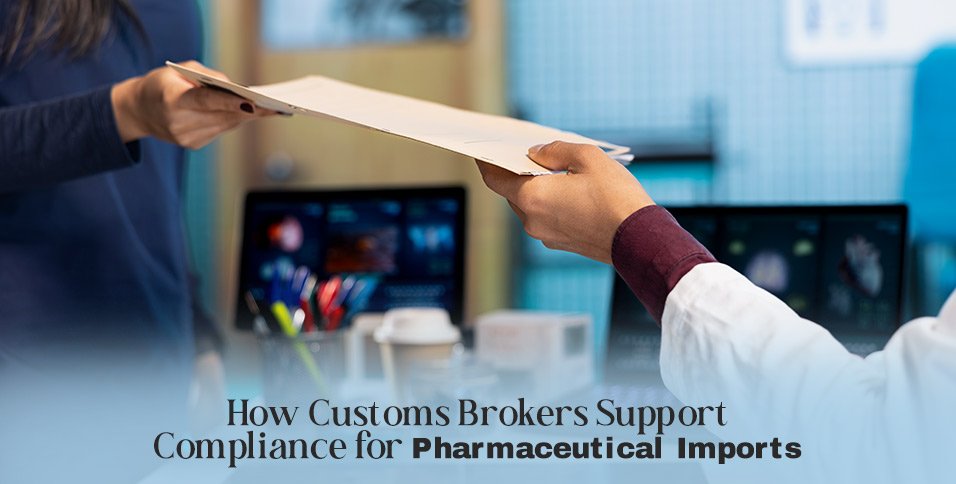
Importing pharmaceutical products is one of the most regulated activities in international trade. The stakes are high on every front. Regulators want to ensure that medicines entering the country are safe, properly labeled, and approved for use. Importers want their shipments cleared quickly without delays that disrupt supply chains or leave patients waiting. Sitting between those two realities is the customs broker, a professional whose role in pharmaceutical importing is far more consequential than most people outside the industry appreciate.
According to the Food and Drug Administration, pharmaceutical imports into the United States have grown significantly over the past decade, with the agency now overseeing millions of import entry lines annually. Managing compliance across that volume requires expertise that goes well beyond filling out forms.
Here’s how customs brokers actively support that process.
1. They Navigate the Overlap Between Customs and Regulatory Agencies
Pharmaceutical imports don’t just pass through customs. They’re subject to review by multiple agencies, including the FDA in the United States, Health Canada for Canadian imports, and various equivalents depending on the destination country. Each agency has its own documentation requirements, timelines, and grounds for refusal.
A customs broker with pharmaceutical experience understands how these agencies interact and what each one needs to see before a shipment can be released. That cross-agency knowledge prevents the kind of documentation gaps that trigger holds, examinations, or outright refusals at the border.
2. They Ensure Accurate Tariff Classification
Pharmaceutical products span a wide range of tariff classifications, and getting the classification wrong has real consequences. Incorrect classification can result in overpaying duties, underpaying and triggering penalties, or flagging a shipment for additional scrutiny. Experienced customs brokers know how to classify these products correctly and support that classification with the right documentation.
This becomes especially critical for shipments containing controlled substances, narcotics, or precursor chemicals, which require import permits, specific labeling, and coordination with the Drug Enforcement Administration on top of standard customs clearance. The documentation requirements are detailed and time-sensitive.
A broker who handles these shipments regularly understands what’s needed and when, which is what prevents costly delays for products that are often urgently needed by the facilities waiting to receive them.
3. They Manage FDA Prior Notice and Import Alert Requirements
The FDA requires prior notice for all food and drug shipments entering the United States, and pharmaceutical imports are no exception. That notice has to be submitted within a specific window before the shipment arrives, and it has to include accurate information about the product, manufacturer, shipper, and intended recipient.
Beyond prior notice, the FDA maintains import alert lists that identify products, manufacturers, or countries subject to additional scrutiny or automatic detention. Customs brokerage providers track these alerts so they can flag potential issues before a shipment leaves its origin, giving importers time to address problems rather than discovering them at the port of entry. Working with Livingston customs brokers therefore means having someone in your corner who not only ensures accurate shipment information is filed on time but also catches issues early before they turn into detained shipments and supply chain disruptions.
4. They Support Temperature-Sensitive Shipment Planning
Many pharmaceutical products require temperature-controlled handling throughout transit, and compliance doesn’t end at the regulatory paperwork. Customs delays can threaten the integrity of temperature-sensitive shipments if they’re not planned for carefully.
An experienced customs broker works with importers to anticipate potential hold times and coordinate with carriers and warehouses to ensure cold chain continuity even when clearance takes longer than expected.
That kind of operational awareness is what separates a broker who understands pharmaceutical logistics from one who simply processes documentation. For companies importing biologics, vaccines, or other temperature-sensitive products, that distinction matters significantly.
5. They Keep Importers Current on Regulatory Changes
Pharmaceutical import regulations change. New guidance documents get issued, tariff schedules get updated, trade agreements shift duty structures, and regulatory agencies periodically revise their documentation requirements. Keeping up with all of that while running a business is genuinely difficult, and falling behind can mean inadvertent non-compliance.
Working with a customs broker gives pharmaceutical importers access to a team that tracks these changes as part of their core function. Customs brokers typically operate with dedicated trade compliance specialists, which means clients aren’t relying on a generalist to handle the nuances of a highly regulated product category. Staying current on regulatory developments is built into the service rather than being something importers have to manage alongside everything else.
6. They Provide Audit Support and Recordkeeping Guidance
Customs authorities have the right to audit import records, sometimes years after a shipment has cleared. Pharmaceutical importers who can’t produce accurate, complete records when asked face penalties and potential disruptions to their import privileges.
A customs broker helps establish and maintain the recordkeeping practices that support a clean audit trail. That includes advising on how long different types of records need to be kept, what format they need to be in, and how to organize documentation in a way that makes a future audit manageable rather than chaotic.
Closing Thoughts
Pharmaceutical importing requires a level of regulatory precision that leaves very little room for error. Customs brokers who specialize in this space bring a combination of trade compliance knowledge, agency-specific expertise, and operational awareness that directly reduces the risk of delays, penalties, and shipment failures.
For companies where supply chain reliability and regulatory standing are non-negotiable, that expertise is a practical necessity rather than an optional add-on.