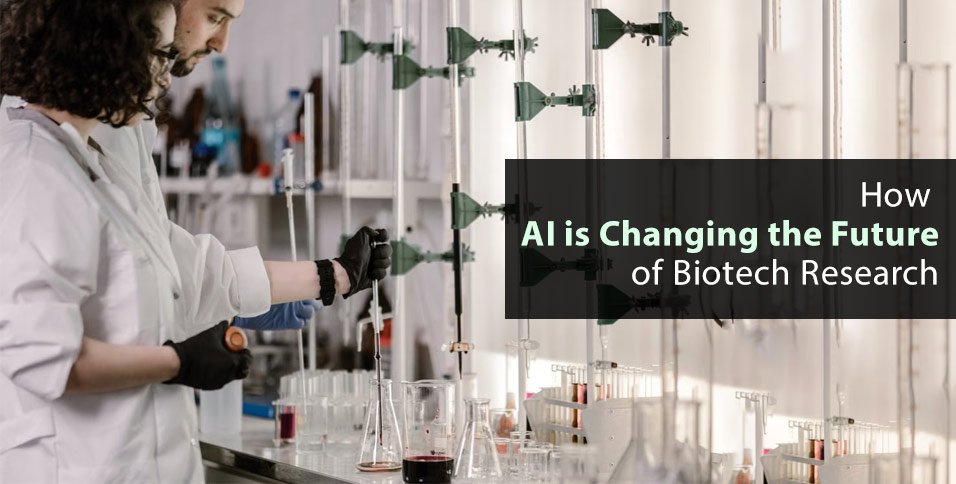
Artificial intelligence has moved beyond being a promising technology in biotechnology to becoming a crucial part of research designs and analysis. Modern biotech systems generate large amounts of biological and experimental data, creating a perfect opportunity for AI platforms to identify patterns that would otherwise be difficult to detect manually.
These advancements aren’t about replacing manual work with software. Artificial intelligence, coupled with laboratory automation, robotics, and data management systems, guides scientists in deciding what to study next. That said, below are a few ways AI is shaping biotech research.
1. AI Helps Create Automated Laboratories
The development of automated labs is probably the most significant outcome of the convergence of AI and lab automation. The new generation of self-regulating labs combines the power of artificial intelligence, automated experimentation, and robotics. These systems activate algorithms that propose experiments for automated equipment to conduct. Automated software then analyzes the results before determining which experiments to conduct next.
Automated labs have the potential to change laboratory operations. In traditional settings, researchers had to design experiments, assemble materials, conduct experiments, analyze the results, and plan the next experiments. Automated systems connect these stages digitally.
This level of automation is especially beneficial for those in the biotech business. These systems improve consistency, increase efficiency, and allow for better use of skilled researchers. It also reduces tedious tasks that scientists often perform manually. However, automation has its disadvantages. Automated labs need reliable equipment, appropriate validation data, great security, and personnel skilled in scientific and computational systems.
2. AI has made the biotech supply chain data-driven
AI’s capabilities can’t be limited to the lab alone. These technologies can also change how research centers manage their broad operations. Most biotechnology projects depend on specialized research components, data services, and consumables. Gathering these resources becomes increasingly crucial as research programs grow.
AI-powered platforms can help research centers forecast inventory needs, identify patterns, and organize information on research materials and suppliers. This is especially relevant as laboratories become digitally connected. Specialized suppliers like Penguin Peptides form part of an important ecosystem that researchers need to know when sourcing various materials.
An AI-driven supply chain has a direct financial impact on biotech businesses. Tech-enhanced forecasting reduces unnecessary inventory while helping organizations avoid shortages that interrupt research programs. In the near future, this technology will connect procurement systems with lab workflows. For instance, inventory data can feed into planning systems to identify when specific research resources need to be ordered.
3. AI Will Change the Skills Biotech Firms Need
The increasing adoption of AI in biotechnology will change the composition of research teams. Scientists will certainly benefit from knowledge of computational methods, AI-assisted research tools, and more. Similarly, technology specialists working in the biotech field need a stronger understanding of experimental science.
This will result in more interdisciplinary teams working together. Unlike before, the lab won’t be full of biologists and research scientists alone. The lab will also shift to accommodate data scientists, AI engineers, software developers, and professionals from other tech roles. The goal isn’t to turn biologists into AI engineers. Instead, biotech firms will need professionals who can collaborate across scientific and technical disciplines.
Endnote
Artificial intelligence comes with a lot of excitement. However, AI algorithms will unlikely replace scientists in the labs. Instead, these systems will enhance the capabilities of research professionals. It can handle big data, generate hypotheses, and identify patterns. Unlike other sectors, biological systems are very complex and require real-world validation.