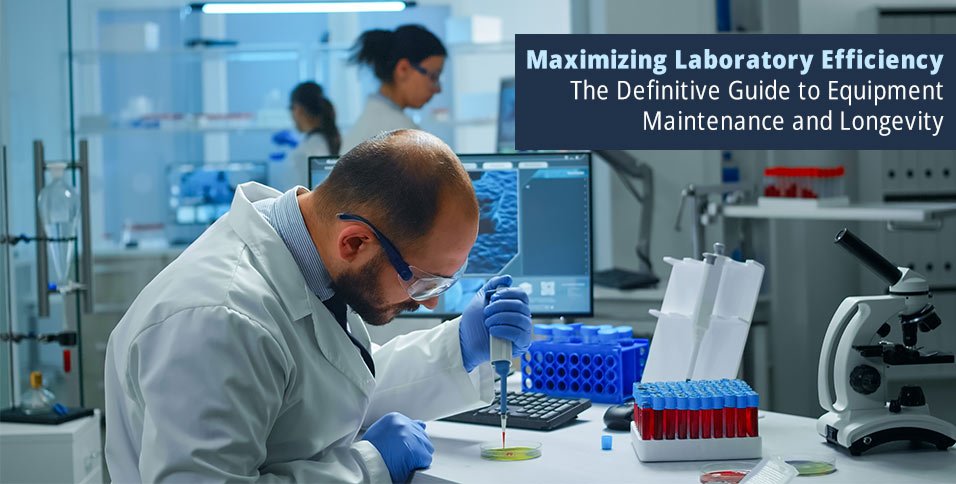
Research facilities are high-stakes, fast-paced environments where precision is not just desired – it is absolutely mandatory. When a high-performance liquid chromatograph (HPLC) or an ultra-low temperature bio-freezer goes offline, it is rarely just a minor inconvenience; it is a critical disruption that can compromise months of meticulous work, degrade irreplaceable biological samples, and delay essential funding milestones. The foundation of any reliable scientific institution lies in its operational consistency and logistical foresight. To safeguard experimental integrity and prevent costly bottlenecks, facility managers must adopt a rigorous, proactive approach to infrastructure upkeep. This requires moving far beyond reactive, last-minute repairs and developing a deep understanding of the instruments themselves. From enforcing strict user protocols to strategically sourcing high-quality lab equipment parts, every facility management decision plays a pivotal role in ensuring that research timelines remain uninterrupted and empirical data remains unassailable.
The Hidden Costs of Unplanned Laboratory Downtime
To fully appreciate the value of a robust maintenance protocol, one must first understand the true cost of equipment failure. In the realms of pharmaceuticals, biotechnology, and advanced materials science, the financial implications of unexpected downtime extend far beyond the mere cost of replacing a broken component.
First, there is the immediate loss of scientific consumables. Reagents, specialized buffers, and cultured cell lines are notoriously expensive. If a mechanical failure occurs mid-assay – such as a centrifuge rotor malfunctioning or an incubator losing its thermal seal – the materials involved are often rendered useless. Second, there is the devastating impact of labor inefficiency. When primary analytical devices are out of commission, researchers are forced into a state of operational paralysis, burning through grant money without generating usable data. Finally, and perhaps most importantly, there is the risk of compromised data integrity. A machine that is slowly drifting out of calibration before a catastrophic failure can produce skewed results, leading to flawed conclusions and forcing teams to retract findings or repeat weeks of arduous experiments.
Proactive vs. Reactive Maintenance Models
In the world of facility management, maintenance strategies generally fall into two categories: reactive and proactive. Modern, high-efficiency laboratories have universally abandoned the former in favor of the latter.
The Pitfalls of “Run-to-Failure”
A reactive, or “run-to-failure,” approach assumes that instruments should only be serviced when they visibly break down. While this might seem cost-effective in the short term, it is a dangerous gamble in a laboratory setting. Relying on a reactive model guarantees that breakdowns will occur at the most inconvenient times, often leading to expedited, premium-priced shipping for replacement components and emergency call-out fees for specialized technicians.
The ROI of Preventative and Predictive Strategies
Conversely, proactive maintenance (PM) involves adhering to a strict schedule of inspections, cleanings, and calibrations based on manufacturer guidelines and historical usage data. By systematically servicing analytical devices before they exhibit signs of wear, laboratories can extend the operational lifespan of their assets by years.
Taking this a step further, many cutting-edge facilities are now adopting Predictive Maintenance (PdM). Utilizing advanced algorithms and sensor technology, PdM monitors the real-time condition of hardware, detecting microscopic anomalies – such as excessive vibration in a motor bearing or a slight drop in vacuum pump pressure – allowing managers to intervene exactly when maintenance is required, avoiding both unnecessary servicing and unexpected breakdowns.
Essential Strategies for Extending Instrument Lifespan
Transitioning a laboratory from a reactive to a highly optimized, proactive environment requires a multifaceted approach. To maximize the longevity and accuracy of scientific infrastructure, facility managers should implement the following core strategies:
- Establish Rigorous Standard Operating Procedures (SOPs): Human error is one of the leading causes of equipment degradation. Implementing and strictly enforcing SOPs ensures that all personnel – from senior principal investigators to first-year graduate students – operate complex machinery correctly. Routine tasks, such as properly balancing a centrifuge or flushing a chromatography column after use, must be institutionalized.
- Maintain Strict Environmental Controls: Highly sensitive instruments, such as electron microscopes and mass spectrometers, are incredibly vulnerable to environmental fluctuations. Laboratories must maintain strict control over ambient temperature, relative humidity, and particulate matter. Even minor vibrations from nearby heavy machinery or HVAC systems can throw optical tables out of alignment, necessitating costly recalibrations.
- Schedule Routine Calibration and Validation: Regular calibration is the only way to ensure empirical validity. Facilities should adhere to standard IQ/OQ/PQ (Installation, Operational, and Performance Qualification) protocols. Creating a centralized, digital logbook that tracks calibration dates and upcoming service windows ensures that no instrument slips through the cracks.
- Implement a Strategic Inventory Management System: Waiting weeks for a simple replacement valve to ship from overseas can paralyze a project. Laboratories should identify high-wear components (such as o-rings, filters, gaskets, and specialized tubing) and maintain a strategic, on-site inventory of these critical items to facilitate immediate repairs.
The Impact of Component Quality on Experimental Integrity
When parts inevitably wear out due to standard operational fatigue, the quality of the replacements utilized is just as critical as the maintenance schedule itself. A sophisticated scientific instrument is a complex ecosystem of interconnected parts; introducing an inferior or incompatible component can have cascading negative effects.
Precision and Compatibility
Consider a gas chromatography system. If a replacement seal does not fit with microscopic perfection, atmospheric gases can leak into the system, creating baseline noise that obscures crucial data peaks. Similarly, utilizing subpar optical components in a spectrophotometer can lead to light scattering, drastically reducing the device’s sensitivity. Laboratory managers must exercise extreme diligence when procuring replacements, ensuring that every valve, sensor, and circuit board meets exact dimensional and material tolerances.
Navigating the Market: OEM vs. Aftermarket
Procurement officers constantly face the choice between Original Equipment Manufacturer (OEM) components and third-party aftermarket alternatives. While OEM components guarantee compatibility and often preserve active warranties, high-quality aftermarket parts from reputable scientific suppliers can offer comparable precision at a fraction of the cost. The key is to vet suppliers rigorously, demanding transparency regarding material specifications, ISO certifications, and manufacturing standards. Cultivating a relationship with a reliable, specialized vendor ensures that your facility has access to the exact specifications required without falling victim to predatory pricing or catastrophic supply chain bottlenecks.
Embracing the Future: IoT and Smart Laboratory Monitoring
As we look toward the future of laboratory management, the integration of the Internet of Things (IoT) is fundamentally changing how infrastructure is maintained. The “smart lab” is no longer a futuristic concept; it is an operational reality.
Modern scientific hardware is increasingly manufactured with native IoT connectivity, allowing devices to stream continuous diagnostic data to secure cloud platforms. For older, legacy equipment, aftermarket IoT sensors can be retrofitted to monitor variables such as electrical draw, thermal output, and mechanical vibration.
This continuous stream of data can be integrated into a central Laboratory Information Management System (LIMS). If an incubator’s internal temperature deviates by a fraction of a degree during the weekend, the system can automatically text an alert to the on-call facility manager. This level of 24/7 oversight virtually eliminates the catastrophic losses associated with overnight hardware failures. Furthermore, the aggregation of this diagnostic data allows managers to accurately calculate the total cost of ownership (TCO) for various instruments, guiding smarter, data-driven purchasing decisions in the future.
Crafting a Facility-Wide Maintenance Culture
Ultimately, upgrading laboratory efficiency is not purely a technological challenge; it is a cultural one. A facility manager can procure the finest hardware and implement the most sophisticated tracking software, but these efforts will fall short if the daily users of the equipment are not equally invested in its upkeep.
Fostering a culture of accountability is essential. Researchers must view instrument maintenance not as an administrative burden, but as a fundamental component of the scientific method itself. When scientists understand that a poorly maintained device directly threatens the validity of their hard-earned data, compliance with cleaning protocols and maintenance schedules naturally improves.
By prioritizing proactive maintenance, investing in high-quality replacement components, and embracing data-driven monitoring tools, research institutions can create a highly resilient infrastructure. In doing so, they protect their financial investments, eliminate frustrating bottlenecks, and empower their scientists to push the boundaries of innovation with absolute confidence in their tools.