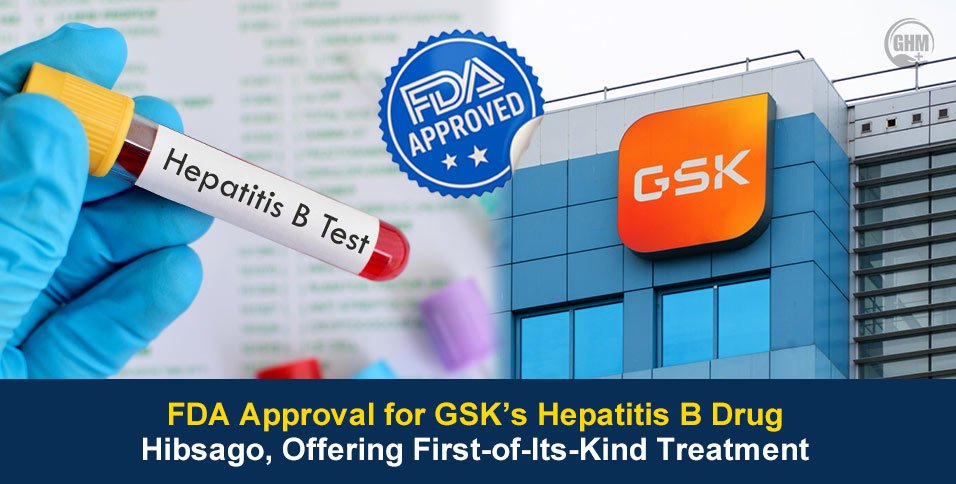
The US Food and Drug Administration (FDA) approved GSK’s hepatitis B drug Hibsago (bepirovirsen), introducing a new treatment option for certain adults with chronic hepatitis B. The FDA approval for GSK’s hepatitis B drug marks a milestone, as Hibsago is the first antisense oligonucleotide approved by the FDA for this infection.
The new hepatitis B treatment could help some eligible patients maintain control of the virus after stopping all hepatitis B medicines. However, patients must meet specific eligibility criteria, and the drug carries serious safety warnings.
What Is GSK’s Hepatitis B Drug Hibsago?
Hibsago, also known as bepirovirsen, is an injectable medicine designed to reduce the hepatitis B virus (HBV) and its proteins. It belongs to a class of treatments called antisense oligonucleotides, which target genetic instructions involved in virus reproduction.
Unlike standard antiviral medicines that primarily suppress HBV, bepirovirsen targets viral RNA, helping reduce the production of viral components, including hepatitis B surface antigen (HBsAg).
The FDA approval for GSK’s Hepatitis B drug covers its use alongside existing antiviral therapy, not as an immediate replacement. The goal of GSK’s Hepatitis B drug Hibsago is to help some patients achieve a functional cure, meaning the virus remains controlled, with HBV DNA and HBsAg undetectable for at least 24 weeks after all treatment ends. This does not necessarily mean the virus has been completely eradicated.
What Are The Trial Results Supporting Chronic Hepatitis B Drug Approval?
The FDA approval for GSK’s hepatitis B drug Hibsago was based on the B-WELL 1 and B-WELL 2 Phase 3 clinical trials, which evaluated bepirovirsen in adults with chronic hepatitis B.
According to GSK’s official data, the combined results showed:
- 24% of patients receiving Hibsago met the criteria to stop their existing antiviral medicine, compared with none in the placebo groups.
- 19% achieved functional cure, maintaining viral control with undetectable HBsAg 24 weeks after stopping all hepatitis B treatment.
- The functional cure rate reached 26% among patients with baseline HBsAg levels of 1,000 IU/mL or lower.
These findings suggest that bepirovirsen for chronic hepatitis B could offer some patients an alternative to indefinite antiviral treatment. However, most participants did not achieve a Hepatitis B functional cure, and the results do not guarantee lasting treatment-free control for every patient.
Who Is Eligible for The Hibsago Drug Treatment?
The FDA-approved hepatitis B drug Hibsago applies to certain adults who meet all the following conditions:
- They do not have cirrhosis or advanced scarring of the liver.
- They have received hepatitis B antiviral therapy for at least six months.
- Their HBV levels in the blood are suppressed.
- Their HBsAg levels are 3,000 IU/mL or lower, confirmed using an FDA-authorized test.
The FDA also authorized Roche’s Elecsys HBsAg II quant II RxDx assay to help identify suitable patients and support treatment monitoring. Healthcare professionals must assess each patient’s test results and clinical condition before determining Hibsago drug eligibility.
How Is Hibsago Administered?
GSK’s Hibsago is administered through injections under the skin for up to 24 weeks while patients continue their existing hepatitis B antiviral therapy. Patients must remain on their current antiviral medicine for at least another 24 weeks after their final Hibsago injection.
Some patients may then stop all treatment if they meet specified medical and laboratory criteria. GSK has also highlighted the option of self-administration after the first dose, offering potential convenience during the treatment course.
Safety Warnings & Side Effects of GSK’s Hibsago Drug
Despite its potential benefits, Hibsago carries a boxed warning for serious liver reactions and low platelet counts, which can increase the risk of potentially life-threatening bleeding.
Other risks of Hibsago include worsening kidney function, serious inflammatory reactions such as vasculitis, and complications associated with improper injection administration.
The most common side effects of GSK’s Hibsago drug include:
- Injection-site reactions
- Fever
- Headache
The FDA-approved hepatitis B drug Hibsago requires regular blood tests and medical follow-up before and during treatment to monitor for complications. Patients should follow their healthcare provider’s instructions and should not stop existing antiviral medication without medical supervision.
How is FDA Approval For GSK’s Hepatitis B Drug Significant?
Chronic hepatitis B can cause cirrhosis and increase the risk of liver cancer. Many patients currently rely on long-term antiviral medicines to keep the virus suppressed, making treatment-free viral control an important goal.
The FDA approval for GSK’s hepatitis B drug introduces a new approach for eligible adults, although access and eligibility will determine its practical impact. However, the treatment does not eliminate the need for screening, monitoring, and ongoing medical care.
GSK has also reported approval in Japan and continues regulatory submissions in other markets.