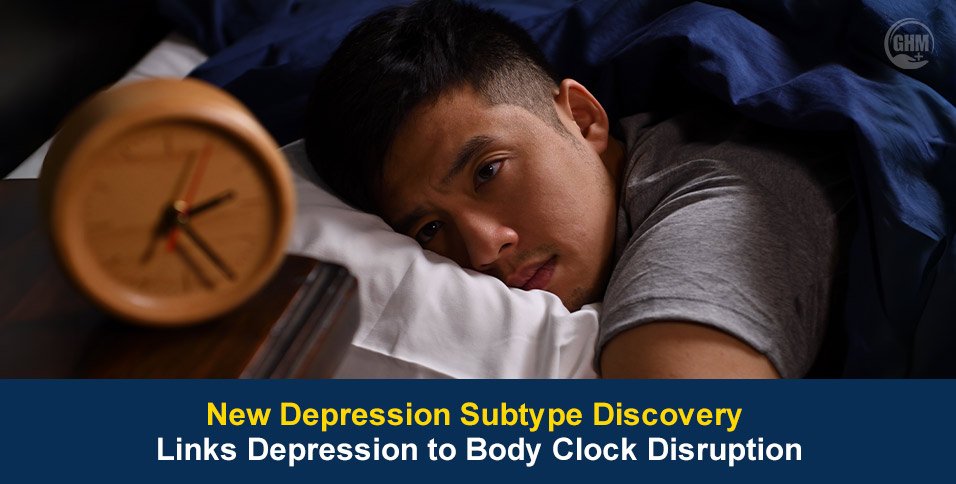
A team of researchers from the University of Sydney has identified a potential new depression subtype linked to disruptions in the body’s internal clock. The new depression subtype discovery, published in The British Journal of Psychiatry on October 20, 2026, suggests that circadian rhythms may help explain differences in depression severity and responses to medication. It is also raising questions about how doctors diagnose and treat the condition.
Researchers say the findings could support more personalized depression treatment, although further studies must confirm whether this profile represents a distinct clinical subtype.
What Is Circadian Depression?
Circadian depression describes a proposed pattern of depression associated with the body’s internal 24-hour clock. This clock regulates sleep, wakefulness, and other biological processes, partly in response to light exposure.
When this rhythm becomes misaligned with a person’s daily schedule, it may affect sleep and mood. Researchers believe these patterns could help explain why some people experience more severe depressive symptoms or respond differently to treatment.
However, circadian depression, found as a new depression subtype discovery, is not yet an established clinical diagnosis. The findings identify a possible clinical profile rather than proving that body-clock disruption directly causes depression.
What Did the University of Sydney Depression Study Find?
The University of Sydney research team analyzed data from 11,380 participants in the Australian Genetics of Depression Study.
For the new depression subtype discovery, the research team examined clinical characteristics, reported antidepressant responses, and genetic risk profiles among participants. Here, 23% of participants were classified as having a proposed subtype called circadian depression.
Compared with participants who did not meet the proposed criteria, those classified as having circadian depression reported:
- Earlier onset: Depression began at a younger age.
- More severe symptoms: Participants reported greater psychological distress, suicidal thoughts, and experiences resembling hypomania or psychosis.
- Weight changes: They more frequently reported weight gain during depressive episodes.
- Different medication responses: They reported poorer responses to commonly prescribed antidepressants and more side effects.
The genetic analysis also identified associations with genetic risk profiles for conditions and traits including anxiety, bipolar disorder, attention-deficit/hyperactivity disorder (ADHD), and metabolic and inflammatory markers. However, these associations do not establish that circadian depression causes these conditions.
The researchers stressed that independent studies must replicate the findings before clinicians can determine their predictive value.
Why Is Depression Subtype Research Linked to Circadian Rhythm Disruption?
Researchers classified participants as having the proposed subtype of depression when they met at least three of six criteria associated with circadian rhythms.
These included:
- Seasonal mood changes: Symptoms vary with the seasons.
- Delayed sleep timing: A person naturally falls asleep and wakes up later.
- Evening preference: A person feels more alert later in the day.
- Morning tiredness: A person feels very tired after waking.
- Longer sleep: A person sleeps more than usual during depressive episodes.
- Social jet lag: Sleep schedules differ substantially between workdays and free days.
These circadian rhythm criteria may help researchers investigate the relationship between the body clock and depression. However, experiencing one or more of them does not mean someone has circadian depression.
Could the New Depression Subtype Discovery Change Depression Treatment?
The new depression subtype discovery could influence future depression treatment research by encouraging clinicians to examine sleep patterns alongside other symptoms and treatment history.
Participants classified in the circadian group reported poorer responses to selective serotonin reuptake inhibitors (SSRIs) and serotonin-norepinephrine reuptake inhibitors (SNRIs). These antidepressants affect chemical signalling in the brain and are widely used to treat depression.
Researchers have suggested investigating approaches that target circadian rhythms, including bright-light therapy, melatonin-based interventions and chronotherapy, which aligns treatment or daily routines with biological rhythms.
Professor Ian Hickie, co-director of the University of Sydney’s Brain and Mind Centre, said: “For those who find that antidepressants are not working for them, it is important to speak to your clinician for advice about your individual circumstances.”
The Australian Genetics of Depression Study did not establish that these approaches work better for the proposed subtype. Patients should consult their healthcare professionals before changing prescribed medication or treatment.
Why Researchers Say More Evidence Is Needed?
The New depression subtype discovery offers a possible way to distinguish patterns within depression, but important limitations remain.
Researchers relied on self-reported information about symptoms, sleep habits and medication responses. The study also examined data at a single point rather than tracking changes over time, making it difficult to establish cause and effect.
Additionally, the genetic analysis focused on participants of inferred European ancestry, limiting how confidently researchers can apply the findings to other populations.
Independent replication, biological measurements, and clinical trials will help determine whether circadian features can reliably predict treatment outcomes.