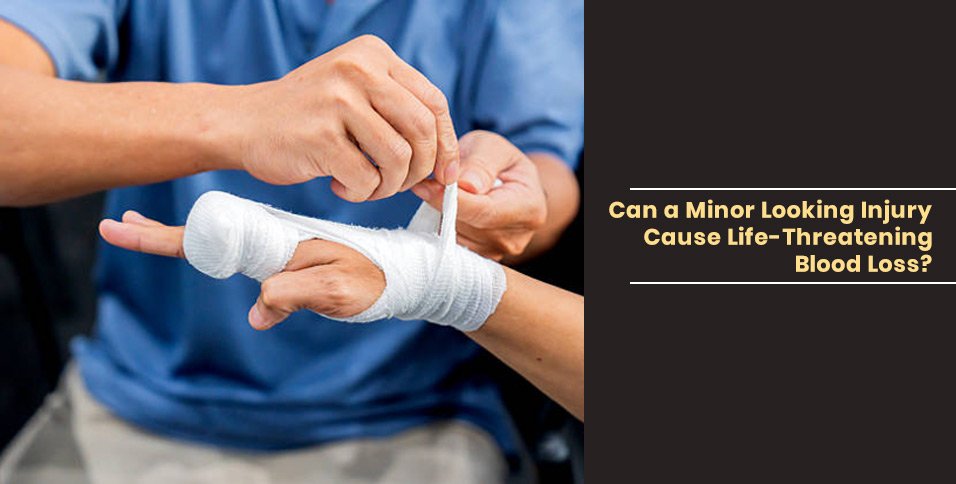
Yes, an injury that looks minor can sometimes cause life-threatening blood loss. A small cut or puncture wound may damage a blood vessel, while internal bleeding can occur without obvious external signs.
The severity of an injury cannot always be judged by how it looks, so recognizing the causes of exsanguination and seeking prompt medical attention when warning signs appear can be critical.
What is Exanguination?
Exsanguination is severe blood loss that can lead to shock, organ failure, and death. Although major accidents often cause significant bleeding, serious blood loss can also result from injuries that initially appear less alarming. The risk depends on the location of the injury, the blood vessels or organs affected, and how quickly medical care is provided.
Understanding these factors can help people recognize when an apparently small wound requires urgent attention rather than routine first aid.
How Minor-Looking Injuries Can Become Serious
The body contains blood vessels of different sizes throughout its tissues. If an injury damages a major vessel, blood may be lost rapidly even when the opening in the skin is small.
Puncture wounds are particularly concerning because they can penetrate deeper tissues while leaving limited visible damage. Injuries to the chest, abdomen, neck, or groin may affect important blood vessels or organs.
Internal bleeding can be harder to recognize. A person may have bruising or mild discomfort at first, even while blood collects inside the body. The absence of heavy external bleeding does not rule out a medical emergency.
Common Causes of Severe Blood Loss
Severe blood loss can result from several types of injuries and medical conditions, including:
- Deep cuts or punctures: Sharp objects may damage arteries or veins beneath the skin.
- Blunt trauma: Falls, vehicle crashes, or hard impacts can injure internal organs and blood vessels.
- Crush injuries: Heavy pressure can damage tissues and cause significant bleeding.
- Surgical or medical complications: Certain complications can lead to uncontrolled blood loss.
- Underlying bleeding disorders: Some conditions or medications can make bleeding harder to stop.
The seriousness of an injury depends on the location and extent of the damage, the amount of blood lost, and how quickly treatment begins.
Warning Signs That Require Urgent Attention
Symptoms of significant blood loss may include dizziness, weakness, confusion, pale or clammy skin, rapid breathing, and a fast heartbeat. Severe cases can cause fainting or loss of consciousness.
Internal bleeding may also cause abdominal pain, swelling, or worsening discomfort. Symptoms can develop gradually, so a person should not wait for every warning sign to appear before seeking help.
Call emergency services if severe bleeding or suspected internal bleeding occurs. Even if the injured person remains conscious and can speak normally, these signs should not be dismissed. Early medical evaluation can help identify hidden injuries and reduce the risk of complications.
Immediate Steps to Take
- For external bleeding, apply firm, continuous pressure with clean cloth or gauze if it is safe to do so.
- Do not remove an object embedded in a wound; apply pressure around it and follow emergency responders’ instructions.
- For life-threatening bleeding from an arm or leg, a commercially made tourniquet may be appropriate when used by someone trained or guided by emergency professionals.
- Keep the injured person still and warm while waiting for help.
- Do not give food or drink to someone who may need emergency treatment.
Key Takeaways
- A small-looking wound can damage a major blood vessel.
- Internal bleeding may occur without obvious external blood loss.
- Dizziness, confusion, pale skin, and rapid breathing can signal serious blood loss.
- Apply firm pressure to external bleeding and call emergency services for severe injuries.
- Prompt medical assessment can be lifesaving.