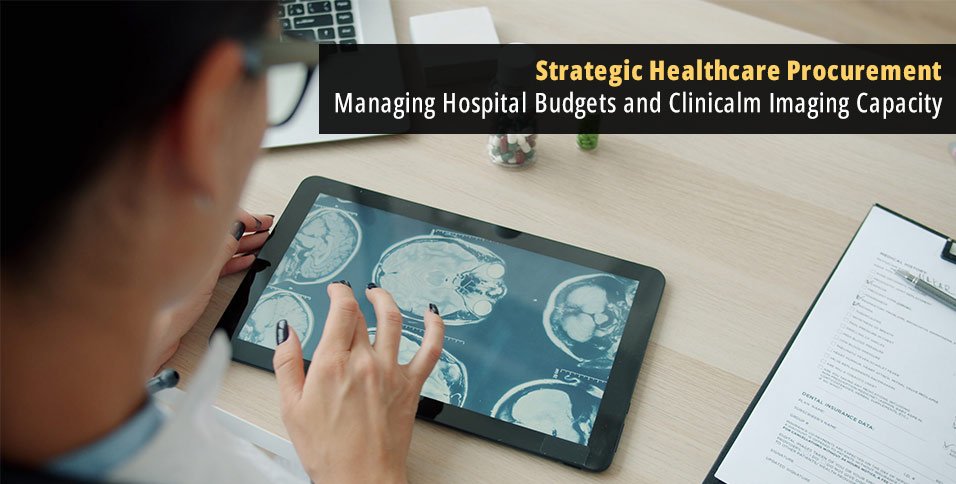
Healthcare administrators and clinical directors face continuous financial pressure as operational overheads climb and patient numbers grow across all diagnostic disciplines. Modern clinical practice depends heavily on advanced medical imaging to detect internal disorders, plan complex surgical interventions, and monitor treatment outcomes. However, the acquisition of brand-new diagnostic scanning equipment straight from manufacturing lines demands massive capital allocations that can severely constrain hospital funds. To overcome these budgetary limitations without sacrificing imaging accuracy, many private clinics, diagnostic centres, and regional hospitals now choose certified refurbished MRI machines as a practical, high-value alternative to new hardware.
This procurement pathway allows medical facilities to expand their routine scanning schedules, shorten patient waiting times, and direct remaining capital toward front-line clinical staff and expanded patient care programs.
Rigorous Testing Standards and Biomedical Engineering Verification
The clinical value of any diagnostic imaging unit relies on consistent signal quality, precise magnetic field uniformity, and dependable daily performance. Certified pre-owned scanners undergo extensive reconditioning procedures carried out by specialized biomedical engineers before they are approved for hospital installation. This mechanical overhaul begins with complete system de-installation, cryogenic evaluation, and cold-head servicing to ensure helium levels and internal vacuum chambers meet original operating benchmarks.
Engineers carefully dismantle, test, and recalibrate internal sub-assemblies, including gradient power amplifiers, radiofrequency transmit coils, patient positioning tables, and data reconstruction workstations.
Worn electronic boards, degraded wiring harnesses, and cosmetic casings are replaced with verified parts. The entire system then undergoes standardized phantom test scans to evaluate slice thickness, signal-to-noise ratios, and overall image resolution across multiple diagnostic sequences. This systematic testing protocol ensures that the reconditioned scanner delivers anatomical clarity and diagnostic confidence on par with newly assembled platforms.
Preserving Workflow Continuity and Reducing Departmental Disruption
A significant benefit of procuring certified imaging platforms from established hardware generations is operational familiarity for existing hospital staff. Diagnostic imaging departments operate under demanding daily timetables where radiographers, technicians, and interpreting radiologists are accustomed to specific user interfaces, patient handling protocols, and positioning consoles. Introducing completely unfamiliar system architectures often requires extensive staff retraining, adjustments to booking schedules, and initial diagnostic slowdowns.
Deploying proven scanning platforms from familiar equipment families eliminates these administrative hurdles, enabling medical staff to operate the scanner with complete confidence from day one.
Furthermore, pre-owned systems significantly reduce the extended manufacturing delivery windows that frequently affect brand-new equipment orders. Turnkey providers manage transport, rigging, installation, and final testing within predictable schedules. This rapid turnaround helps healthcare networks address sudden influxes of patient referrals, replace damaged equipment quickly, and avoid prolonged departmental closures.
Comprehensive Maintenance Agreements and Long-Term Operating Stability
Securing an imaging unit represents only the first phase of an effective diagnostic strategy; maintaining unbroken daily operation is equally essential. Reputable medical hardware suppliers back their installed scanners with comprehensive service contracts, rapid technical support, and remote monitoring tools that track system temperatures, cryogenic pressures, and electronic performance around the clock. Potential hardware anomalies can be identified and corrected before they lead to unexpected scanner shutdowns during operating hours.
Direct access to centralized warehouses filled with certified spare parts ensures that components can be dispatched and fitted without prolonged shipping delays.
Additionally, turnkey providers offer flexible contract arrangements, including operational leasing, phased equipment upgrades, and trade-in structures when facilities prepare for subsequent technology cycles. This comprehensive technical and commercial support framework provides healthcare managers with budget predictability, reduced total cost of ownership, and a stable diagnostic foundation that serves the clinical needs of the community for years to come.