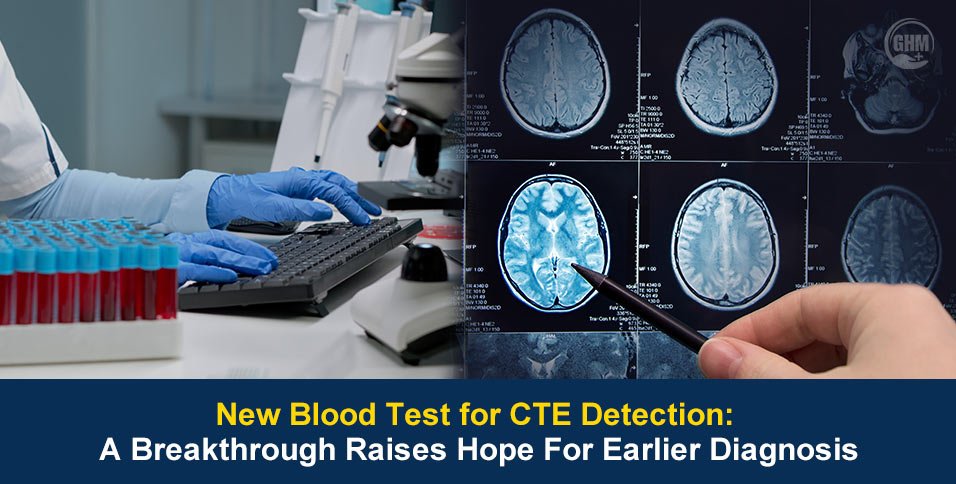
Researchers from Boston University (BU) and Banner Health have identified a promising blood biomarker that could help detect chronic traumatic encephalopathy (CTE) during a person’s lifetime. Published in JAMA on November 19, 2026, the new blood test for CTE detection identified elevated levels of a specific tau protein in former football players with advanced CTE.
This CTE diagnosis breakthrough could address a major challenge in brain disease research, as doctors have traditionally confirmed CTE only through brain examination after death. However, researchers emphasize that larger studies must validate the results before doctors can use the blood biomarker test in clinical practice.
What Is Chronic Traumatic Encephalopathy (CTE)?
Chronic traumatic encephalopathy is a progressive neurodegenerative disease associated with repeated head impacts, including those experienced by athletes participating in contact sports.
Repeated head injuries can contribute to abnormal accumulation of tau proteins in the brain. These proteins form tangled structures that damage brain cells and can affect cognitive and behavioral functions.
Currently, doctors can definitively confirm CTE only through a postmortem examination of brain tissue. This limitation makes it difficult to identify affected individuals during life and develop treatments through clinical trials.
New Blood Test for CTE Detection Identifies a Key Protein
The Boston University CTE study, conducted in collaboration with Banner Health, investigated a protein called endogenously cleaved microtubule-binding region tau (eMTBR-tau), which acts as a blood biomarker.
Researchers examined blood plasma samples to determine whether eMTBR-tau levels could indicate the presence and severity of CTE-related tau tangles in the brain.
The findings of the CTE research study revealed that participants with advanced-stage CTE had significantly higher blood plasma eMTBR-tau concentrations than those with early-stage disease or no CTE.
Working of the New Blood Test for CTE Detection
The new blood test for CTE detection focuses on detecting abnormal tau protein activity associated with CTE.
Tau proteins normally help maintain the structure of nerve cells. However, abnormal tau accumulation can lead to tangled structures inside brain cells, a characteristic feature of CTE and certain other neurodegenerative diseases.
Researchers also examined another blood biomarker called phosphorylated tau 217 (p-tau217), which is associated with Alzheimer’s disease.
The Boston University CTE study found that:
- eMTBR-tau levels were significantly elevated in participants with advanced-stage CTE.
- p-tau217 was elevated in participants with Alzheimer’s disease.
- The highest eMTBR-tau concentrations occurred in participants who had both CTE and Alzheimer’s disease.
These findings suggest that examining multiple biomarkers could eventually help researchers distinguish between Alzheimer’s disease and CTE. However, further research must establish how reliably these markers can differentiate the conditions in living patients.
Key Findings From CTE Clinical Trials
The study with the new blood test for CTE detection examined blood samples from 21 former American football players who had participated in BU research projects. They provided blood samples during life and donated their brains for examination after death.
The participants for the clinical trial included 12 professional, seven college, and two high school football players. Of the 18 participants with CTE, 16 had advanced-stage disease (McKee stages 3 or 4), while two had early-stage disease (stages 1 or 2).
Importantly, elevated eMTBR-tau levels appeared in participants with advanced CTE, but not at similar levels in those with early-stage disease or no CTE. Five participants with CTE also had Alzheimer’s disease, and this group showed the highest eMTBR-tau concentrations.
Limitations of The New Blood Test for CTE Detection
Despite the promising findings, researchers caution that the new blood test for CTE detection is not ready for clinical use. The study has several limitations that require further investigation:
- Small sample size: Researchers examined only 21 former football players, limiting the broader applicability of the findings.
- Limited early-stage cases: Only two participants had early-stage CTE, making it difficult to assess the test’s ability to detect the disease in its initial stages.
- Lack of age-matched controls: The study did not include sufficient age-matched participants for a stronger comparison.
Larger validation studies involving more diverse participants are necessary before doctors can use it for chronic traumatic encephalopathy diagnosis.
CTE Diagnosis Breakthrough For Future Treatments
A reliable blood biomarker for CTE could change how researchers investigate and manage the disease. Currently, the inability of CTE detection during life creates significant challenges for testing potential treatments.
A separate research team published another study in the same issue of JAMA, reporting elevated blood plasma eMTBR-tau243 in individuals with autopsy-confirmed CTE.
The researchers examined different cases and used a different detection method. The findings provide additional evidence supporting the relationship between blood-based tau biomarkers and CTE-related brain changes.
If future studies validate the findings, the new blood test for CTE detection could help researchers with future findings.
Researchers also confirmed that the blood test is not FDA-approved and is not available to the public. Although the new CTE blood test requires further validation, it could help advance brain disease diagnosis, clinical trials, and future treatment research.