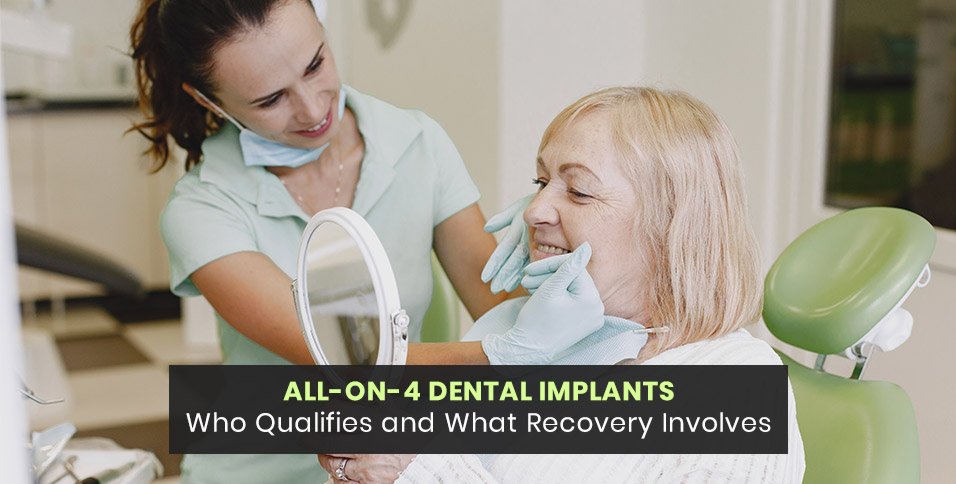
All-on-4 dental implants suit adults who have lost most or all of their teeth in one jaw, or whose remaining teeth are failing, and who have enough bone in the front of the jaw to support four implants. Recovery usually involves several days of swelling and discomfort, a soft diet for around six to eight weeks, and a healing period of three to six months before the final, permanent bridge is fitted.
The appeal is that many patients leave the clinic with fixed temporary teeth on the same day or within a day or two of surgery. That doesn’t mean healing is instant, though. The implants still need months to fuse with the bone, and how well that happens depends a great deal on your health, your habits and how carefully you follow aftercare instructions.
How the All-on-4 Approach Works
Traditional implant treatment often places one implant for every missing tooth, or six to eight implants per jaw for a full arch. All-on-4 supports a complete fixed bridge of around 10 to 14 teeth on just four implants. Two implants are placed upright in the front of the jaw, and two are placed further back at an angle, often up to around 45 degrees.
That angle is what makes the technique work for so many people. The front of the jaw usually keeps more bone than the back, where teeth are often lost earlier and bone shrinks over time. Tilting the back implants lets them anchor in denser bone while avoiding the sinuses in the upper jaw and the main nerve in the lower jaw, which in many cases removes the need for bone grafting.
The bridge is screwed onto the implants rather than glued, so your dentist can remove it for professional cleaning or repairs. For patients, it stays fixed in the mouth and is never taken out at home, unlike a conventional denture.
Who Is a Good Candidate for All-on-4 Implants
The typical candidate has lost most or all of their teeth in one or both jaws, or has teeth that are badly damaged by decay, gum disease or previous failed dental work. Many are long-term denture wearers who are tired of loose plates, adhesives and restricted diets. Others have a mix of crowns, bridges and failing teeth that would be expensive and unpredictable to repair one by one.
Bone is the key clinical factor. There needs to be enough healthy bone in the front of the jaw to hold the implants securely, and the bone quality needs to be good enough for them to integrate. Patients with severe bone loss aren’t automatically excluded, as alternatives such as longer implants anchored in the cheekbone exist, but those cases need more specialised planning.
Age on its own isn’t a barrier. Patients in their seventies and eighties are routinely treated, provided their general health allows minor oral surgery. What matters more is how well any medical conditions are controlled and whether the patient can commit to good oral hygiene afterwards.
Health Conditions and Habits That Need Extra Assessment
Smoking is the biggest avoidable risk. Research has consistently linked smoking with slower healing and a higher rate of implant failure, so most clinicians strongly advise stopping before treatment and throughout the healing period. Uncontrolled diabetes carries similar risks, although patients with well-managed diabetes are often treated successfully.
Certain medications and treatments also need careful review. Bone-strengthening drugs used for osteoporosis, particularly when given intravenously, can affect how the jaw heals. Previous radiotherapy to the head or neck, blood thinners and some immune-suppressing medications may require adjustments to the treatment plan or coordination with your doctor. Active gum disease is usually treated before implants are placed, and patients who grind their teeth heavily may need a protective night guard afterwards.
This is why a proper consultation matters more than a quick quote. A good assessment includes a 3D CBCT scan to measure bone volume and map nerves and sinuses, a full medical history and an analysis of your bite. Choosing a specialist Harley Street practice or another experienced implant clinic that plans treatment digitally from those scans helps make sure the implants are positioned where the bone can support them best. Costs for All-on-4 in London are commonly in the region of £12,000 to £20,000 or more per arch, depending on the materials, the complexity of the case and whether extractions or additional procedures are needed.
What Happens on the Day of Treatment
The procedure is usually carried out under local anaesthetic, often combined with intravenous sedation so you feel relaxed and remember little of the appointment. Any remaining teeth in the arch are removed, infected tissue is cleaned away, and the four implants are placed according to the digital plan. Surgery typically takes two to four hours per arch.
In most cases, a temporary fixed bridge is attached the same day or within 24 to 48 hours. This bridge is usually made from acrylic and is designed to be lighter and slightly less demanding on the implants than the final version. It lets you eat soft foods, speak and smile normally while the implants heal underneath.
Recovery: The First Days, Weeks and Months
The first few days are the most uncomfortable. Swelling and bruising usually peak around 48 to 72 hours after surgery and then settle over the following week. Most patients manage discomfort with standard painkillers, cold compresses and rest, and many return to office work within two to five days, although those with physical jobs may need longer.
Diet is the part of recovery people underestimate most. For the first few days, liquids and very soft foods such as soups, yoghurt and mashed potato are best. After that, most clinicians recommend a soft diet for around six to eight weeks, avoiding anything hard, crunchy or chewy, such as nuts, crusty bread or tough meat. Biting hard on the temporary bridge during this period can disturb implants that haven’t yet fused with the bone.
Hygiene starts gently. Salt water or prescribed rinses keep the area clean in the first days, and gentle brushing around the bridge follows as the gums settle. A water flosser becomes very useful later for cleaning underneath the bridge. Follow-up appointments check healing and adjust the bite if needed.
After three to six months, once the implants have fully integrated, the final bridge is fitted. It’s typically stronger and more natural-looking than the temporary version, often made from zirconia or a reinforced acrylic over a metal framework, and it allows a normal diet again.
Long-term studies of the All-on-4 approach have reported high implant survival rates, often above 90 percent over many years, and a decade of follow-up on cases treated this way recorded survival above 94 percent at ten years, with smoking standing out as a factor in the failures that did occur. That outcome depends heavily on ongoing care. If you’re considering treatment, plan for the maintenance as much as the procedure itself: regular hygiene visits every three to six months, a daily cleaning routine under the bridge and occasional professional removal of the bridge for deep cleaning. Patients who treat those appointments as part of the investment are the ones most likely to keep their new teeth comfortable and secure for decades.