The American Dental Association’s 2024 orthodontic survey reveals that over 4 million Americans are currently receiving orthodontic treatment — with adults now representing nearly 25% of all patients, up from just 15% a decade ago. This dramatic shift reflects changing attitudes about adult orthodontics and the rise of nearly invisible treatment options that fit seamlessly into professional and social lifestyles.
For families in Montclair, where both career-focused adults and image-conscious teens navigate demanding schedules, traditional metal braces often feel like a significant compromise between oral health and daily life. Clear aligners have fundamentally changed this equation, offering a treatment approach that addresses the distinct needs of different age groups without the aesthetic and lifestyle disruptions that once made orthodontic treatment feel like a major sacrifice.
Whether you’re an adult considering orthodontics for the first time or a parent weighing options for your teenager, understanding how clear aligner technology works and what makes it particularly effective for each demographic can help you make an informed decision about this increasingly popular treatment approach.
What Makes Clear Aligners Ideal for Adults and Teens
Adults and teenagers bring entirely different priorities and challenges to orthodontic treatment, and clear aligners address these age-specific concerns in ways that traditional braces simply cannot match.
For adults, professional appearance often takes priority. Consider a 35-year-old marketing executive who avoided orthodontics for years because the thought of metal braces in client meetings felt career-limiting. Clear aligners allow professionals to straighten their teeth while maintaining the polished image their work demands. The removability factor proves equally crucial — adults can remove aligners for important presentations, networking events, or client dinners without compromising their treatment progress.
Adults also tend to have more complex lifestyle considerations. Many drink coffee throughout the day, attend business lunches, or have established oral hygiene routines that metal braces would disrupt significantly. Clear aligners accommodate these patterns by allowing normal eating and drinking habits (when aligners are removed) and simplified cleaning routines that busy professionals can maintain consistently.
Teenagers face different but equally important challenges. Social acceptance during high school years can feel paramount, and the ability to smile confidently in photos, during school presentations, or while dating removes a significant psychological barrier to seeking orthodontic treatment. Many teens who would have refused traditional braces willingly embrace clear aligners because they don’t feel like they’re announcing their orthodontic treatment to everyone they meet.
The compliance factor works differently across age groups as well. While adults typically demonstrate excellent compliance due to self-motivation and established routines, teens benefit from the fact that clear aligners don’t require the dietary restrictions that come with traditional braces. They can still eat pizza at lunch, chew gum with friends, or enjoy movie theater popcorn — they simply remove their aligners first.
Perhaps most importantly, both adults and teens appreciate that clear aligner treatment often progresses more predictably than traditional orthodontics. The digital treatment planning allows patients to see their projected results upfront, creating realistic expectations and motivation to maintain the 20-22 hours per day wear time that ensures successful outcomes.
How Does Invisalign Treatment Work in Montclair
Step-by-Step Planning and Customization
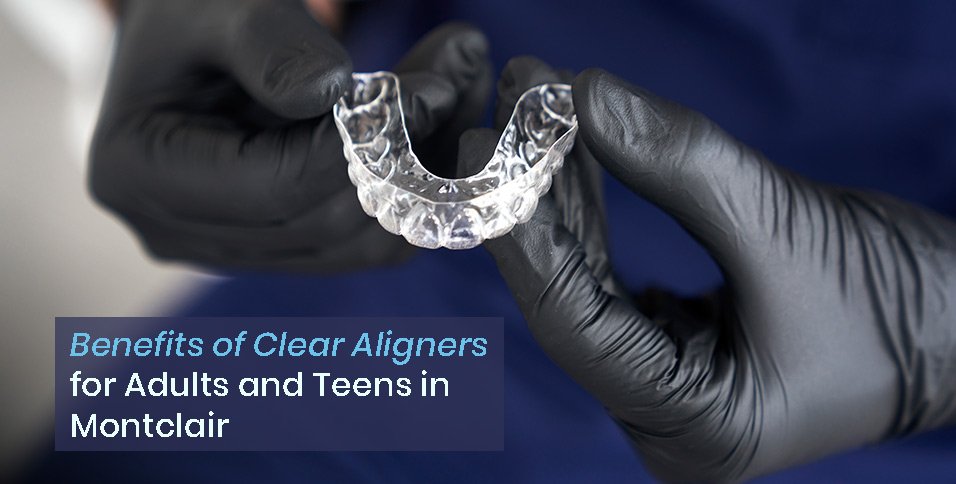
The Invisalign process begins with comprehensive digital imaging that creates a precise 3D model of your current tooth positions. Montclair orthodontists use iTero scanners or similar technology to capture detailed impressions without the uncomfortable putty molds that traditional orthodontics required. This digital approach allows for immediate visualization of your teeth and enables providers to identify specific movement patterns needed for optimal results.
During the treatment planning phase, your provider uses specialized software to map out the exact sequence of tooth movements over the entire treatment timeline. This creates a customized series of aligners — typically ranging from 15 to 50 sets depending on complexity — with each aligner designed to move specific teeth by precise amounts. Patients can often view a simulation showing how their smile will change throughout treatment, providing clear expectations about both the process and final results.
The customization extends beyond just tooth movement. Montclair providers consider factors like your jaw relationship, bite patterns, and even lifestyle considerations when designing your treatment plan. Some cases may require attachments — small, tooth-colored bumps bonded to certain teeth — to help aligners grip more effectively for complex rotations or movements.
Aligner Use and Replacement Schedule
Each set of aligners is worn for approximately one to two weeks, depending on your specific treatment plan and how your teeth respond to movement. The key to success lies in consistent wear — aligners must be in place 20 to 22 hours daily, removed only for eating, drinking anything other than water, and oral hygiene routines.
Most patients switch to new aligners at home following their provider’s schedule, though some cases require more frequent monitoring. Montclair orthodontists typically schedule progress check-ups every 6 to 10 weeks to ensure treatment is progressing as planned and make any necessary adjustments. These appointments are generally shorter and less involved than traditional braces adjustments.
The replacement schedule creates a predictable rhythm that most patients find easy to incorporate into their routines. Many providers recommend switching to new aligners in the evening, as any initial tightness or pressure typically subsides overnight, minimizing daytime discomfort.
Best Practices to Ensure Successful Invisalign Treatment
Successful clear aligner treatment depends heavily on patient compliance and proper care routines that go beyond simply wearing the aligners as prescribed. The most critical factor is maintaining the 20-22 hour daily wear schedule — even reducing wear time to 18 hours can significantly slow progress and extend treatment duration.
Oral hygiene becomes more important, not less, during aligner treatment. Because aligners cover your teeth completely, any food particles or bacteria trapped underneath can lead to increased cavity risk or gum inflammation. Patients should brush and floss after every meal before reinserting aligners, and many find that carrying a travel toothbrush makes this routine more manageable when away from home.
Aligner cleaning itself requires consistent attention. Rinse aligners with lukewarm water each time you remove them, and clean them thoroughly at least twice daily with a soft toothbrush and clear, antibacterial soap. Avoid hot water, which can warp the plastic, and colored or scented soaps that might stain or leave residues. Some patients prefer specialized aligner cleaning tablets, though these aren’t strictly necessary with proper daily care.
Eating and drinking habits need minor adjustments but nothing as restrictive as traditional braces require. Remove aligners before consuming anything except plain water — even clear beverages like sparkling water can contain acids that get trapped against teeth. When possible, plan meals and snacks to minimize the frequency of aligner removal, as constant in-and-out handling increases the risk of damage or loss.
Perhaps most importantly, communicate regularly with your Montclair provider about any concerns or changes you notice. Aligners that suddenly feel very loose, persistent pain beyond normal adjustment discomfort, or damaged aligners all require prompt professional attention to keep treatment on track. Many providers offer emergency contact options for urgent situations that arise between scheduled appointments.
What Side Effects Are Common and How to Manage Them
Most patients experience some degree of discomfort when starting treatment or switching to new aligners, though this differs significantly from the ongoing soreness associated with traditional braces. The pressure sensation typically occurs during the first few days with each new aligner set as teeth begin to move into new positions. This discomfort generally subsides as teeth adjust and rarely requires more than over-the-counter pain relief if needed.
Speech changes represent another common initial side effect. Many patients notice a slight lisp or different tongue positioning when first wearing aligners, as the plastic adds a thin layer over teeth that affects how the tongue contacts them during speech. According to research published in the American Journal of Orthodontics, these speech adjustments typically resolve within one to two weeks as patients adapt to speaking with aligners in place.
Some patients develop increased saliva production during the first few days of treatment, as the mouth perceives aligners as a foreign object. This response usually normalizes quickly, though staying hydrated and using sugar-free gum between meals (when aligners are out) can help manage any persistent issues.
Gum irritation occasionally occurs, particularly around the edges of aligners where they contact gum tissue. This typically indicates either poor aligner fit — which requires professional adjustment — or inadequate oral hygiene allowing bacteria buildup. Ensuring aligners are properly seated and maintaining excellent cleaning routines usually resolves minor irritation within a few days.
One of the most important considerations involves managing expectations around eating and social situations. Many patients initially find the routine of removing aligners, eating, cleaning teeth, and reinserting aligners cumbersome, particularly in professional or social settings. However, research shows that those who develop efficient routines within the first month report significantly higher satisfaction with treatment. When considering professional orthodontic care, many Montclair residents find that an advanced clear aligner solution provides the expertise needed to navigate these challenges effectively and ensure optimal treatment outcomes.
How Does Invisalign Compare to Traditional Braces and Other Aligners
The aesthetic advantage of clear aligners over traditional metal braces is obvious, but the practical differences extend far beyond appearance. Traditional braces excel in treating complex cases involving significant rotations, vertical movements, or severe bite issues — movements that require the constant force that fixed appliances provide. However, for the mild to moderate spacing, crowding, and alignment issues that represent the majority of adult and teen orthodontic needs, clear aligners often achieve comparable results with significantly less lifestyle disruption.
Comfort levels differ substantially between the two approaches. While both cause discomfort as teeth move, traditional braces create ongoing irritation from brackets and wires against cheek and lip tissues, plus the periodic intense soreness following adjustment appointments. Clear aligners produce pressure sensations when switching to new sets, but the smooth plastic surfaces don’t cause the tissue irritation that makes traditional braces uncomfortable for many patients.
Treatment duration varies considerably based on case complexity, but clear aligners often complete treatment in 12 to 18 months for typical cases, compared to 18 to 24 months for traditional braces addressing similar issues. This efficiency stems partly from the precise digital planning that maps out optimal tooth movements from the beginning, rather than making adjustments reactively at monthly appointments.
When comparing Invisalign to other clear aligner brands, several factors distinguish the options. Invisalign’s extensive research database — built from over 8 million patient cases — allows for more predictable treatment planning, particularly for complex movements. The SmartTrack material used in Invisalign aligners provides more consistent force delivery and better retention compared to some generic alternatives. However, other brands like ClearCorrect or SureSmile offer similar technology at potentially lower costs, though often with less comprehensive treatment planning software.
The key consideration for most patients isn’t whether clear aligners work — extensive research confirms their effectiveness for appropriate cases — but rather whether their lifestyle and commitment level align with the requirements for successful treatment. Those who can maintain consistent wear schedules and proper care routines typically achieve excellent results regardless of the specific brand chosen.
Looking ahead, the integration of artificial intelligence and improved materials science continues to enhance clear aligner precision and comfort. For patients weighing their options in 2025, the decision often comes down to finding a qualified provider who can accurately assess case complexity and match treatment approach to individual needs and lifestyle factors.