According to the American Association of Orthodontists, approximately 4.6 million Americans are currently undergoing orthodontic treatment — and for the first time in decades, adults represent nearly half of all patients seeking teeth straightening solutions. This surge reflects not just growing awareness of oral health’s impact on overall wellness, but also the expansion of treatment options that fit diverse lifestyles and aesthetic preferences.
The choice between traditional braces and clear aligners has become more nuanced as both technologies have advanced significantly. What once seemed like a simple trade-off between effectiveness and appearance now involves complex considerations around treatment mechanics, lifestyle demands, and long-term outcomes. For anyone facing this decision — whether as an adult professional concerned about appearance or a parent weighing options for their teenager — understanding how these treatments actually work and where each excels can prevent costly mistakes and ensure the best possible results.
The stakes extend beyond just straight teeth. Poor orthodontic choices can lead to extended treatment times, unexpected complications, or results that don’t address underlying bite issues. Here’s what you need to know about how these two approaches differ fundamentally, which cases each handles best, and what living with each treatment actually entails.
How Do Braces and Clear Aligners Move Teeth Differently?
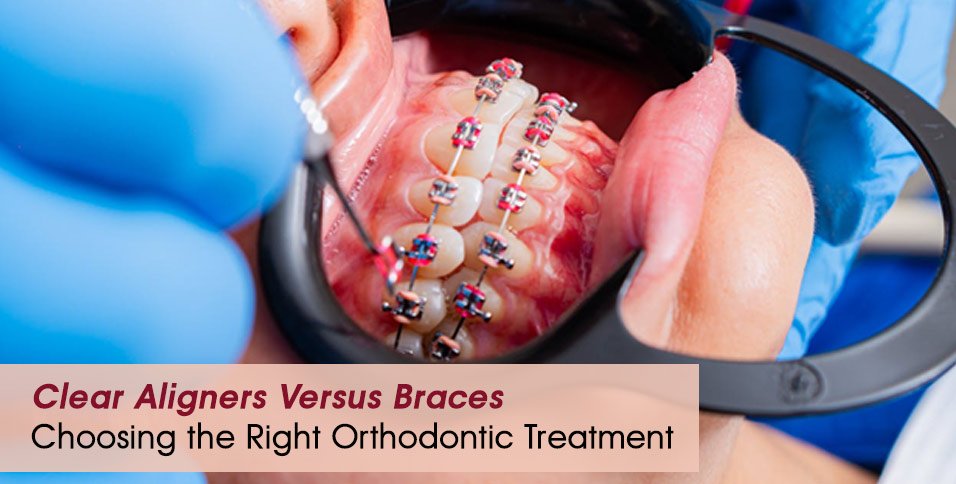
The fundamental difference between braces and clear aligners lies in how they apply force to move teeth through the jawbone. Traditional braces use a continuous pressure system — metal or ceramic brackets bonded to each tooth connect via an archwire that maintains constant, gentle force 24 hours a day. As teeth gradually shift, orthodontists adjust the wire tension during regular visits, progressively guiding teeth toward their target positions.
Clear aligners work through controlled, incremental movements. Each aligner applies pressure to specific teeth for predetermined movements, typically worn for one to two weeks before switching to the next in the series. The plastic material flexes against teeth, creating targeted pressure points that encourage movement in carefully planned directions. Unlike braces, which can simultaneously address multiple types of movement, aligners excel at specific motions like rotation and simple translations.
This mechanical difference has practical implications. Braces can handle complex three-dimensional movements more effectively because the wire-and-bracket system allows orthodontists to apply torque, angulation, and rotational forces simultaneously. The continuous pressure also means teeth are constantly receiving movement signals, which can accelerate treatment for severe cases.
Aligners rely on patient compliance to maintain consistent pressure — they only work when worn, typically 20-22 hours daily. However, the removable design allows for more precise control over individual tooth movements, as each aligner represents a specific step in a digitally planned sequence. This precision makes aligners particularly effective for cases requiring controlled, gradual adjustments without the need for complex wire bending or bracket repositioning.
Understanding these mechanical differences helps explain why certain cases favor one treatment over another, and why treatment timelines can vary significantly between the two approaches.
How Effective Are Braces Compared to Clear Aligners for Different Cases?
Treatment effectiveness depends heavily on the complexity and type of orthodontic issues being addressed. For mild to moderate crowding, spacing, and simple bite corrections, both braces and aligners demonstrate comparable success rates in clinical studies. The American Journal of Orthodontics found similar outcome quality between the two treatments when case selection was appropriate.
However, significant differences emerge with complex cases. Severe crowding, significant bite discrepancies, and cases requiring tooth extraction typically favor traditional braces. The continuous force application and ability to use additional appliances like elastics, springs, or headgear give orthodontists more tools for complicated movements. Braces excel when teeth need to be rotated significantly, moved vertically (intrusion or extrusion), or when precise root positioning is critical.
Clear aligners have evolved to handle moderate complexity better than early versions, but limitations remain. Severe rotations, particularly of rounded teeth like canines, present ongoing challenges for aligner treatment. The smooth plastic surface struggles to grip round tooth surfaces effectively, often requiring additional attachments or prolonged treatment times. Similarly, significant bite corrections often exceed what aligners can accomplish alone.
Patient age also influences effectiveness. Teenagers with braces benefit from active jaw growth, which can help correct bite relationships naturally during treatment. Adult patients often see more predictable results with aligners for mild-to-moderate cases, as their treatment goals typically focus on alignment rather than bite correction.
Orthodontists increasingly recommend a case-specific approach rather than patient preference alone. Complex cases that might take 18-24 months with braces could extend to 36 months or more with aligners — and some movements may simply prove impossible without traditional appliances. The key lies in honest assessment of what each treatment can realistically achieve for the specific orthodontic issues present.
What Lifestyle and Comfort Differences Should You Expect?
The daily experience of orthodontic treatment varies dramatically between braces and aligners, affecting everything from professional interactions to meal planning. These practical differences often matter more to patients than theoretical treatment capabilities, particularly for adults in customer-facing careers or teenagers navigating social pressures.
Speech adaptation represents one of the most immediate concerns. Traditional braces typically cause minor speech changes initially, particularly with sounds like “s” and “th,” but most patients adapt within two to three weeks. Clear aligners can create a slight lisp that persists throughout treatment, as the plastic covers the tooth surfaces and slightly alters tongue placement. However, the speech impact with modern, thin aligners is generally less noticeable than with earlier, thicker versions.
How Does Care and Maintenance Differ Between Braces and Aligners?
Oral hygiene with braces demands significant technique modification. Brushing requires angled approaches to clean around brackets, and flossing becomes a multi-step process involving threaders or special floss. Food particles easily trap in the hardware, making thorough cleaning after every meal essential. Patients typically need water flossers, interdental brushes, and extra time for effective cleaning routines.
The bracket-and-wire system also restricts food choices. Sticky candies, hard foods, and anything that might bend wires or pop off brackets becomes off-limits. Even seemingly harmless foods like corn on the cob or whole apples require careful cutting into smaller pieces. The constant food restrictions can feel particularly challenging during social eating situations.
Clear aligners simplify oral hygiene dramatically — patients remove them for brushing and flossing normally. However, aligners themselves require maintenance. They need cleaning twice daily to prevent bacterial buildup and staining, typically with special cleaning solutions or mild soap. The plastic can discolor from coffee, tea, or colored beverages, requiring mindful drinking habits or frequent rinsing. For those considering clear aligner treatment in Renton, understanding these maintenance requirements helps set realistic expectations for the daily routine.
What Are the Comfort Levels and Daily Life Impacts?
Initial discomfort patterns differ significantly between treatments. Braces create soreness primarily after placement and adjustment appointments, typically lasting 3-5 days. The discomfort feels dull and constant, often managed with over-the-counter pain relievers and soft foods. Broken brackets or protruding wires can cause sudden sharp pain requiring immediate orthodontic attention.
Clear aligners produce discomfort with each new aligner set, usually for the first 2-3 days as teeth respond to new pressure patterns. The pain feels more targeted to specific teeth being moved in that stage. While generally milder than brace adjustments, the frequency — every 1-2 weeks — means patients experience discomfort more regularly throughout treatment.
The removable nature of aligners creates both advantages and compliance challenges. Patients can remove aligners for important presentations, special meals, or photos, but must maintain 20-22 hours of daily wear for effective treatment. This responsibility can feel overwhelming for some patients, particularly teenagers who may struggle with consistent compliance. Braces eliminate the compliance variable entirely — they work continuously regardless of patient cooperation.
How Do Cost and Treatment Duration Compare?
Financial investment in orthodontic treatment varies significantly based on case complexity, geographic location, and provider experience, but general patterns exist between treatment types. Traditional metal braces typically cost between $3,000-$7,000, while clear aligners range from $3,500-$8,000 for comprehensive treatment. The higher cost ceiling for aligners reflects the digital planning technology and custom manufacturing involved in creating each aligner series.
Insurance coverage often favors traditional braces, as many dental plans still classify aligners as cosmetic rather than necessary treatment. However, this distinction is evolving as more insurers recognize aligners’ therapeutic value for appropriate cases. Flexible spending accounts and health savings accounts typically cover both treatment types equally.
Treatment duration shows more significant variation. Braces typically complete treatment in 18-36 months for most cases, with complex situations occasionally extending longer. The continuous pressure and orthodontist’s ability to make real-time adjustments during visits often keep treatment on schedule. Clear aligners frequently require 12-24 months for mild-to-moderate cases, but complex cases can extend significantly if multiple refinement rounds become necessary.
The refinement factor represents a hidden cost consideration with aligners. Initial treatment plans may not achieve perfect results, requiring additional aligner sets to fine-tune positions. While many providers include the first round of refinements, extensive revisions can add months to treatment time and potentially additional costs. Braces allow for real-time adjustments without manufacturing delays, potentially completing complex cases more efficiently despite slower individual tooth movement.
Treatment interruptions also affect timelines differently. Broken brackets or bent wires require immediate attention but usually involve quick repairs. Lost or damaged aligners can halt progress for days or weeks while replacements are manufactured, particularly problematic when traveling or during holidays when orthodontic offices may be closed.
What Are the Common Risks and Common Issues with Braces and Clear Aligners?
Both treatment options carry specific risks that patients should understand before beginning orthodontic care. Traditional braces pose primarily mechanical and hygiene-related challenges. Bracket breakage occurs in roughly 10-15% of patients during treatment, often from eating restricted foods or sports activities. Emergency orthodontic visits for repairs can be painful and inconvenient, particularly when sharp wires irritate soft tissues.
Poor oral hygiene with braces can lead to white spot lesions — permanent chalky marks around bracket areas where acid from trapped bacteria has begun demineralizing tooth enamel. These cosmetic imperfections persist long after braces removal and may require additional dental treatment to address. Root resorption, where tooth roots slightly shorten during movement, can occur with any orthodontic treatment but may be more pronounced with the continuous pressure of braces.
Clear aligners carry different risk profiles. Non-compliance represents the primary failure mode — patients who don’t wear aligners consistently often see minimal progress or regression of tooth positions. Unlike braces, which work regardless of patient behavior, aligners depend entirely on consistent wear. Some patients develop temporomandibular joint issues from the slight bite changes that occur when aligners are in place, though this typically resolves after treatment completion.
Attachment-related complications can also arise with aligners. The small tooth-colored bumps bonded to teeth to improve aligner grip can chip or detach, requiring repair visits. More significantly, some patients experience difficulty removing aligners, particularly when attachments are numerous or positioned in hard-to-reach areas. This can lead to damaged aligners or, in rare cases, soft tissue injury from excessive force during removal.
Both treatments can result in relapse if retention protocols aren’t followed properly after active treatment ends. However, patients who’ve grown accustomed to removable aligners often adapt more easily to removable retainers, while those with braces may need time to develop new oral hygiene habits around their retention appliances. The key insight for anyone considering orthodontic treatment isn’t avoiding risks entirely, but choosing the approach whose potential complications align best with their lifestyle, oral hygiene capabilities, and long-term maintenance preferences.