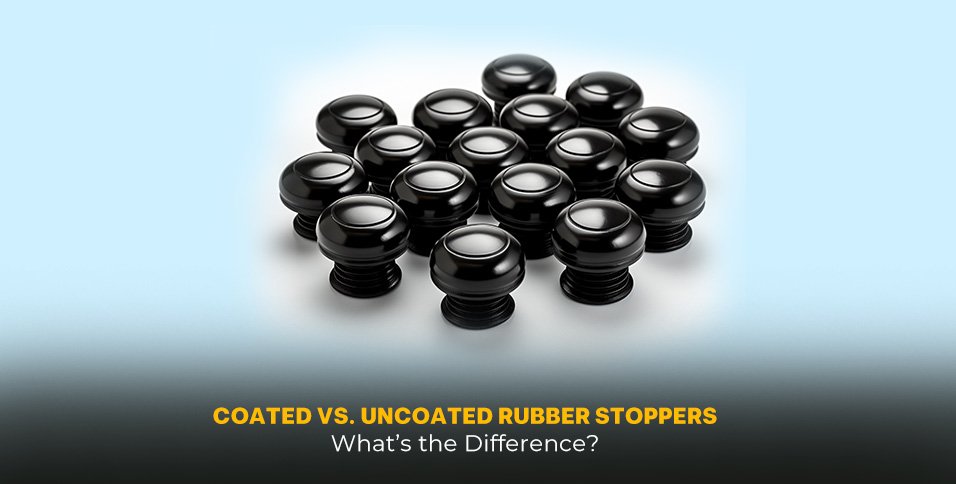
Rubber stoppers play a critical role in pharmaceutical, biotechnology, and laboratory applications. Designed to create a secure seal for containers, they help maintain product integrity, prevent contamination, and preserve the contents of vials throughout storage and transportation. However, not all rubber stoppers are the same. One of the most important distinctions is whether a stopper is coated or uncoated.
Understanding the differences between coated and uncoated rubber stoppers can help manufacturers, laboratories, and healthcare providers select the most appropriate option for their specific needs. This article explores the characteristics, benefits, and applications of both types of stoppers.
What Are Rubber Stoppers?
Rubber stoppers are closures made from elastomeric materials such as butyl rubber, chlorobutyl rubber, bromobutyl rubber, or silicone rubber. They are commonly used in pharmaceutical packaging to seal vials containing injectable medications, vaccines, diagnostic reagents, and other sensitive products.
A rubber stopper for vials must provide an effective barrier against moisture, oxygen, microorganisms, and other external contaminants. At the same time, it must be compatible with the contents of the vial and withstand punctures from hypodermic needles when required.
What Are Uncoated Rubber Stoppers?
Uncoated rubber stoppers are closures that consist solely of the base rubber material without any additional surface treatment. They are widely used across various industries and are often chosen for applications where direct contact between the product and the rubber material does not present significant challenges.
Advantages of Uncoated Rubber Stoppers
Cost-Effective
Uncoated stoppers are generally less expensive to manufacture because they do not require additional processing or coating materials. This makes them an economical choice for many applications.
Reliable Sealing Performance
High-quality rubber formulations provide excellent sealing capabilities, helping to protect products from contamination and environmental exposure.
Versatile Applications
Uncoated stoppers can be used in pharmaceutical, laboratory, and industrial settings where compatibility concerns are minimal.
Potential Drawbacks
Despite their benefits, uncoated rubber stoppers may have certain limitations. The rubber surface can generate higher levels of friction during insertion and removal processes. Additionally, there is a greater possibility of interaction between the rubber and the vial contents, particularly with highly sensitive formulations.
In some cases, extractables and leachables from the rubber material may migrate into the product, which can be a concern for pharmaceutical manufacturers seeking the highest levels of purity.
What Are Coated Rubber Stoppers?
Coated rubber stoppers feature a thin layer of material applied to the surface of the rubber closure. Common coating materials include fluoropolymer films, silicone coatings, and other specialized barrier technologies.
The purpose of the coating is to enhance the performance of the stopper by creating a protective interface between the rubber substrate and the product contained within the vial.
Advantages of Coated Rubber Stoppers
Improved Chemical Resistance
One of the primary benefits of coated stoppers is their ability to reduce interactions between the rubber and the product. This is especially important for sensitive biologics, vaccines, and injectable drugs.
Lower Extractables and Leachables
The coating acts as a barrier that minimizes the migration of compounds from the rubber into the vial contents. This helps maintain product purity and stability over time.
Reduced Friction
Coated surfaces often provide smoother insertion and removal during manufacturing processes. Lower friction can improve production efficiency and reduce the risk of stopper damage.
Enhanced Product Compatibility
Certain drug formulations are highly sensitive to contamination or chemical interaction. Coated stoppers offer an additional layer of protection that can help preserve product quality.
Potential Drawbacks
The main disadvantage of coated rubber stoppers is their higher cost. The coating process adds complexity to manufacturing, which can increase overall expenses. Additionally, manufacturers must ensure that the coating remains intact and performs consistently throughout the product’s lifecycle.
Key Differences Between Coated and Uncoated Rubber Stoppers
Several factors distinguish coated and uncoated stoppers:
Surface Properties
Uncoated stoppers expose the base rubber material directly, while coated stoppers have a protective layer designed to improve performance.
Chemical Compatibility
Coated stoppers generally offer superior resistance to chemical interactions, making them suitable for sensitive pharmaceutical products.
Extractables and Leachables
The barrier coating on coated stoppers helps reduce the risk of unwanted compounds migrating into the vial contents.
Manufacturing Performance
Coated stoppers often provide smoother processing due to lower friction characteristics.
Cost
Uncoated stoppers are typically more affordable, whereas coated stoppers involve additional manufacturing costs.
Which Option Is Right for Your Application?
The choice between coated and uncoated rubber stoppers depends on several factors, including product sensitivity, regulatory requirements, budget considerations, and manufacturing processes.
For standard laboratory or industrial applications, uncoated stoppers may provide an effective and economical solution. However, pharmaceutical companies developing high-value biologics, vaccines, or injectable medications often prefer coated stoppers because of their enhanced compatibility and reduced contamination risks.
Evaluating the specific requirements of the product and conducting compatibility testing can help determine the most suitable closure system.
In short
Both coated and uncoated rubber stoppers serve an essential role in protecting products stored in vials. While uncoated stoppers offer cost-effectiveness and reliable sealing performance, coated stoppers provide additional benefits such as improved chemical resistance, lower extractables and leachables, and enhanced compatibility with sensitive formulations.
By understanding the differences between these two closure types, manufacturers can make informed decisions that support product safety, quality, and long-term stability.