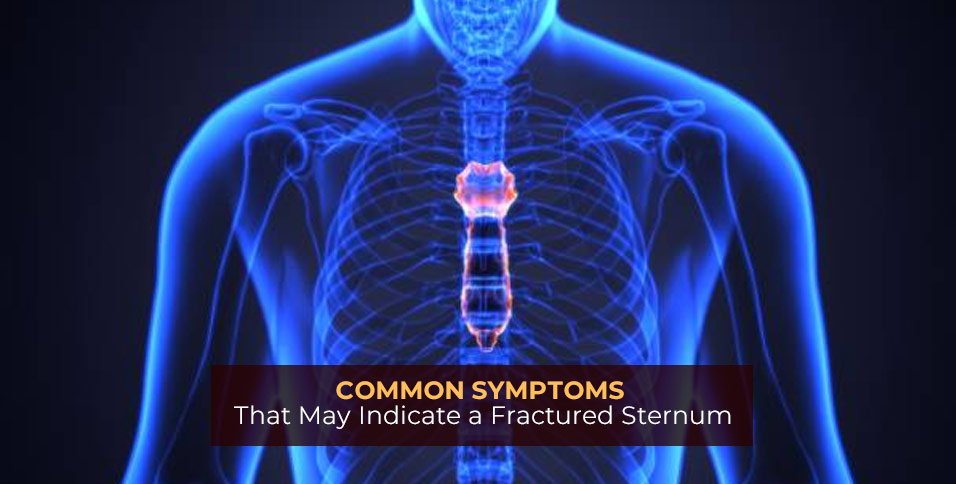
The breast bone (sternum) is a flat bone in the middle of the chest that can become fractured. Usually occurs following a direct impact from a forceful blow, particularly from a motor vehicle accident, a fall, or from sporting activities. The sternum is important in protecting the heart and lungs, and a fracture should never be overlooked.
People may ask after a knock to the chest if it is serious or if it’s just a bruise. Some people may ask you, “Can a broken sternum kill you?” because the possibility of complications from a severe injury to the chest exists, involving organs or blood vessels close to the sternum.
While most sternal fractures will heal with good care, knowing the signs of trouble early on can help you know if there might be more issues to deal with and help you receive timely medical attention.
What Are the Most Common Symptoms of a Fractured Sternum?
Symptoms of a fractured sternum can range from mild to severe, depending on the severity of the injury. Some signs of the conditions are common, though.
Common symptoms include:
- Ruddy, sharp pain in the middle of the chest
- The pain is increased by breathing deeply
- Tenderness of the sternum (bony breast bone)
- Edema or swelling around the injured area
- Bruising on the chest (front)
- Shortness of breath, difficulty breathing
- Screaking or grinding feeling while on the move
Why Does Breathing Become Painful?
Breathing pain is one of the most obvious symptoms of a broken sternum.
The chest wall is expanding and contracting with each breath. These movements add stress to the broken bone if the sternum has been broken.
Consequently, the act of laughing, coughing, or sneezing may be very uncomfortable. If breathing problems occur, it could be a more severe injury to the lungs or other body tissues that may need urgent medical attention.
What Causes a Fractured Sternum?
Typically, fractured sternums are caused by a direct blow to the chest.
Common causes include:
- Motor vehicle accidents
- Accidents involving a fall from a height. A fall from height
- Contact sports injuries
- Occupational incidents with high blows to the body
- Physical assaults
With over 44,000 deaths reported in U.S. motor vehicle crashes in 2023, the Centers for Disease Control and Prevention has highlighted the severity of injuries gotten in motor vehicle crashes.
When to Get Emergency Medical Care?
The symptoms indicate that the injury might be more serious than a fracture.
Call the emergency services if you have any of the following symptoms:
- Highly strung, severe difficulty breathing
- Chest pain that quickly intensifies
- Dizziness or fainting
- Irregular heartbeat
- Bluish lips or skin
- Signs of internal bleeding
Steps to Take After a Chest Injury
1. Seek medical evaluation
If there has been a major trauma to the chest, seek medical attention from an ED or health professional.
2. Obtain imaging tests
Order recommended X-rays or CT to ensure the diagnosis and to find associated injuries.
3. Follow activity restrictions
Don’t lift heavy objects, overexert, or do activities that make your chest hurt more.
4. Monitor breathing symptoms
Look for the onset of worsening shortness of breath, persistent cough, or increasing discomfort.
5. Attend follow-up appointments
Regular medical review to monitor the fracture’s recovery and prevent any complications.
Key Takeaways
- A sternum fracture is the breakage of the breastbone, which typically results from substantial trauma to the chest.
- Chest pain is the most common symptom.
- Deep breathing, coughing, or movement may make the pain worse.
- The swelling, bruising, and tenderness about the injury are common.
- A significant percentage of sternal fractures is due to motor vehicle accidents.
- If it is hard to breathe, then it could be a more serious injury that needs urgent help.
- Early diagnosis and treatment lead to better recovery.