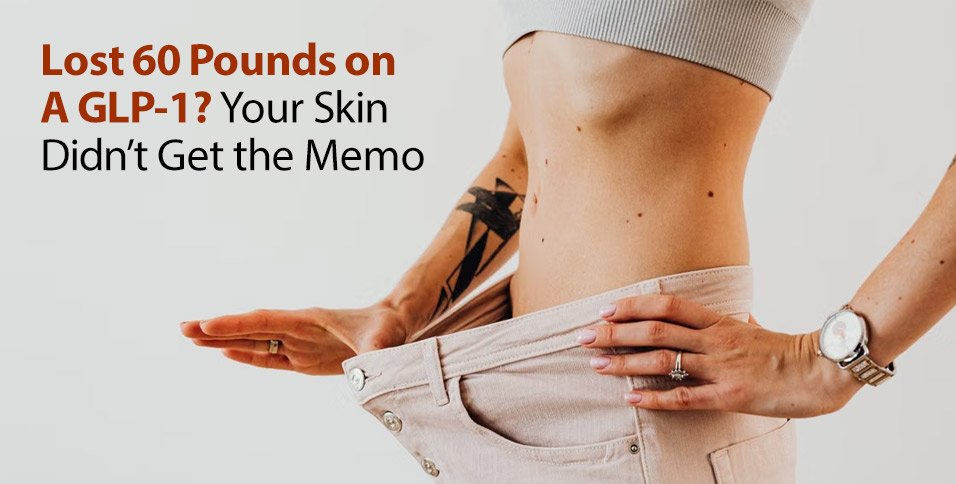
You worked hard, watched the number drop, and may have finally reached a weight you had been chasing for years. Then you caught your reflection and noticed something unexpected: your skin did not shrink along with you. Loose skin after major GLP-1-assisted weight loss can feel like an awkward footnote to an otherwise huge transformation. It is common, it is understandable, and it has a lot more to do with skin elasticity than personal failure.
Start Here: The Scale Moved. Your Skin Didn’t.
Sixty pounds gone. Your jeans are looser, your reflection looks different, and the number on the scale finally tells a story you are proud of.
Then comes the plot twist: loose skin.
Your stomach may look softer. Your arms may swing a little more. Your face may seem less full than it once did. After major weight loss, it can feel strange to celebrate a huge physical change while wondering why your skin did not change along with it.
That disconnect is common. GLP-1 medications can help people lose significant amounts of weight, yet skin has its own timeline. Sometimes, it simply needs longer to catch up.
When Skin Falls Behind
Think of skin as a flexible covering that has spent months or years stretching around your body. When your body gets smaller, that covering does not always snap neatly back into place.
Skin elasticity varies from person to person. Age, genetics, sun exposure, smoking, pregnancy history, and the amount of weight lost can all affect how much it recoils.
A 60-pound loss is enough to make these changes noticeable for some people. That does not mean GLP-1 medication ruined your skin. More often, the issue is simple: underlying fat has decreased, while stretched skin has not fully adjusted to the new shape.
When Extra Skin Becomes More Than a Mirror Issue
Loose skin is not always just about appearance.
A fold around the abdomen, thighs, arms, or breasts may rub against clothing or neighboring skin. Moisture can collect in folds, leading to irritation or recurring rashes. Some people find certain workouts, clothing, or everyday movement less comfortable.
That is where a conversation with a qualified plastic surgeon may help. A specialist can look at how much excess skin remains, where it is located, whether your weight has stabilized, and what concerns you want addressed.
For people exploring post-weight-loss body contouring, Ohio Plastic Surgery Specialists can be part of that conversation.
Your Face May Be Telling a Similar Story
Your face can change dramatically after substantial weight loss, too.
Fat gives cheeks, temples, and areas around the eyes some of their natural fullness. Lose that volume quickly and lines, hollows, or looser skin may suddenly stand out more.
You may have heard this called Ozempic face. The nickname gets attention, yet the basic phenomenon is not exclusive to one medication. Similar facial changes can happen after significant weight loss from different causes.
Depending on what bothers you, a dermatologist or plastic surgeon may discuss skincare, energy-based treatments, fillers, or fat transfer. The right option depends on your facial structure and the specific change you are seeing.
Creams Have Limits
This is where skincare marketing can get a little carried away.
A good moisturizer can make dry skin feel smoother. Daily sunscreen helps protect collagen from ultraviolet damage. Adequate protein and overall nutrition support your body while it adjusts to weight loss.
None of those things can magically erase a large fold of extra skin.
Resistance training can build muscle beneath loose areas and improve your overall shape. It may make the body look firmer, yet it cannot remove significant excess skin. Knowing that difference can save you from chasing products that promise more than they can deliver.
Body Contouring Is Not One-Size-Fits-All
Post-weight-loss body contouring comes in several forms.
A tummy tuck may address loose abdominal skin. An arm lift can remove excess tissue around the upper arms. A thigh lift may address sagging along the inner or outer thighs. A breast lift can reshape and reposition breast tissue after volume loss. A lower body lift may address more extensive changes around the abdomen, hips, back, and buttocks.
That does not mean everyone who loses 60 pounds needs surgery. Far from it.
For some people, loose skin is minor. For others, it becomes a persistent source of discomfort or frustration. Surgery is an elective decision, and an evaluation can help determine whether it makes sense for your particular situation.
Timing Can Change the Conversation
One of the biggest questions is not simply, Do I have loose skin? It is Has my body finished changing?
If you are still losing weight, your shape may continue to shift. Surgeons commonly recommend reaching a stable weight before body-contouring procedures because additional weight changes can affect surgical results.
Nutrition matters here, too. Major weight loss can affect nutrient intake, and good nutrition supports healing. If surgery is on your radar, discuss your diet, medications, supplements, and weight-loss timeline with your healthcare team.
Never stop or change a prescribed GLP-1 medication simply because you are unhappy with a skin change. Talk with the clinician managing your treatment first.
Know When Skin Needs More Than Patience
Most loose skin is not an emergency. Still, recurring redness, painful irritation, open sores, unusual drainage, or persistent rashes deserve medical attention.
Skin folds can trap heat and moisture while friction keeps irritating the area. That combination can create problems that need more than another moisturizer.
Sudden swelling, severe pain, or a new persistent rash is another reason to contact a healthcare professional rather than assuming the GLP-1 is responsible.
Not every skin change after weight loss comes from the medication. Sometimes, something else is going on.
Give Your New Shape a Minute
Losing 60 pounds is a major transformation. It is perfectly possible to feel thrilled about your progress and still feel frustrated by what the mirror shows.
Those feelings do not cancel each other out.
Give your body time to settle. Keep your skincare routine realistic. Stay focused on nutrition and healthy movement. If loose skin affects comfort, activity, clothing, or confidence, a professional consultation can help you understand what options exist.
Your skin did not get the memo when the scale changed. That does not mean something went wrong.
Sometimes, your body simply needs a little more time to catch up with the number on the scale.
Q&A (Questions and Answers)
1. Will loose skin tighten on its own after GLP-1 weight loss?
Some skin may gradually retract after weight loss, particularly when the amount of looseness is mild. Larger amounts of stretched skin may remain. Age, genetics, skin quality, and the amount of weight lost all influence how much tightening occurs naturally.
2. Can exercise get rid of loose skin?
Exercise can build muscle underneath loose areas and improve overall body shape. It cannot remove large amounts of excess skin. If significant skin remains after weight stabilizes, a consultation can explain available options.
3. Should I stop taking my GLP-1 because of loose skin?
No medication change should be made without speaking with your prescribing clinician. Loose skin alone is not a reason to stop a prescribed medication. Your healthcare team can discuss your weight-loss pace, nutrition, skin changes, and treatment goals.
4. When should I consider a plastic surgery consultation?
A consultation may be useful once your weight has stabilized and loose skin continues to bother you. This is particularly relevant if excess skin causes rubbing, rashes, difficulty with clothing, activity limitations, or ongoing concerns about body contour.