For most of the last two decades, healthcare organizations answered the technology question the same way: buy the platform, then fit the workflow around it. EHRs, billing systems and patient portals came off the shelf, and IT teams spent their time configuring rather than building.
That default is under pressure. AI tools are arriving faster than vendors can bundle them, federal interoperability rules now set hard deadlines for data exchange, and patients expect the same digital experience from their health system that they get from their bank.
The result is that healthcare leaders are once again asking a question many thoughts was settled: what should we buy, what should we build, and where do we need a partner? The answer is rarely all one or the other. The organizations getting it right treat it as a decision made system by system, not once for the whole enterprise.
Why buying everything no longer works
Off-the-shelf systems are built for the average organization. That works well for standardized functions, but healthcare is full of workflows that are anything but standard. A multi-specialty group, a rural hospital network and a behavioral health provider can all run the same EHR and still need very different things from it.
Three pressures are widening that gap:
- Interoperability deadlines. The CMS Interoperability and Prior Authorization Final Rule require impacted payers to stand up FHIR-based APIs, with most of those requirements starting in January 2027. Providers on the other side of those exchanges need systems that can consume the data, not just store it.
- AI that has to fit the workflow. An AI model that flags a risk or drafts a note only helps if it appears in the right screen at the right moment. Vendors add AI features on their own roadmap, which is rarely the organization’s roadmap.
- Rising patient expectations. Patients now judge a health system partly on how easy it is to book, pay, message a clinician or see results. A generic portal often cannot deliver the experience a specific patient population needs.
None of this means buying is wrong. It means buying is no longer the whole strategy.
Core systems: buy the platform, build around it
For systems of record like the EHR, billing and scheduling, buying is still the right call for almost every organization. These platforms carry years of regulatory work, certification and clinical content that no single health system should try to recreate.
The opportunity for custom work sits around those platforms, not inside them. Common examples include:
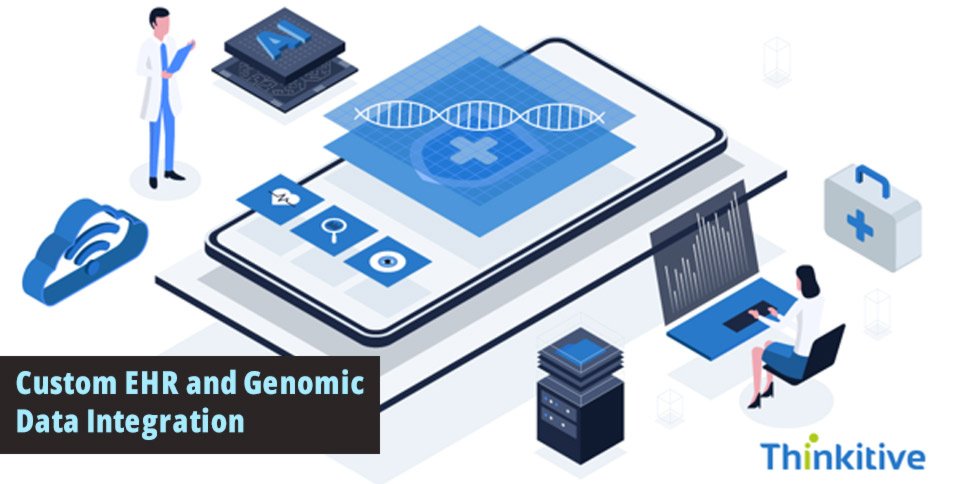
- Integration layers that connect the EHR to labs, imaging, pharmacy, payers and third-party apps through HL7 and FHIR interfaces.
- Data platforms that pull clinical, financial and operational data into one place for analytics, population health and AI models.
- Workflow tools for processes unique to the organization, such as referral management across a regional network or a specialty-specific intake process.
These are the areas where off-the-shelf products tend to fall short, because they depend on the organization’s exact mix of systems. For workflows no vendor product covers, many organizations bring in a healthcare software development company to build the integration and data layer around their EHR, while keeping the core platform untouched.
The test for building is simple: does this capability set us apart, or depend on our specific systems? If yes, custom work is worth considering. If it is a commodity function, buy it.
Patient-facing apps: where the decision matters most
Patient apps are where build, buy or partner decisions show up most clearly in outcomes. A scheduling app nobody uses, a remote monitoring program with low enrollment, or a portal patients abandon after one login all cost money and trust.
The bundled portal that comes with an EHR covers the basics well: results, messages, bill pay. It struggles when an organization needs something specific, such as:
- Remote patient monitoring for a chronic condition program, with device data flowing to the care team.
- A digital front door that handles symptom intake, triage and booking across multiple locations.
- Apps built for a particular population, such as older adults, pediatric families or patients who prefer a language other than English.
These products live or die on adoption, and adoption depends on design, performance and trust. Because patient apps live or die on usability and HIPAA-grade security, leaders tend to look for a healthcare app development partner with clinical product experience, not just a general mobile team.
The partner model also helps with a problem many health systems underestimates: an app is never finished. Operating systems update, regulations change and patient feedback piles up. Planning for ongoing releases from the start avoids a launch that slowly decays.
How to evaluate a technology partner
When the answer is to partner, the choice of partner matters more than the choice of technology. Healthcare leaders who have been through several of these projects tend to ask five questions:
- Have they worked in healthcare before? Ask for examples involving protected health information, clinical workflows and EHR integration, not just general software projects.
- How do they handle security and compliance? Look for a clear approach to HIPAA safeguards, access controls, audit logging and data encryption, backed by recognized security certifications.
- Can they work with your existing systems? Experience with HL7, FHIR and the specific EHR you run shortens timelines and reduces integration risk.
- Do they design with clinicians and patients? Strong partners involve end users early and test with them often, rather than handing over a finished product for sign-off.
- What happens after launch? Clarify ownership of the code, support terms and how updates will be handled before the contract is signed.
A partner who answers these well becomes an extension of the internal team. One who cannot tends to leave the organization with software nobody on staff knows how to maintain.
What to prioritize in the next 12 months
For leaders planning their technology roadmap, a few moves pay off regardless of where each system lands on the build, buy or partner spectrum:
- Map every system to a decision. List core platforms, integrations and patient-facing tools, and mark each as buy, build or partner. Most organizations find they have been defaulting to “buy” for things that actually need custom work.
- Get ahead of interoperability requirements. FHIR API work takes longer than expected. Starting integration planning now avoids a rush as the 2027 deadlines approach.
- Put data before AI. AI projects fail most often on messy, disconnected data. A clean data layer makes every future AI use case faster to deliver.
- Pick one patient experience to fix first. Rather than rebuilding the whole digital front door, choose the journey with the most friction, such as scheduling or remote monitoring, and prove results there.
Conclusion
The build versus buy debate is not new, but the stakes in healthcare are higher than they have been in years. The organizations pulling ahead are not the ones that build the most or buy the most. They are the ones that decide system by system, buy where the market is mature, build where their workflows are unique, and bring in the right partners where they lack the depth in-house.