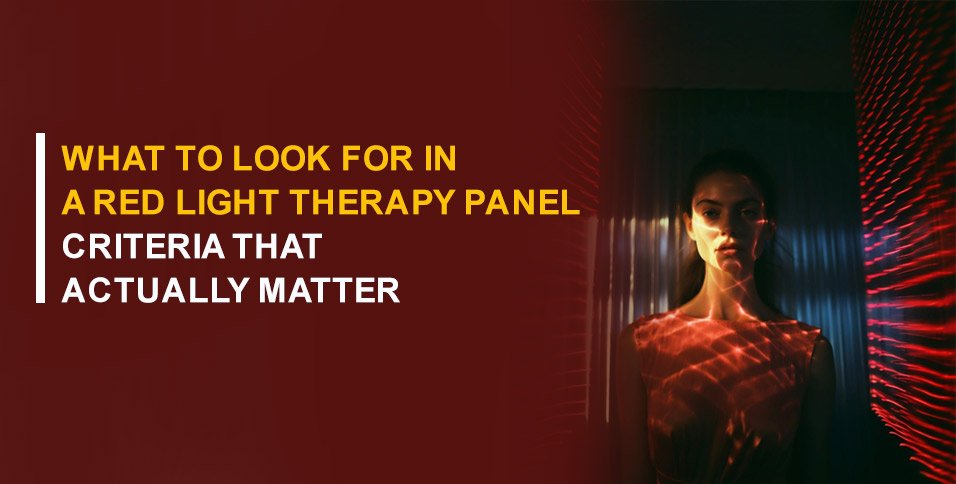
Red light therapy has become one of the most popular wellness technologies for supporting skin health, muscle recovery, pain management, and overall cellular function. As demand grows, the market has become flooded with red light therapy panels that promise impressive results.
The challenge is that many brands focus on flashy marketing claims such as LED count or total wattage rather than the specifications that actually influence performance.
If you’re planning to invest in a red light therapy panel, understanding the right criteria can help you avoid overpriced devices and choose a panel that delivers real value.
1. Wavelength Accuracy Matters More Than LED Count
One of the most important factors in any red light therapy panel is wavelength accuracy.
Scientific research has primarily focused on red light wavelengths between 630nm and 660nm and near-infrared wavelengths between 810nm and 850nm. These ranges are commonly associated with photobiomodulation, a process that supports cellular energy production and tissue repair.
Many brands advertise a high number of LEDs, but a panel with hundreds of low-quality LEDs may perform worse than a panel with fewer, properly calibrated LEDs.
When evaluating a panel, look for:
- Clearly listed wavelength ranges
- Third-party wavelength testing
- Certificates of Analysis (COA)
- Multiple clinically studied wavelengths
A quality manufacturer should be transparent about the wavelengths their device actually emits.
2. Irradiance Determines Real Performance
Irradiance refers to the amount of light energy reaching your skin and is typically measured in milliwatts per square centimeter (mW/cm²).
This specification directly affects treatment efficiency because it determines how much energy your body receives during each session. Higher irradiance can often deliver therapeutic doses in shorter treatment times.
Before purchasing a panel, check:
- Published irradiance measurements
- Testing distances used for measurement
- Consistent output across the treatment area
Be cautious of brands that only display impressive irradiance numbers measured at extremely close distances that aren’t practical for everyday use. Community discussions frequently highlight the importance of comparing irradiance at realistic treatment distances rather than focusing on peak numbers alone.
3. Coverage Area Should Match Your Goals
Not every user needs a full-body panel.
The ideal panel size depends on your treatment objectives.
Small Panels
Best for:
- Facial treatments
- Joint discomfort
- Targeted muscle recovery
- Hair and scalp applications
Medium Panels
Best for:
- Upper body treatments
- Back and shoulder recovery
- Skin rejuvenation
Large Panels
Best for:
- Full-body wellness routines
- Athletic recovery
- Multiple treatment areas simultaneously
Larger panels reduce the need for repositioning and can save significant time during daily use.
4. Verify Clinical Research and FDA Status
Many consumers assume that all red light therapy devices undergo the same regulatory process, but that’s not the case.
Terms such as:
- FDA Cleared
- FDA Registered
- FDA Exempt
all mean different things. Understanding these distinctions helps you evaluate manufacturer claims more accurately.
Additionally, look for companies that reference clinical studies and research-backed wavelengths rather than relying solely on marketing language.
5. Check Safety Certifications
A high-quality panel should meet recognized safety standards.
Look for certifications such as:
- FCC Compliance
- CE Certification
- RoHS Compliance
These certifications indicate that the product has met specific safety and environmental requirements.
Safety should never be overlooked, especially for devices designed for frequent home use.
6. Low EMF and Minimal Flicker
As awareness grows, more buyers are paying attention to electromagnetic field (EMF) emissions and light flicker.
Premium most powerful red light therapy panel often publish:
- EMF testing reports
- Flicker measurements
- Independent laboratory testing
Many experienced users consider these important factors when comparing brands. Panels with low EMF and minimal flicker can provide a more comfortable treatment experience during regular use.
7. Treatment Distance and Beam Angle
A panel’s performance depends heavily on how it is used.
Light intensity decreases as the distance from the panel increases. Because of this, treatment distance can dramatically impact the dose delivered during a session.
It’s also worth considering beam angle.
A narrower beam angle generally provides higher intensity, while a wider angle offers broader coverage. The ideal balance depends on your treatment goals and available space. Users researching panel specifications often identify beam angle as an underrated factor that affects real-world performance.
8. Build Quality and Warranty
A red light therapy panel is a long-term investment, so durability matters.
When comparing devices, evaluate:
- LED quality
- Cooling systems
- Frame construction
- Power supply components
- Warranty coverage
A longer warranty often indicates greater manufacturer confidence in the product’s lifespan. Premium devices frequently offer warranties well beyond the industry minimum.
9. Third-Party Testing and Transparency
Independent testing is one of the strongest indicators of product credibility.
Brands that openly publish testing reports for:
- Wavelength accuracy
- Irradiance
- EMF levels
- Flicker rates
demonstrate greater transparency and make it easier for consumers to compare products objectively.
If a manufacturer avoids sharing technical data, that may be a sign to look elsewhere.
Common Red Flags to Avoid
Before making a purchase, watch for these warning signs:
- LED count used as the primary selling point
- Missing irradiance data
- No third-party testing reports
- Vague wavelength claims
- Extremely short warranty periods
- Lack of safety certifications
- Unclear FDA status
- No customer support information
These issues often indicate that a brand is relying more on marketing than product quality.
Final Thoughts
Choosing a red light therapy panel isn’t about finding the device with the most LEDs or the highest advertised wattage. The factors that truly matter are wavelength accuracy, irradiance, treatment coverage, safety certifications, testing transparency, and overall build quality.
By focusing on these criteria, you can confidently compare devices and invest in a panel that aligns with your wellness goals. A well-designed red light therapy panel should provide reliable performance, consistent results, and long-term value rather than simply impressive marketing claims.
When in doubt, ask manufacturers for testing data, compare specifications carefully, and prioritize evidence-backed performance over flashy numbers.
FAQs: What To Look For In A Red Light Therapy Panel
1. What is the most important feature to look for in a red light therapy panel?
The most important features are wavelength accuracy and irradiance. These factors determine whether the panel delivers the appropriate light spectrum and energy levels needed for effective treatments.
2. Which wavelengths are best for red light therapy?
Most research focuses on red light wavelengths between 630nm and 660nm and near-infrared wavelengths between 810nm and 850nm. These ranges are commonly used for skin health, recovery, and cellular support.
3. What does irradiance mean in red light therapy?
Irradiance measures the amount of light energy reaching the body, usually expressed in mW/cm². Higher irradiance can allow users to achieve therapeutic doses in shorter treatment sessions.
4. Is a panel with more LEDs always better?
No. A higher LED count does not automatically mean better performance. The quality of the LEDs, wavelength accuracy, and irradiance are far more important than the number of LEDs alone.
5. What size red light therapy panel should I buy?
The ideal size depends on your goals. Small panels work well for facial treatments and targeted areas, while larger panels are better for full-body treatments and faster sessions.