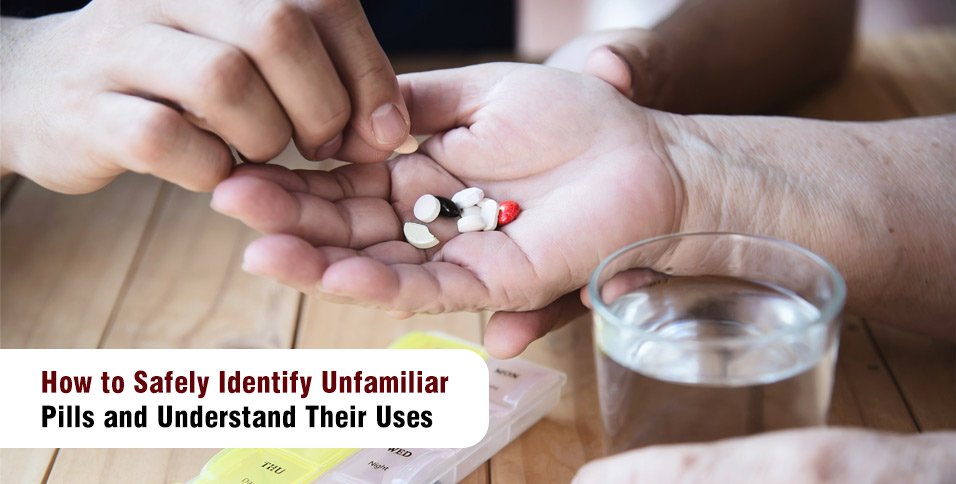
Finding an unfamiliar pill can be unsettling, especially when you are not sure what it contains, why it was prescribed, or whether it is safe to take. Many tablets look similar at first glance, while small differences in color, shape, imprint, strength, and release type can indicate completely different products. That is why identifying a medication should never depend on appearance alone.
Pill identification is especially important when several medicines are being used at the same time. Many common pain, cold, flu, and headache products contain the same active ingredient, which can make accidental double dosing easier than people realize. Acetaminophen, for example, is found in many prescription and over-the-counter medicines, and taking too much can cause serious liver damage.
A safer approach combines the physical characteristics of the tablet with the packaging, active ingredients, dosage information, and professional confirmation when anything remains uncertain. Learning what the markings on a pill actually mean can help you avoid mistakes and make better decisions about medication safety.
Why Pill Identification Requires More Than an Imprint
An imprint is one of the most useful clues when identifying a tablet. It may contain letters, numbers, or symbols that help distinguish one medicine from another. But an imprint is only one part of the identification process.
The same or similar markings can appear on different products, particularly when the color, shape, or dosage form is different. The G650 example illustrates this clearly. The white, solid, capsule-shaped tablet marked G650 is described as an extended-release acetaminophen 650 mg product, while a clear capsule carrying the same G650 marking may represent a completely different product containing psyllium fiber.
This is why you should compare the complete appearance of an unfamiliar medication rather than searching for a number or letter by itself. Color, shape, size, score lines, dosage form, and whether the item is a solid tablet or a capsule can all provide important clues.
Even when an online pill identifier produces a seemingly perfect match, it is still wise to compare the result with the original container or ask a pharmacist to confirm the medication. A faded imprint, damaged tablet, or missing packaging makes identification less reliable.
Understand What the Active Ingredient Does
Once a pill has been identified, the next step is understanding its active ingredient. The active ingredient is the component responsible for the medicine’s intended effect, while inactive ingredients help with the tablet’s structure, coating, stability, or other characteristics.
This distinction matters because different brand names can contain the same active ingredient. Acetaminophen is a good example. It is commonly used as a pain reliever and fever reducer and appears under different brand names as well as in combination medicines.
Acetaminophen is not an NSAID, so it should not automatically be treated as equivalent to ibuprofen, aspirin, or naproxen. These medicines belong to different categories and have different safety considerations. Understanding the active ingredient helps you recognize when two seemingly different products may actually contain the same medicine.
This is particularly important when treating several symptoms at once. A person may take one medicine for a headache and another for cold symptoms without realizing that both contain acetaminophen. Checking the active ingredients on every package can help prevent that type of accidental duplication.
Learn the Difference Between Immediate-Release and Extended-Release Medicines
The release type of a tablet can also affect how it should be used. Immediate-release medicines are designed to release their active ingredient more quickly, while extended-release products are formulated to release medicine over a longer period.
The distinction is especially important with acetaminophen products, as illustrated by the G650 pill, an extended-release 650 mg formulation.
The white G650 tablet described in the referenced product information contains 650 mg of extended-release acetaminophen and is intended to release the medicine over several hours. Its labeling instructs users to swallow the tablet whole rather than crushing, chewing, splitting, or dissolving it.
Breaking an extended-release tablet can change the way the medicine is released. For that reason, you should never assume that a tablet can be divided simply because it appears large enough to split. If a medication does not have an appropriate score line or the product labeling says not to split it, ask a pharmacist about alternatives.
Release type is one more reason that two pills containing a similar active ingredient may not be interchangeable in practice. Strength, formulation, dosage instructions, and intended use all need to be considered together.
The S500 Pill Shows Why Strength Matters
Another example is the S500 tablet. The referenced product information describes the white S500 or S 500 tablet as an acetaminophen 500 mg product used for temporary pain relief and fever reduction. It may be used for common problems such as headaches, backaches, toothaches, muscular aches, minor arthritis pain, menstrual cramps, and fever.
Although S500 and G650 both contain acetaminophen, they are not identical products. One is a 500 mg formulation, while the other contains 650 mg of extended-release acetaminophen. The different strength and release type are important when considering dosing and how the medicine should be taken.
This is an important lesson when comparing pills that contain the same active ingredient. Similarity does not mean interchangeability. A person should follow the instructions on the specific product they have rather than assuming another tablet containing the same medicine has identical directions.
When identifying an S500 tablet, it is important to compare its full appearance and packaging rather than relying on the S500 marking alone. The product information also notes that different medicines may use similar markings, making complete identification especially important.
Pay Attention to Dosage Instructions
Once you know what a pill contains, dosage becomes the next major safety consideration. The correct amount can vary depending on the strength, formulation, product labeling, age, and individual health circumstances.
This is particularly relevant for acetaminophen because the same active ingredient appears in many different products. Current product labeling for the referenced S500 formulation provides specific instructions for adults and children aged 12 and older, while the referenced G650 extended-release product has its own directions and spacing between doses. The two products should therefore not be treated as though they have identical dosing instructions simply because both contain acetaminophen.
You should always read the Drug Facts label on the exact product you have. Avoid taking an additional tablet simply because the first dose did not provide enough relief, and do not shorten the interval between doses unless a healthcare professional specifically tells you to do so.
It is also important to consider the total amount of acetaminophen consumed from every medicine used during the day. Taking multiple acetaminophen-containing products can unintentionally push the daily amount above recommended limits.
Why Combination Medicines Can Create Problems
Combination medicines are convenient because they may treat several symptoms with one product. The downside is that people may not always recognize every ingredient in the formulation.
A cold and flu product might contain acetaminophen along with ingredients intended to address congestion, coughing, or other symptoms. A prescription pain medicine may also contain acetaminophen. If you add another acetaminophen tablet without checking the ingredients, you may unknowingly increase the total amount you take.
Reading the active ingredient section is therefore more useful than relying solely on the product name. Search specifically for terms such as acetaminophen, APAP, or paracetamol when reviewing your medicines. These names can refer to the same active drug.
A pharmacist can also help when several medicines are being used together, especially when you are unsure whether two products contain overlapping ingredients.
Recognize Important Warning Signs
Most people can use acetaminophen-containing medicines without serious problems when they follow the product directions, but serious reactions are possible.
One of the most important risks is liver injury from taking too much acetaminophen. The danger is particularly concerning because an overdose may not cause obvious symptoms immediately. The referenced product information warns that serious liver damage can occur even when a person initially feels well.
Possible warning signs of significant liver problems include yellowing of the skin or eyes, dark urine, pale stools, and pain in the upper abdomen. Severe allergic or skin reactions can also occur, with symptoms such as swelling, breathing difficulty, severe rash, blistering, or peeling skin. These symptoms require prompt medical attention.
The important point is not to wait for symptoms after a suspected overdose. The referenced medication information advises seeking urgent medical help after a possible acetaminophen overdose even if the person appears fine.
Be Careful When Other Medicines Are Involved
Medication safety becomes more complicated when prescription medicines or multiple over-the-counter products are involved.
People with liver disease are advised to seek professional guidance before using acetaminophen products because of the risk of serious liver damage.
Certain medications may also require additional caution. For example, the G650 product information specifically advises people taking warfarin to consult a doctor or pharmacist before use. Other prescription medicines, supplements, and over-the-counter products may also be relevant depending on the individual.
This is why a complete medication list is useful when speaking with a healthcare professional. Include prescription medicines, over-the-counter products, vitamins, supplements, and combination cold or pain medicines rather than mentioning only the medication you think is most important.
Know When Self-Treatment Should Stop
Pain and fever can often be managed temporarily with appropriate over-the-counter medicines, but persistent symptoms should not simply be masked indefinitely.
The referenced S500 information advises medical evaluation when pain worsens or lasts longer than 10 days, when fever becomes worse or lasts longer than three days, or when new symptoms, redness, or swelling develop. Similar warnings appear in the G650 product information.
These limits are important because a pain reliever can reduce symptoms without treating the underlying cause. For example, acetaminophen may make a headache or toothache feel better, but it does not address the condition causing that problem.
If symptoms continue despite appropriate use, the answer may not be a different dose. It may be a medical evaluation.
What to Do When You Cannot Identify a Pill
Sometimes a tablet is too damaged, the imprint is incomplete, or the packaging is missing. In that situation, guessing is not a safe strategy.
Do not take an unidentified pill simply because it looks similar to something you have used before. Compare the full imprint, shape, color, and dosage form with reliable identification information, and use the original packaging whenever it is available.
A pharmacist is often the most practical person to contact for pill identification because they can examine the physical characteristics directly and consider the medication’s packaging and context. When there is uncertainty, professional confirmation is preferable to taking a risk based on an online image.
The same principle applies when two pills look almost identical. Small differences can matter, particularly when one product is immediate-release and another is extended-release or when the strength differs.
Store Medicines Safely
Identification is only one part of medication safety. Proper storage also matters.
Keep medicines in their original containers whenever possible so the name, strength, expiration date, and instructions remain available. Store them according to the label, protect them from excessive heat and moisture, and keep them out of the reach of children.
The referenced S500 and G650 product information recommends room-temperature storage and emphasizes keeping the medicines in secure locations.
Keeping medication in its original packaging also reduces confusion when several tablets look similar. It gives you a reliable source of information when you need to check ingredients or dosing instructions later.
Make Pill Safety Part of Your Routine
Safe medication use does not require a complicated system. Start by knowing the name and active ingredient of every medicine you take regularly. Keep the original packaging, read the label before using a new product, and check for duplicate ingredients whenever you combine medicines.
When an unfamiliar pill appears, do not rely on the imprint alone. Compare its complete appearance, confirm the strength and formulation, and ask a pharmacist when there is any uncertainty.
For acetaminophen products in particular, tracking the total amount taken from all medicines is an important habit. This is especially useful when using combination products for pain, headaches, colds, or flu symptoms.
Understanding these basics can prevent many common mistakes. More importantly, it helps you recognize when a question is beyond what an online search can safely answer.
Final Thoughts
Pill identification is not simply about matching a number or letter to a picture. A safe identification process considers the imprint, color, shape, size, dosage form, active ingredient, strength, release type, packaging, and product instructions together.
S500 and G650 acetaminophen products are useful examples of why these details matter. Both involve acetaminophen, but they differ in strength and formulation, and their labeling provides different directions. The G650 example also demonstrates that the same imprint may not always indicate the same type of product when the physical form is different.
When you cannot confidently identify a medication, the safest option is to ask a pharmacist or other qualified healthcare professional rather than taking an unknown tablet. And if an overdose is suspected, seek urgent medical help instead of waiting for symptoms to appear.
Disclaimer: This article is for general educational and informational purposes only and is not a substitute for professional medical advice, diagnosis, or treatment. Do not take an unidentified medication or change how you use a medicine based solely on online information. Always follow the product label and consult a qualified doctor or pharmacist if you are unsure about a medication, dosage, possible interaction, or suspected overdose.