For a lot of working adults, stress has become part of everyday life. Work doesn’t always stop when the day ends, emails keep piling up, and scrolling through your phone before bed can make it harder to switch off. Finding ways to relax doesn’t have to cost much or take up hours of your time. Small habits, like making time for a creative hobby, can help ease stress and fit into a healthier daily routine.
It helps to keep the claims in proportion. Plenty of online posts promise that colouring books or knitting will cure anxiety. The studies paint a more cautious picture, and a more useful one. Below we look at what researchers have found about making art and stress, which questions are still open, and how to keep a creative habit going when the week gets busy.
Why Simple Creative Activities Can Make Relaxation Easier
Advice to “just relax” does little for someone who is worn out. Relaxing takes practice, and many people find it easier when their hands are busy and their mind has one simple thing to follow.
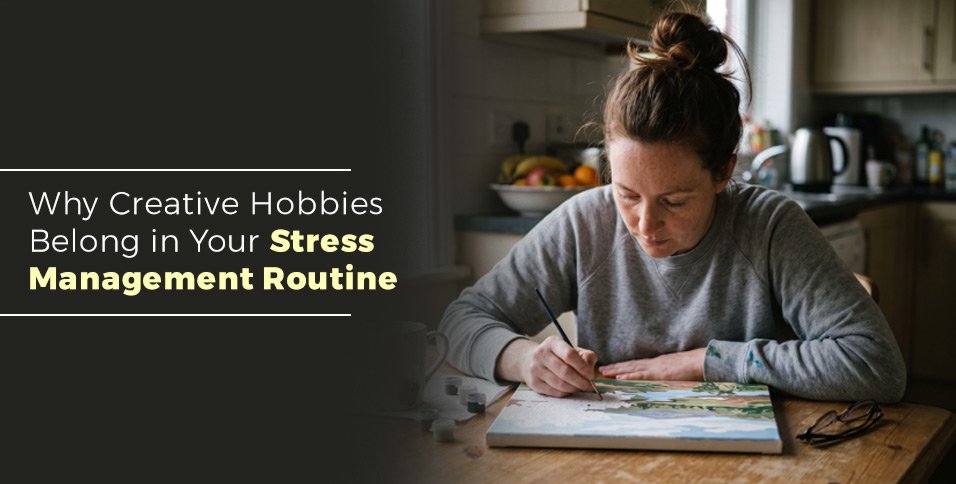
Think of someone coming home after a twelve-hour hospital shift or a long day of spreadsheets. They want a break from screens, yet the thought of “being creative” feels like one more demand. An empty canvas can bring its own kind of pressure. For this reason, a lot of beginners pick the best quality paint by number kits, since each area of the picture carries a number and the design choices have been made in advance. All that is left is finding the matching colour and filling in one shape after another.
An easy way in is worth having, because so many people are under strain. Gallup’s 2026 State of the World’s Emotional Health report, which draws on surveys carried out in 2025, found that 36% of adults across the countries polled had experienced a lot of stress on the day before their interview. Among American adults the share was 48%, and neither number had moved much since 2024. For a large part of the population, high stress has become the normal state of affairs.
What Making Art Does to the Body’s Stress Response
The study cited most often on this topic was led by Girija Kaimal at Drexel University and appeared in the journal Art Therapy in 2016. Her team asked 39 healthy adults to make art for 45 minutes, using materials such as markers, clay and collage paper, and took saliva samples before and after to check their levels of cortisol, a hormone the body releases under stress. About 75% of the group ended the session with lower cortisol. Experienced artists and complete beginners saw similar results, as the university’s write-up on how making art reduces stress hormones points out.
The same results contain a detail that is easy to miss. For roughly one participant in four, cortisol went up after the session. With a small group, healthy volunteers and a single session, the study cannot show that a hobby will treat long-term stress.
Researchers suspect that absorbing, repetitive work draws attention away from looping worries, which could play a part in calming the nervous system. The idea makes sense, but it has not yet been conclusively proven.
The Bigger Picture From Arts and Health Research
Beyond single experiments, there is a large body of work on the arts and wellbeing. In 2019, Daisy Fancourt and Saoirse Finn wrote a scoping review for the WHO Regional Office for Europe that drew on more than 900 publications, which together covered upwards of 3,000 studies. They concluded that arts activities can help in preventing and managing illness and in supporting good health more widely. Because the authors did not run a systematic search, the report works best as a map of existing research and leaves many questions open.
Long-term studies add more pieces, each with limits. In a 2019 paper in the British Journal of Psychiatry, Fancourt and Urszula Tymoszuk used data from the English Longitudinal Study of Ageing to follow 2,148 adults aged 50 and over for ten years. Those who went to museums, galleries, the theatre or concerts every few months or more were less likely to develop depression later on. That finding shows a link and cannot prove cause. Another paper, by Bone and Fancourt, reported that once people’s earlier cognitive ability was taken into account, arts activity showed no clear connection with cognition. A box of paints should not be sold as a way to prevent dementia.
For people living with dementia, art sessions are best judged by the pleasure and involvement they bring. Those benefits matter on their own terms.
How to Make a Creative Habit Stick
Even once you find a hobby you enjoy, you still have to find a way to fit it into your schedule. This isn’t always easy. However, a few small adjustments to your routine can help you keep going without turning something relaxing into another obligation:
- Start with something manageable. Choose an activity that doesn’t require expensive equipment or hours of preparation. Painting by numbers is one option for beginners, since the design is already laid out and you can work on a small section whenever you have time. You could also try knitting a scarf, keeping a sketchbook or writing short stories. Small projects let you discover what you enjoy before committing more time or money. There’s no need to be good at it straight away.
- Make time when you can. Try setting aside 20 to 45 minutes a few days a week. Some people prefer a quiet evening at home, while others have more energy in the morning or during a lunch break. What matters is finding a time that works with your schedule. Keep your supplies somewhere easy to reach and put your phone away so you can give the activity your attention.
- Share the experience with others. Joining a book club, attending a pottery class or working on a project with friends gives you something to look forward to. The social contact may offer benefits of its own, much like those associated with group-based therapeutic activities. You can also make a quick note of how you feel before and after each session. Over several weeks, this may help you notice whether your hobby is making stressful days a little easier.
When to Look for More Support
Painting or knitting can help you switch off at the end of the day. It won’t fix whatever is causing the stress in the first place.
Pay attention if you’re still lying awake thinking about work, waking up tired after a full night in bed or losing interest in things you used to look forward to. Those signs suggest your usual routine isn’t doing enough on its own.
Stress shows up in the body too. Headaches, tight shoulders, an upset stomach and broken sleep are all common. Reading about how stress affects the body makes it easier to notice these signals early, so you don’t write them off as the result of a busy week. The sooner you spot them, the easier they are to deal with.
If anxiety or low mood hangs around for a few weeks, or starts getting in the way of your work, sleep or relationships, book an appointment with your GP or a mental health professional. The National Institute of Mental Health has advice on self-care and getting professional help, including how to tell when you might need more support.
Keep the hobby. Just pair it with decent sleep, firmer limits at work and honest conversations with someone you trust.
Give It a Try This Week
Current research backs art making as an easy, low-risk way to ease stress, and stops well short of bigger claims. Choose one 45-minute evening this week, leave your phone in another room, and notice how you feel when you finish. Keep going if it helps. If it doesn’t, you’ve still spent some time away from screens doing something different.
Frequently Asked Questions
- Can creative hobbies really help reduce stress?
Research suggests that creative activities may help lower stress levels and improve emotional well-being. The benefits can vary depending on the person and the activity.
- Do you need artistic skills to benefit from creative hobbies?
No, studies suggest that beginners can experience stress-related benefits from making art, regardless of their previous experience.
- How much time should you spend on creative hobbies?
Spending 20 to 45 minutes on a creative activity a few days a week is a reasonable starting point. There’s no proven minimum, so choose an amount of time that fits comfortably into your routine.