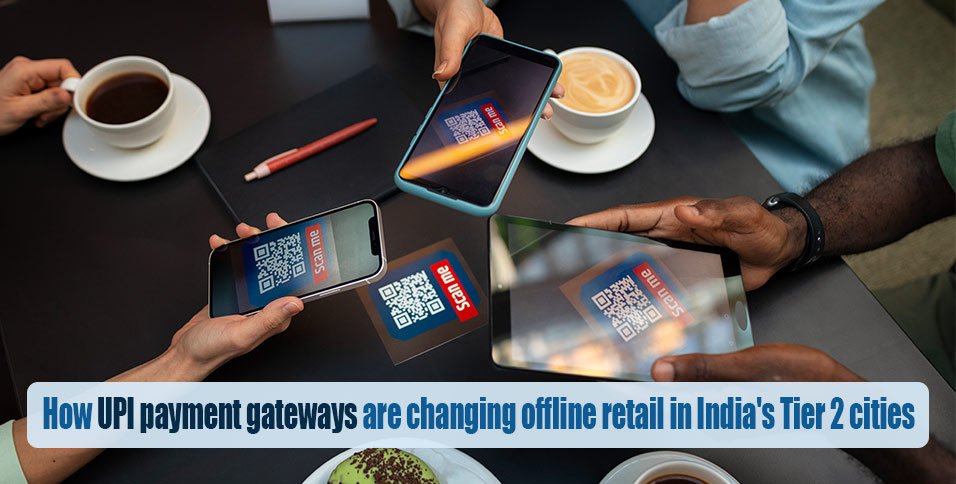
Tier 2 locations like Jaipur, Lucknow and Indore are currently rewriting the retail narrative. The physical marketplace in these cities is adopting digital frameworks at an unprecedented pace. Department of Financial Services reported 22.64 billion UPI transactions in March alone, reflecting the relentless pace of digital payment adoption across India.
The traditional retail structure relied on cash processing for decades. Small merchants previously viewed digital terminals as expensive and complex setups. Today, the deployment of a modern UPI payment gateway has transformed how local shopkeepers handle daily sales.
This blog explores how digital payment infrastructure is accelerating retail growth in Tier 2 India and reshaping the everyday shopping experience.
How digital payment systems are strengthening Tier 2 retail growth
Here are the key ways a modern UPI payment gateway is helping regional retailers improve daily operations, strengthen financial access and build a more reliable retail ecosystem across Tier 2 cities:
- Drives the shift from cash to instant verification
The local retail ecosystem requires speed to handle peak evening rushes. Traditional card terminals often faced network delays and high maintenance costs in smaller markets. By switching to digital payment methods, Tier 2 merchants enjoy several instant advantages:
- Instant verification: A modern UPI payment gateway provides immediate payment validation through simple sound boxes or screen notifications. This instant feedback loop builds immense trust between buyers and sellers.
- Cardless convenience: Shoppers expect a rapid scanning option at clothing boutiques, sweet shops and pharmacies. By incorporating a robust UPI payment gateway, regional retailers can match the convenience offered by large ecommerce brands.
- Automated auditing: A well-integrated UPI payment gateway tracks incoming revenue in real time, making daily sales auditing incredibly straightforward. Business owners no longer spend hours counting cash notes after closing hours.
- Enhances business efficiency at the Point-of-Sale
Modern retail setups utilise dedicated merchant applications to monitor earnings. These applications allow business owners to track consumer purchasing trends over specific periods. Store operations at the regional level become much simpler due to three distinct factors:
- Centralised dashboards
A smart UPI payment gateway simplifies this collection process by compiling all transaction histories into a single interface. Shop owners can view accurate financial statements at any given moment.
- Faster capital rotation
When a store uses an advanced UPI payment gateway, funds move into the primary bank account much faster. This rapid capital rotation helps merchants restock popular products without facing supply delays.
- Decluttered billing counters
Merchants can now eliminate bulky hardware pieces from their main payment counters. A single QR code or a compact digital PoS terminal serves the entire consumer base efficiently.
- Builds credit profiles for regional merchants
Unorganised retailers historically struggled to secure formal banking credit due to a lack of documentation. Cash transactions leave no verifiable paper trail for financial institutions to assess risk. Using a digital framework changes this dynamic for Tier 2 retail businesses in three major ways:
- Verifiable credit profiles
The continuous usage of a structured UPI payment gateway generates an immutable digital ledger of all sales. This transparent data helps banks evaluate the actual financial health of a store.
- Access to microloans
A trusted UPI payment gateway acts as the foundational data source for modern underwriting systems. Financial technology providers analyse regular transaction volumes to offer customised credit lines.
- Targeted customer loyalty
Incorporating a dedicated UPI payment gateway enables the deployment of dynamic payment links for home deliveries. Regular customers can settle their monthly store tabs remotely through a single smartphone notification.
- Scales up strong merchant infrastructure
The rapid increase in daily digital transactions requires highly stable technology platforms. System downtime during festive shopping seasons can cause severe revenue losses for local merchants. Ensuring Tier 2 system reliability involves three core elements:
- Enterprise-grade stability
Choosing an enterprise-grade UPI payment gateway ensures that payment processing remains active during peak traffic hours. Modern platforms utilise multiple banking handles to route traffic away from failing servers.
- Advanced fraud prevention
A secure UPI payment gateway monitors for fraudulent patterns to safeguard small business earnings. Advanced encryption protocols protect user credentials during every smartphone transaction.
- Future-proof integration
Adopting a versatile UPI payment gateway prepares regional retailers for impending structural developments. Future store models will likely merge offline billing systems with automated ledger books.
The digital future of regional marketplaces
The ongoing transformation across smaller cities signals a permanent shift in India’s economic landscape. Real-time digital transactions have evolved from a novelty into an essential toolkit for business survival.
For regional retailers, adopting a modern UPI payment gateway is no longer just about keeping pace with modern times. It is about fundamentally unlocking enterprise growth, optimising cash flow and securing formal financial credit.
As technology systems deepen their roots in Tier 2 markets, the reliance on cash will continue to diminish. Merchants who equip themselves with stable infrastructure will be best positioned to capture emerging consumer demands.
Transitioning to integrated payment gateways like Pine Labs Online allows local shopkeepers to future-proof their operations. Ultimately, this nationwide digital migration ensures that independent regional businesses remain highly resilient, competitive and efficient.