You’ve probably heard the word “peptides” at least three times this week — on a skincare label, in a podcast about weight loss shots, or from a friend who swears by injections for muscle recovery. Peptides really are everywhere right now. So, what are peptides, and why has a molecule suddenly become one of the most talked-about topics in medicine and wellness?
Peptides are short chains of amino acids that regulate key body functions like hormones, tissue growth, and immune defense, and some of them have been turned into powerful medications. But not every peptide sold online is the same as the ones prescribed by your doctor.
The global peptide therapeutics market is projected to reach nearly $295 billion by 2033, and that explosive growth has pulled in everything from diabetes drugs to weight management medications to unregulated “research chemicals.”
In this guide, you’ll get to know exactly what peptides are, how they work, what the benefits are, and which ones can be risky.
What Are Peptides?
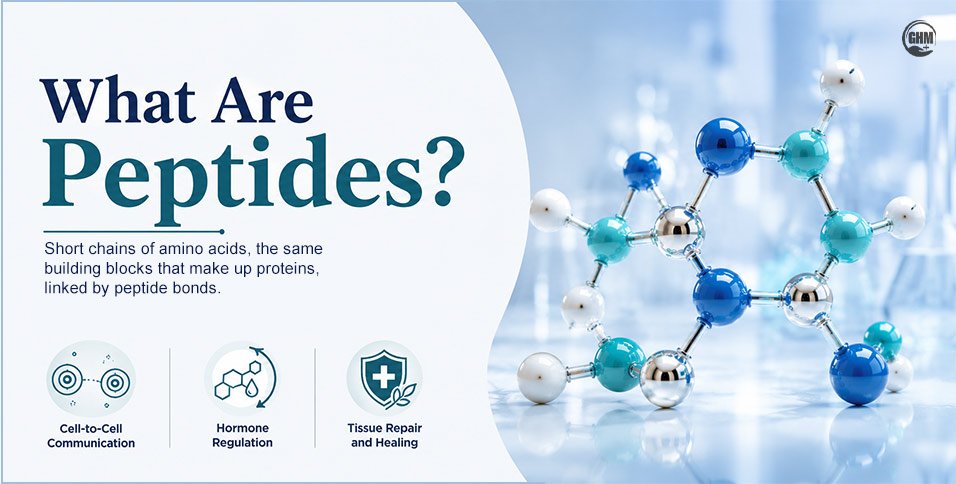
Peptides are short chains of amino acids, the same building blocks that make up proteins, linked by peptide bonds. Proteins, by comparison, are entire paragraphs, made of much longer chains folded into complex 3D shapes.
Peptides are usually 2 to 100 amino acids, smaller and simpler. These smaller peptides can move through tissues and bind to specific receptors more easily, making them so useful for targeted, precise biological function, like signaling a cell or triggering a hormone response.
Some peptides are made naturally by your own cells. Others are created synthetically in a lab, engineered to mimic or enhance the effects of natural peptides. Both types rely on the same basic process: peptide formation, amino acids link together, fold into a shape, and that shape determines what job the peptide does.
How Peptides Work In the Body?
Peptides don’t do just one thing. Depending on their exact sequence, they can act as messengers, hormones, or repair signals. Swapping even one amino acid in a peptide chain can completely change which receptor it binds to and what effect it has.
Here’s how peptides work across different body systems.
1. Cell-to-Cell Communication
Peptides act like tiny couriers, carrying instructions from one cell to another. A peptide might signal a cell to grow, divide, repair itself, or slow down, all based on which receptor it binds to.
2. Hormone Regulation
Many of the body’s most important hormones are actually peptides. Insulin, which regulates blood sugar, is a peptide hormone. So is GLP-1 (glucagon-like peptide-1), which controls appetite and digestion, and growth hormone.
3. Tissue Repair and Healing
Certain peptides trigger the processes involved in wound healing and tissue regeneration, which is why they show up so often in discussions about recovery and anti-aging.
4. Immune Defense
Some peptides act as a first line of defense against bacteria and viruses, supporting the immune system’s response to infection.
5. Digestion and Metabolism
Peptides released in the gut help regulate hunger, fullness, and how efficiently your body processes food. It is a major reason why peptide-based drugs have become central to modern weight management treatment.
What Are The Types of Peptides?
Not all peptides belong in the same category. Here are the major types of peptides.
1. Natural Peptides
Natural peptides occur inside the body without any outside intervention. The body constantly manufactures peptides to regulate hormones, immunity, and repair. Examples of natural peptides include insulin, endorphins (which reduce pain and boost mood), and oxytocin (linked to bonding and stress reduction).
2. Therapeutic Peptides
Therapeutic peptides are medications built on peptide structures. Scientists can design peptides in a lab, either recreating a natural sequence or engineering a new one for a specific medical purpose. This is how most peptide medications for diabetes and weight loss drugs are produced.
3. Cosmetic Peptides
Cosmetic peptides are found in skincare products. Peptides like copper peptides, Matrixyl, and collagen peptides are marketed to support skin hydration, elasticity, and wrinkle reduction. Evidence for peptide supplements for skin is generally more limited than for prescription therapeutic peptides. However, these peptides have been studied, tested, and approved by regulators for targeted treatments.
What Are Peptides Used For?
Peptide applications fall into four broad categories.
- Medical Uses of Peptides: Diabetes, obesity, osteoporosis, hormonal disorders, certain cancer treatments, and HIV management.
- Wellness Uses of Peptides: Weight management, muscle recovery, athletic performance, healthy aging, sleep support, and sexual health.
- Cosmetic Uses of Peptides: Skincare, hair growth support, and anti-aging formulations.
- Research Uses of Peptides: Experimental peptides currently being studied in clinical trials for future medical applications.
What Are The Possible Side Effects of Peptides?
Like any biologically active substance, peptides carry risks that vary by type and source.
Common side effects of peptides include injection site irritation, nausea, headache, fatigue, and digestive issues.
Potential risks of peptides include allergic reactions, unwanted immune responses, contamination in poorly manufactured products, and unknown long-term effects, especially with peptides that haven’t completed formal clinical trials.
Risk levels differ significantly depending on the specific peptide and, just as importantly, where it comes from.
The Future of Peptide Therapy
Peptide medicine is entering a genuinely new chapter. Pharmaceutical companies are pouring investment into peptide pipelines for personalized medicine, regenerative treatment, and smarter drug delivery systems that could eventually let peptides be taken orally instead of injected.
Regulators are also actively reshaping the landscape of peptide therapy. In 2026, the Food and Drug Administration (FDA)removed a dozen peptides from its restricted compounding list and opened several others, including BPC-157 and Semax, to formal review for legal, physician-supervised compounding. Even though these peptides are not approved drugs, the door to safer, regulated access has opened slightly. With rigorous human clinical trials, the complete safety standards can also be met.
The Bottom Line
Understanding what are peptides can give you a better picture of the compound before trying any peptide product. Peptides are naturally occurring biological molecules that play a role in nearly every system in your body, from digestion to immunity to hormone regulation. Several peptide-based medicines, like insulin and GLP-1 drugs, have genuinely transformed modern healthcare and are backed by rigorous clinical evidence. Many newer wellness and performance peptides, on the other hand, are still waiting on the kind of long-term human research that turns a promising molecule into a proven treatment.
Before trying any peptide product, know the difference between an approved peptide therapy and an experimental one sold online, and talk to a healthcare professional who can evaluate what’s right for your body. In a market this crowded with marketing claims, the best decisions are the ones grounded in evidence, not hype.
Sanskruti Jadhav
Frequently Asked Questions
- Is the FDA going to legalize peptides?
The FDA is not approving these peptides as standard retail medicines, but an advisory panel recently voted to recommend allowing specialty compounding pharmacies to legally make several popular versions.
- How to get peptides naturally?
You can get peptides naturally by eating protein-rich foods, exercising, and getting quality sleep. Your body uses the amino acids from these habits to build its own peptides.
- Is Ozempic a peptide?
Yes, Ozempic is a peptide. It is a synthetic chain of 31 amino acids that mimics the natural human gut hormone glucagon-like peptide-1 (GLP-1).