Wisdom tooth removal is one of the most common oral surgeries performed today, with roughly 10 million wisdom teeth removed from about 5 million Americans every year. You might be one such person, and if you’ve just had your wisdom teeth removed, you already know the surgery is only half the story. Wisdom tooth extraction recovery matters just as much and sometimes more. More importantly, the first 24 to 72 hours of wisdom tooth removal are critical. Fortunately, recovering smoothly isn’t complicated once you know the right dos and don’ts after wisdom tooth extraction.
In this guide, you’ll get to know the wisdom tooth recovery tips where you’ll learn exactly what helps your mouth heal, what to avoid, which foods are safe, and which warning signs mean it’s time to call your dentist.
The Significance of Wisdom Tooth Extraction Aftercare
The moment your wisdom tooth is removed, your body immediately starts repairing the socket. A blood clot forms first, followed by new gum tissue growing over the area, and finally the underlying bone slowly rebuilds over the following weeks. Protecting this process is the whole point of aftercare.
Good aftercare does more than keep you comfortable. Following the right dos and don’ts after wisdom tooth extraction helps to:
- Reduce bleeding by allowing the clot to stabilize
- Minimize swelling so you feel more comfortable, sooner
- Lower infection risk by keeping bacteria away from the open socket
- Speed up tissue healing so gum and bone repair on schedule
- Improve overall comfort during the first week of recovery
Skipping these basics doesn’t just slow you down; it can turn a simple recovery into a painful, drawn-out one.
The First 24 Hours After Wisdom Tooth Extraction
In the wisdom tooth extraction healing process, many changes can occur, and knowing which symptoms are normal and which are not can help with the recovery journey.
Normal Symptoms After Wisdom Tooth Removal
- Mild bleeding or oozing
- Swelling in the cheeks and jaw
- Jaw stiffness
- Mild to moderate pain
- Slight bruising
- Difficulty opening your mouth fully
Serious Symptoms After Wisdom Tooth Removal
- Heavy bleeding that won’t slow down
- Fever
- Pus or foul-smelling discharge
- Severe swelling that worsens after several days
- Persistent numbness in the lip, tongue, or chin
- Difficulty swallowing or breathing
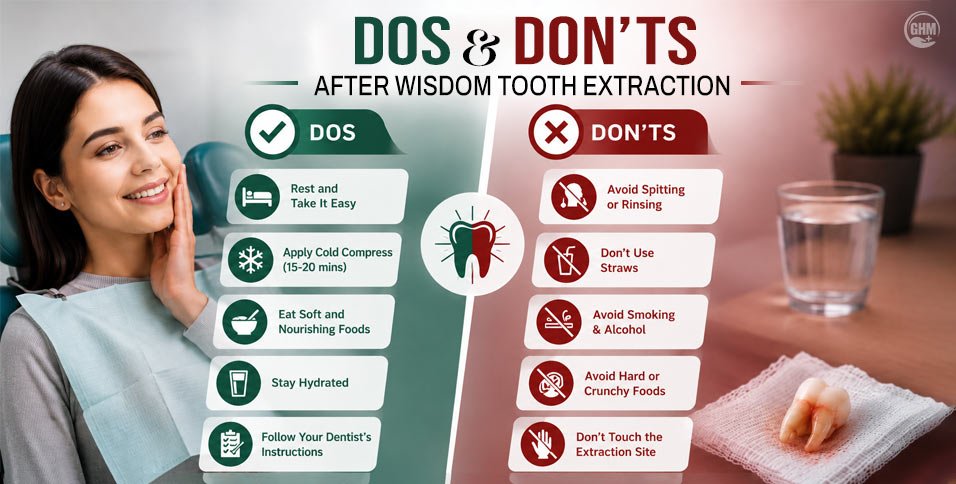
Take A Look At The Dos and Don’ts After Wisdom Tooth Extraction
What To Do In Wisdom Tooth Extraction Recovery?
These simple habits protect the blood clot after wisdom tooth extraction and give your body the best possible conditions to heal quickly.
1. Bite Gently on Gauze
Biting down on gauze for 30 to 45 minutes after surgery applies steady pressure that helps control bleeding and supports clot formation. Replace the gauze with a fresh piece once it’s fully soaked, and stop once bleeding has clearly slowed.
2. Apply Ice Packs During the First 24–48 Hours
Cold therapy reduces inflammation, minimizes swelling, and helps numb the area for pain relief. Apply an ice pack to the outside of your cheek for 20 minutes on, 20 minutes off, during the first day or two.
3. Rest and Keep Your Head Elevated
Limiting physical activity keeps your blood pressure steady, which protects the clot. Sleep with an extra pillow or two, so your head stays elevated above your heart; this reduces blood flow to the area and helps control swelling after wisdom tooth removal.
4. Stay Hydrated
Drink plenty of water, but take small, frequent sips rather than big gulps. Good hydration supports tissue repair and keeps your mouth from drying out, which can otherwise irritate the healing socket.
5. Eat Soft, Nutrient-Rich Foods
Soft foods let you get proper nutrition without disturbing the extraction site. Eating soft foods after wisdom tooth extraction requires little to no chewing near the surgical site, so they won’t stress the clot while still giving your body the fuel it needs to heal.
6. Take Medications Exactly as Prescribed
Whether it’s pain medication, antibiotics, or anti-inflammatory drugs, take them on the schedule your dentist gives you. Skipping or delaying doses can let pain and inflammation build back up, which completely slows the wisdom tooth extraction healing process.
7. Practice Gentle Oral Hygiene
Keeping your mouth clean lowers infection risk, but you’ll need to be gentle. Brush your other teeth carefully while avoiding the extraction site for the first day. After 24 hours, rinse gently with warm saltwater instead of swishing vigorously. A soft-bristled brush can make a real difference here; if you’re not sure which are gentle enough for a healing mouth, it’s worth asking your dentist for a recommendation.
8. Gradually Resume Daily Activities
Ease back into work, school, and exercise over several days rather than all at once. Most people can return to light activity within 48 to 72 hours, but always follow your own dentist’s specific timeline.
What Not To Do In Wisdom Tooth Extraction Recovery?
Avoiding certain habits protects the healing clot and significantly reduces your risk of wisdom tooth extraction complications.
1. Don’t Use Straws
The suction created by sipping through a straw can dislodge the blood clot from the socket, sharply increasing your risk of dry socket, a painful condition where the underlying bone is left exposed.
2. Don’t Smoke or Vape
Smoking reduces blood supply to the healing tissue, delays healing, and raises your infection risk. In fact, one clinical study found dry socket occurred in about 5.1% of extractions among smokers compared to just 2.1% among non-smokers, which is more than double the risk. If possible, hold off on smoking or vaping for at least 72 hours, longer if you can manage it.
3. Don’t Drink Alcohol
Alcohol interferes with healing, can interact dangerously with prescribed pain medications, and irritates the healing tissue in your mouth. Skip it until your dentist gives the go-ahead.
4. Don’t Eat Hard, Crunchy, or Sticky Foods
Chips, nuts, popcorn, hard toast, candy, and chewing gum can all get lodged in the socket or physically damage the extraction site while it’s still fragile.
5. Don’t Touch the Extraction Site
Keep fingers, your tongue, and toothpicks away from the area of the extracted tooth. Poking or prodding introduces bacteria and can disturb the clot, both of which raise your infection risk.
6. Don’t Rinse Vigorously During the First Day
Forceful rinsing or spitting after wisdom tooth extraction can wash the blood clot right out of the socket. Once 24 hours have passed, rinse gently with warm salt water instead of swishing hard.
7. Don’t Exercise Too Soon
Strenuous exercise raises your blood pressure and heart rate, which can restart bleeding and worsen swelling. Most dentists recommend waiting 48 to 72 hours before returning to anything intense, though your own provider may suggest a different timeline.
8. Don’t Ignore Severe Pain or Fever
Worsening pain, especially after day three, or a fever that develops during the wisdom tooth extraction recovery can be early signs of infection or dry socket. Don’t try to wait these out; contact your dentist instead.
What To Eat After Wisdom Tooth Extraction?
Here’s a quick-reference table so you always know what’s safe to eat during the wisdom tooth extraction.
| Eat | Avoid |
| Yogurt | Chips |
| Smoothies (spoon, not straw) | Popcorn |
| Mashed potatoes | Nuts |
| Oatmeal | Hard bread |
| Cottage cheese | Spicy foods |
| Lukewarm soup | Carbonated drinks |
| Scrambled eggs | Alcohol |
| Applesauce | Sticky candy |
Soft, cool, and lukewarm foods won’t disturb the clot and are gentle on tender tissue, while hard, crunchy, spicy, or fizzy foods can dislodge it, irritate the wound, or get trapped in the socket.
When Should You Contact Your Dentist?
Reach out to your dentist right away if you notice any of the following:
- Fever
- Persistent bleeding
- Severe pain after day three
- A bad taste or foul odor in your mouth
- Pus or discharge
- Difficulty breathing
- Increasing swelling
- Difficulty swallowing
- Persistent numbness
Early intervention is key. Catching an infection or dry socket early almost always means a faster, simpler fix than waiting until symptoms worsen.
Conclusion
Following the correct dos and don’ts after wisdom tooth extraction greatly improves how smoothly and how quickly you heal. Protecting the blood clot, keeping up gentle oral hygiene, staying hydrated, eating soft foods, and steering clear of habits like smoking will all work together for a healthy wisdom tooth extraction healing process.
Every mouth heals a little differently, so always follow your own dentist’s personalized aftercare instructions, and don’t hesitate to reach out if something feels off. With the right care in those first few days, most people recover smoothly and are back to normal within a couple of weeks.
Frequently Asked Questions
- How to sleep after wisdom teeth removal?
To sleep safely and comfortably after wisdom teeth removal, keep your head elevated above your heart to minimize swelling, sleep on your back, and take your pain medication about 30 minutes before bed. Never sleep with gauze in your mouth, as it poses a severe choking hazard.
- Will drinking water prevent dry sockets?
Yes, drinking plenty of water promotes healing and keeps the extraction site hydrated. However, how you drink it is crucial: you must never use a straw. The suction creates negative pressure in your mouth that can dislodge the blood clot, which is the direct cause of dry socket.
- Which is more painful, root canal or wisdom tooth extraction?
Wisdom tooth extraction is generally considered more painful and involves a longer recovery than a root canal. Both procedures are performed under local anesthesia, so you shouldn’t feel sharp pain during either.