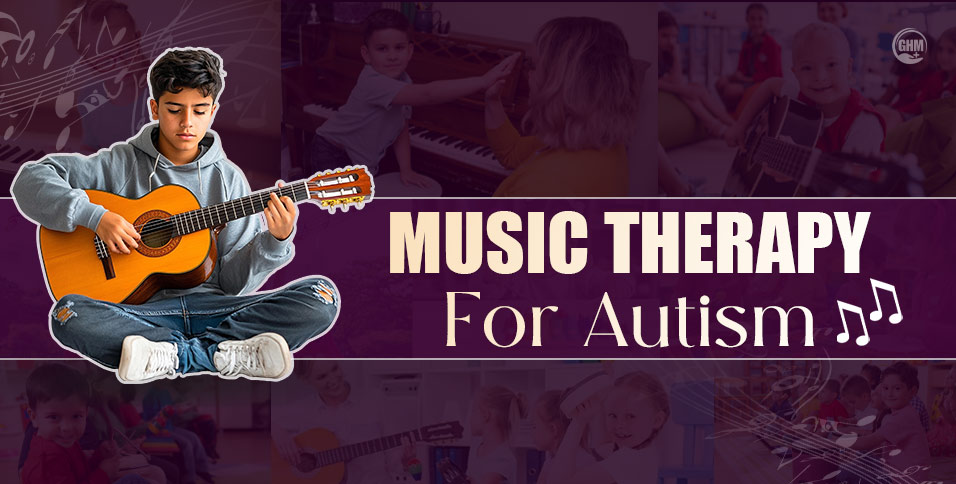
If you are a parent, you must have noticed how children respond to rhythms even when they struggle to find the right words. And if your child had autism spectrum disorder, it could be a bridge to deeper development.
Autism affects communication, social interaction, and behavior, often making it difficult for individuals to express themselves using words alone. This is where music therapy offers a unique advantage. Music therapy for autism uses rhythm, melody, and structured musical interaction to unlock new ways of communication.
Unlike traditional therapies, music therapy engages both emotional and cognitive pathways, helping individuals connect, respond, and interact more effectively. Research shows that structured musical experiences can improve social interaction, enhance verbal and non-verbal communication, and even strengthen emotional bonding between children and caregivers.
But how does it work, and who can benefit the most?
In this guide, we break down the benefits and techniques of music therapy for autism. It explores how musical engagement can unlock new pathways for connection and growth.
What Is Music Therapy For Autism?
Music therapy for autism is a systematic process of intervention where a trained professional uses musical experiences to address the core challenges of autism spectrum disorder.
Music therapy is an evidence-based clinical approach rather than just a recreational activity.
These sessions are delivered by board-certified therapists who tailor every note to the individual’s needs.
Music therapy sessions for autistic individuals occur in various settings, including specialized clinics, schools, hospitals, or even at home.
Research defines music therapy for autism as a “systematic process using musical experiences to promote health”.
How Does Music Therapy Work in Autism?
Music therapy for autism engages multiple brain regions simultaneously very effectively. Research indicates that music activates areas involved in language, motor planning, and emotional processing.
Music acts as a pre-verbal language, allowing individuals to interact without the pressure of words. This is particularly helpful for individuals with autism who may find traditional conversation overwhelming. It serves as a powerful alternative or supplement to ABA therapy.
Through structured rhythm and melody, music therapy enhances:
- Joint Attention: Sharing a musical focus with the therapist.
- Eye Contact: Naturally looking at others during musical cues.
- Turn-Taking: Learning the “back and forth” of social exchange through beats.
Who Can Benefit From Music Therapy?
Using music therapy for autism benefits not just children but individuals of all ages and severity levels.
- Non-Verbal Individuals: They use instruments to find their “voice” without words.
- Verbal Individuals: They use songwriting to process complex emotions.
- Adults with ASD: It is effective for those with mild to severe symptoms of autism.
5 Techniques of Autism Music Therapy
Music therapy is a versatile intervention where sessions are carefully calibrated to a child’s sensory profile and developmental goals. Here is an elaboration on the core autism music therapy techniques;
1. Singing and Vocal Exercises
Singing is a primary tool for encouraging speech and language development. Because melody and rhythm are processed in multiple areas of the brain, children who struggle with traditional speech often find it easier to vocalize through song.
Therapists use “transition songs” to help children navigate daily routines or “fill-in-the-blank” songs where the child completes a phrase, fostering verbal initiation. These music therapy exercises also help improve breath control and articulation in a low-pressure environment. For non-verbal children, simple humming or tonal matching can serve as the first step toward meaningful communication.
2. Instrument Playing
In music therapy for autism, using instruments like drums, shakers, pianos, or xylophones provides immediate “cause and effect” feedback. Physically engaging with an instrument helps improve both fine and gross motor coordination in individuals with autism.
Instrument play also serves as a non-verbal “dialogue”; a therapist might mimic the rhythm a child plays, creating a powerful moment of social mirroring and joint attention without the need for eye contact or words.
3. Musical Games
Structured musical games, such as “Stop and Go” or “Musical Statues,” are designed to build executive function and behavioral control. These games require the child to listen for specific cues, helping them practice impulse control and sustained attention.
Games that involve passing an instrument or waiting for a musical cue to start are excellent for teaching turn-taking and social patience. These activities transform complex social rules into fun, predictable routines that reduce the anxiety often associated with peer interaction.
4. Rhythm-Based Activities
Rhythm acts as a structural anchor for children with ASD. A steady beat provides a sense of predictability and security, which is essential for emotional regulation in autistic individuals. Music Therapists use rhythmic entrainment to help coordinate motor planning.
These music therapy activities can be alerting for an under-stimulated child (using fast, upbeat tempos) or calming for an over-stimulated child (using slow, steady pulses). By synchronizing their movements with a rhythm, children learn to navigate the timing of social exchanges.
5. Listening and Response Exercises
Receptive music therapy involves the child listening to live or recorded music to achieve specific emotional or cognitive goals. Therapists may use carefully curated playlists to help an autistic person unwind during a meltdown or focus during a challenging task.
Beyond passive listening, “response” exercises involve the child identifying different sounds or expressing an emotional reaction to a piece of music. This helps build emotional literacy, allowing children to connect specific sounds to feelings like happy, calm, or excited, which they can then apply to their own self-regulation strategies.
Types of Therapy Used For Autism
The music therapy for autism uses various types of therapies to help individuals communicate and interact with society.
| Therapy Types | Focus | Best For |
| Individual | One-on-one personalized goals | Intense skill building |
| Group | Peer interaction and teamwork | Socializing and turn-taking |
| Family-Centered | Parent and child interaction | Strengthening home bonds |
| Improvisational | Spontaneous musical “dialogue.” | Emotional expression |
Key Benefits of Music Therapy For Autism
The autism music therapy benefits vary from individual to individual, as per their needs. They are as follows,
1. Improves Social Interaction
Music provides a social bridge. Studies show that music therapy for autistic children is superior to standard care in improving generalized social interaction outside. Participants often show increased engagement and responsiveness to others in their daily lives.
2. Enhances Communication Skills
Whether a child with autism is verbal or non-verbal, music helps. Research found that music therapy significantly improves both verbal and non-verbal communicative skills. Music encourages children to use their voices or gestures. It provides a supportive framework for those managing speech disorders.
3. Supports Emotional Regulation
Many individuals use music as a tool to achieve cognitive behavioral therapy goals, such as reducing anxiety. Soft, slow music can calm the nervous system, while upbeat rhythms can help an under-stimulated child feel more alert.
4. Strengthens Parent-Child Relationships
Family-centered music therapy for autism involves parents actively in the process. This involvement significantly improves the quality of parent-child relationships and helps parents learn new ways to play with their children.
Limitations & Considerations of Music Therapy
It is important to remember that music therapy for autism is a supportive therapy, not a cure.
- Professional Training: Only board-certified therapists should deliver clinical music therapy.
- Consistency: Benefits are most pronounced with long-term, consistent sessions.
- Individual Variation: Every child is unique; what works for one may not work for another.
How to Get Started with Music Therapy For Autism
- Consult a Specialist: Speak with your pediatrician or a developmental expert to discuss if music therapy fits your child’s current plan.
- Find a Certified Therapist: Look for the MT-BC (Music Therapist-Board Certified) credential.
- Set Clear Goals: Decide if you want to focus on speech disorders, social skills, or emotional regulation.
- Try a Sample Session: Observe how your child responds to the therapist and the instruments.
Final Note
In summary, music therapy for autism is a versatile and powerful tool that improves communication, social adaptation, and family bonds. By tapping into the brain’s natural response to music, music therapy provides a safe and motivating environment for development. While it requires a trained professional for the best results, the joy and progress it brings are undeniable.
As clinical research continues to expand, the future of music therapy in autism looks bright. We are seeing more integration with digital tools and AI to personalize rhythms. As awareness grows, more healthcare providers are recommending music therapy for autism as a primary early intervention tool.
Whether your child is autistic or non-verbal or simply needs help with social anxiety, music offers a path forward. Explore these musical recommendations and consider how a melody might unlock your child’s potential.
Did you find this guide helpful? Share it with a fellow parent or caregiver to spread the word about the power of music therapy!
Frequently Asked Questions
- Is music therapy effective for ADHD?
Yes, many techniques used in music therapy help children with ADHD improve focus and impulse control.
- Can we do music therapy at home?
While clinical therapy requires a professional, you can use musical prompts at home, like singing “transition songs” to help your child move between activities.
- How long are the music therapy sessions?
Typically, a music therapy session lasts 30 to 60 minutes, depending on the child’s age and attention span.
- Is music therapy better than speech therapy?
Music therapy and speech therapy are different but complementary. Music therapy often helps “prime” the brain for language, making speech therapy more effective.
- How long does it take to see the results of music therapy?
Some children show “joy” and increased eye contact in the first music therapy session, while verbal improvements often take several months of consistent work.