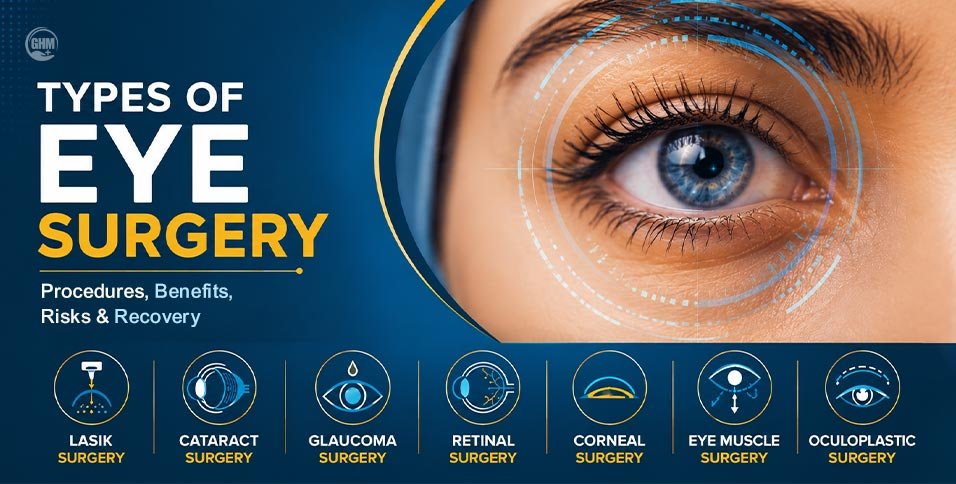
Vision is one of the most important senses, yet millions of people worldwide struggle with eye conditions that affect their daily lives. Fortunately, advances in modern ophthalmology have provided us with different types of eye surgery safer, faster, and more effective than ever before.
According to the World Health Organization, at least 2.2 billion people globally have a vision impairment or blindness, and nearly half of these cases could have been prevented or treated.
Eye surgeries are no longer limited to complex hospital procedures. The remarkable variety of types of eye surgery available today is designed to target a specific part of the eye, a specific condition, and a specific need. Many treatments today are minimally invasive, use advanced laser technology, and involve shorter recovery periods. LASIK remains one of the world’s most popular eye surgeries, and studies show that over 95% of LASIK patients report satisfaction with their results.
From correcting refractive errors to treating cataracts and retinal disorders, the various types of eye surgery available today can significantly improve vision and overall quality of life.
In this guide, we will explore the most common eye surgeries, how they work, who may need them, and what patients can expect before and after treatment.
Why Eye Surgery May Be Needed
Your eyes are complex structures, and problems can arise in many different layers — the cornea, lens, retina, optic nerve, or eye muscles.
Eye surgery may be recommended for:
- Vision correction (difficulty seeing clearly near or far)
- Age-related conditions like cataracts or macular degeneration
- Eye injuries or structural abnormalities
- Progressive diseases like glaucoma or diabetic retinopathy
Common conditions that lead to eye surgery include cataracts, glaucoma, refractive errors (myopia, hyperopia, astigmatism), retinal detachment, corneal damage, and strabismus (crossed eyes). The right treatment depends on where the problem is and how severe it has become.
The Most Commonly Performed Types of Eye Surgery
1. Refractive Eye Surgery
Refractive eye surgery is a vision correction surgery that corrects how light bends as it enters your eye. It works by reshaping the cornea (the clear front layer of your eye), reducing or eliminating the need for glasses or contact lenses.
2. LASIK Surgery
LASIK (Laser-Assisted In Situ Keratomileusis) is the world’s most popular elective eye procedure. A laser creates a thin flap in the cornea, reshapes the tissue underneath, and replaces the flap. Most patients see clearly within 24 hours of LASIK surgery. Studies show a 96–99% success rate, and roughly 90% of patients achieve 20/20 vision or better after the LASIK procedure.
3. PRK Surgery
Before LASIK, PRK (Photorefractive Keratectomy) was the preferred option. In Photorefractive Keratectomy, rather than creating a flap, the surgeon gently removes the outer layer of the cornea before applying the laser. Recovery takes a few days longer, but PRK is often recommended for patients with thinner corneas who are not ideal LASIK candidates.
4. SMILE Surgery
SMILE (Small Incision Lenticule Extraction) is the newest and most minimally invasive laser procedure. In SMILE eye surgery, a tiny lens-shaped piece of corneal tissue is extracted through a small incision, and no flap is involved. This technique is associated with a lower risk of dry eye and a faster healing experience, making SMILE an increasingly popular type of eye surgery worldwide.
5. Cataract Surgery
A cataract is a clouding of the eye’s natural lens, which sits just behind the pupil. Cataract causes blurry, hazy vision and is one of the leading causes of blindness globally. But it is also one of the most treatable conditions in all of medicine.
During cataract surgery, the clouded lens is removed and replaced with a clear artificial lens called an IOL (Intraocular Lens). The procedure is typically done in under 30 minutes and is performed on an outpatient basis. Laser-assisted cataract surgery offers even greater precision in certain cases. Recovery after cataract surgery is generally quick, and most patients notice improved vision within days.
6. Glaucoma Surgery
Glaucoma is a group of conditions that damage the optic nerve, usually due to elevated pressure inside the eye. When eye drops or medication cannot adequately control the pressure, surgery is recommended. If left untreated, Glaucoma can cause permanent vision loss.
Warning signs of glaucoma that need urgent attention include sudden eye pain, halos around lights, and rapid vision changes.
Common approaches in Glaucoma Surgery include:
- Trabeculectomy creates a new drainage channel in the eye
- Laser trabeculoplasty uses a laser to improve fluid drainage
- Drainage implants, where tiny tubes are inserted to help fluid drain
- Iridotomy creates a small laser opening in the iris to relieve pressure
7. Retinal Surgery
The retina is the light-sensitive tissue at the back of the eye. The retina converts the visuals into signals that the brain can process.
Several serious conditions can affect the retina, including,
- Retinal tears occur when the vitreous fluid inside the eye shrinks and pulls on the retina with a force that can cause a rip
- Retinal detachment, where the retina pulls away from the eye wall
- Diabetic retinopathy, caused by damage from uncontrolled blood sugar
Procedures used to treat retinal conditions include vitrectomy (removal of the gel inside the eye), laser photocoagulation (sealing tears with a laser), scleral buckling (placing a band around the eye to push the wall inward), and pneumatic retinopexy (injecting a gas bubble to reattach the retina).
8. Corneal Surgery
The cornea is your eye’s outermost clear layer. It can be damaged by infection, disease, or injury, leading to vision impairment. When the cornea is too scarred or diseased to function properly, surgical intervention is often the only solution.
Corneal Surgery Procedures include:
- Corneal transplant (keratoplasty): a donor cornea replaces a damaged one. Healing takes several months, but visual outcomes are generally positive.
- Phototherapeutic keratectomy (PTK): a laser smooths the irregular surface or removes scar tissue.
- Pterygium surgery: removes a fleshy overgrowth on the cornea caused by UV exposure or dryness.
9. Eye Muscle Surgery
Eye Muscle Surgery is preferred for correcting strabismus. Strabismus, commonly known as “crossed eyes,” occurs when the eyes do not align properly. Eye muscle surgery adjusts the tension of the muscles controlling eye movement, helping both eyes point in the same direction.
Eye muscle surgery is one of the most common eye surgeries performed on children, though adults can also benefit. Some patients may pair surgery with vision therapy for the best results.
10. Oculoplastic Surgery
Oculoplastic surgery covers procedures involving the eyelids, tear ducts, and the bony socket surrounding the eye (orbit). Common procedures in oculoplastic surgery include eyelid repair (for drooping or turned-in lids), tear duct reconstruction, and orbital fracture repair following facial trauma. These procedures serve both functional and cosmetic purposes, improving vision obstruction while also restoring appearance.
Risks and Recovery After Eye Surgery
Eye surgery is generally safe, but like any medical procedure, it comes with possible side effects and a recovery period. Knowing what to expect helps you heal faster and spot any concerns early.
Common Temporary Side Effects of Eye Surgery
Dry Eyes: Eye surgery temporarily reduces tear production, leaving your eyes feeling gritty or uncomfortable. Lubricating eye drops prescribed by your doctor provide relief. This usually resolves within a few weeks.
Redness: Some redness or pink discoloration around the eye is normal after surgery. It happens as small blood vessels respond to the procedure and typically fades within days without any treatment.
Light Sensitivity: Bright lights may feel uncomfortable or even painful in the first few days after surgery. Wearing sunglasses outdoors and dimming your indoor lighting can help manage this while your eyes adjust.
Blurred Vision: Vision may appear hazy or fluctuate during the initial healing phase. This is a normal part of recovery as the eye stabilises. Most patients notice significant improvement within a few days to a couple of weeks.
Rare but Serious Risks of Eye Surgery
Infection: Though uncommon, post-surgical infection can occur if bacteria enter the eye. Signs include increased pain, discharge, or worsening redness in the days after surgery. Prompt medical attention is essential to prevent lasting damage.
Bleeding: Minor surface bleeding is occasionally visible after eye surgery and is rarely a concern. In rare cases, internal bleeding within the eye can affect vision and require immediate evaluation by the surgeon.
Vision Complications: In very rare cases, surgery may result in under-correction, glare, halos around lights, or an unexpected change in vision quality.
Final Words
The various types of eye surgery available today reflect just how far ophthalmology has come. From minimally invasive laser eye surgery to sight-saving retinal repairs, modern vision procedures offer patients safer outcomes, faster recovery times, and dramatically better quality of life.
Whether you are exploring vision correction, managing a progressive eye disease, or recovering from an injury, there is a surgical option that may be right for you. The key is early diagnosis and professional guidance. The sooner an eye condition is caught and treated, the better your visual outcome.
If you notice persistent changes in your vision, see flashes, floaters, or experience eye discomfort that does not go away, consult an eye specialist promptly. Your sight is worth protecting.
This article is for informational purposes only and does not constitute medical advice. Always consult a qualified ophthalmologist for diagnosis and treatment.
Sanskruti Jadhav