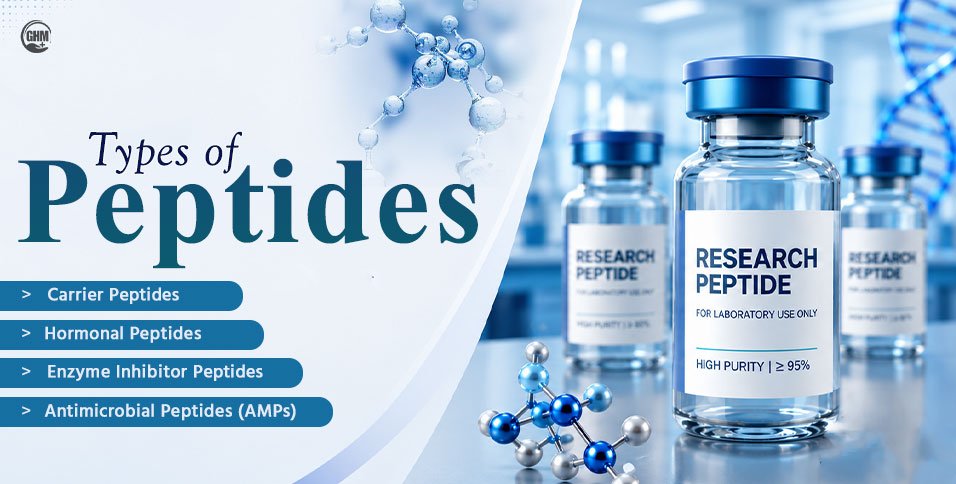
You might have heard about peptide supplements, anti-aging serums, or revolutionary weight-loss shots in the healthcare sector in recent years. These incredible biological messengers shape modern health, yet many people still do not know what peptides are, what peptides do, and how they actually work. Different types of peptides support the body for hundreds of different tasks. Therefore, researchers have organized peptide compounds into clear categories based on their chemical origin, structural length, biological role, target tissues, and medical applications.
Scientists have mapped out over 100 FDA-approved peptide medications, proving that these microscopic molecules carry massive potential for human wellness. Understanding these distinctions helps make smart, safe choices for the personal health journey.
In this guide, we will explore the primary types of peptides, scientific classifications of peptides, their powerful role in modern medicine, and how to use them safely.
What Are Peptides?
Peptides are short chains of amino acids, which serve as the fundamental building blocks of proteins. While both peptides and proteins consist of amino acid chains linked by peptide bonds, their overall size sets them apart. Scientists generally define peptides as short chains containing between 2-50 amino acids, whereas longer chains with over 50 amino acids become full proteins.
Researchers classify these tiny structures by their precise amino acid length:
- Dipeptides: Contain exactly two amino acids linked together.
- Tripeptides: Consist of three amino acids, such as the famous skin-repairing copper peptide GHK-Cu.
- Oligopeptides: Feature small chains ranging from 2-20 amino acids.
- Polypeptides: Include longer, complex chains containing between 20-50 amino acids.
Size directly influences biological activity. Because peptides feature a small molecular weight, they easily penetrate deep cell layers and travel through biological barriers.
Inside the body, peptides provide cellular functions that trigger vital processes like collagen production, tissue repair, and hormone balance.
Understand The Different Types of Peptides In Modern Medicine
The body does not treat every amino acid chain the same way. Classification of different types of peptides allows medical professionals to develop targeted treatments with minimal side effects.
Types of Peptides Based on Their Origin
To understand how these peptide compounds work, start by examining where they originate.
1. Endogenous Peptides (Natural Peptides)
Endogenous peptides originate naturally inside the body’s cells. The endocrine glands, immune cells, and nervous system continuously release these natural messengers to keep the internal organs in balance.
Key natural examples of Endogenous Peptides include:
- Insulin Peptides: Regulate blood sugar levels and energy storage.
- Oxytocin Peptides: Control uterine contractions and foster social bonding.
- Vasopressin Peptides: Manage fluid retention around the cells and maintain blood pressure balance.
- Endorphins Peptides: Relieve pain naturally and elevate mood during physical activity.
- Defensins Peptides: Act as primary immune defenders that destroy harmful pathogens.
2. Exogenous Peptides
Exogenous peptides originate outside the human body. Scientists synthesize these compounds in specialized laboratories or extract them from nutrient-rich natural foods. Manufacturers turn exogenous formulas into life-saving prescription drugs, dietary supplements, and topical cosmetic serums.
Types of Peptides Based on Their Biological Function
When evaluating cosmetic and wellness formulas, experts separate them into six distinct functional groups.
1. Signal Peptides
Signal peptides send direct chemical commands to target skin cells. They prompt fibroblasts to generate fresh collagen, elastin, and structural proteins. This renewed collagen restores skin firmness and speeds up wound healing. Popular peptide skincare ingredients like Matrixyl fall directly into the category of signal peptides.
2. Carrier Peptides
Carrier peptides deliver essential trace minerals, like copper or manganese, directly to deep cellular structures. By transporting these vital elements, carrier formulas boost enzymatic activity, promote skin repair, and support thicker hair growth. Copper peptide (GHK-Cu) stands out as a leading carrier compound.
3. Neurotransmitter-Inhibiting Peptides
Neurotransmitter-inhibiting peptides disrupt the chemical signals between the facial nerves and underlying muscles. By relaxing minor muscle contractions, they visibly smooth out deep expression lines around the eyes and forehead. Skincare brands often highlight Argireline as a top neurotransmitter inhibitor. While marketers call Argireline a “Botox-like” alternative, it works far more gently than botulinum toxin and does not paralyze facial muscles.
4. Enzyme Inhibitor Peptides
Enzyme inhibitor peptides slow down the natural breakdown of existing collagen and structural proteins. Rather than triggering the body to build entirely new protein structures, these defensive compounds preserve existing skin matrix proteins, which effectively slows down visible aging signs.
5. Antimicrobial Peptides (AMPs)
Antimicrobial peptides form the body’s frontline physical defense against invading microbes. These defensive chains disrupt dangerous bacteria, fungi, and viruses while fortifying the skin’s moisture barrier. Dermatologists prescribe topical AMP formulas to calm inflammatory conditions like eczema, rosacea, and severe acne.
6. Hormonal Peptides
Hormonal peptides travel through the bloodstream to carry critical instructions across different organ systems. They regulate blood sugar, appetite signals, kidney hydration, and reproductive cycles. Key biological examples of hormonal peptides include insulin, GLP-1, and oxytocin.
Therapeutic Peptides Used in Modern Medicine
Ever since scientists successfully created synthetic insulin in 1921, peptide-based medications have completely transformed patient care. Today, over 100 FDA-approved peptide medications treat complex chronic illnesses.
FDA-Approved Peptide Therapies:
| Medical Condition | Representative Approved Medications |
| Diabetes Management | Insulin, Semaglutide, Tirzepatide, Liraglutide |
| Osteoporosis | Teriparatide, Abaloparatide |
| Oncology Care | Degarelix, Carfilzomib |
| Digestive Health | Linaclotide, Teduglutide |
| HIV & Chronic Pain | Enfuvirtide, Ziconotide |
1. Diabetes and Metabolic Health
Peptide research has revolutionized endocrine care. Clinical studies reveal that GLP-1 receptor agonists, including semaglutide and dual-action tirzepatide, significantly improve blood sugar control while reducing long-term cardiovascular risks.
2. Osteoporosis and Bone Density
Osteoporosis weakens bone matrix structures over time. FDA-approved medications like teriparatide and abaloparatide mimic natural parathyroid hormones. These daily therapies rebuild bone mineral density in aging adults, significantly lowering fracture risks.
3. Oncology Care
Oncology specialists rely on targeted peptide drugs to disrupt cancer cell growth. Medications such as degarelix suppress advanced prostate cancer progression, while carfilzomib specifically targets multiple myeloma cells.
4. Gastrointestinal Disorders
Chronic digestive conditions respond exceptionally well to targeted peptide science. Prescriptions like linaclotide relieve severe irritable bowel syndrome symptoms. Meanwhile, teduglutide helps patients with short bowel syndrome absorb vital nutrients far more efficiently.
5. HIV Therapy and Chronic Pain Management
Antiviral therapies like enfuvirtide block HIV-1 from invading healthy human cells. For severe chronic pain that fails to respond to traditional pain medication, doctors use ziconotide, a non-opioid peptide derivative that blocks pain signals along the spinal cord.
Cosmetic Peptides Used in Skincare
Cosmetic researchers widely consider peptides to be gold-standard skincare ingredients.
As we age, our skin naturally loses about 1% of its collagen every year, leading to fine lines, loss of firmness, and a weakened moisture barrier. When we apply topical skincare formulas containing specific types of peptides, these small signaling molecules penetrate the skin barrier to reach deep dermal fibroblasts.
1. Collagen Peptides
Collagen peptides (often labeled as hydrolyzed collagen) are small, pre-digested fragments of the collagen protein. Because whole collagen molecules are far too large to pass through the pores, researchers break them down into microscopic dipeptides and tripeptides that easily absorb into the skin. When applied topically or taken as a dietary drink powder, it significantly boosts skin hydration, smooths out rough texture, and strengthens the natural moisture barrier against environmental stress.
2. Copper Peptides (GHK-Cu)
Copper peptides combine a small tripeptide (glycyl-L-histidyl-L-lysine) with a trace molecule of elemental copper. Acting as powerful carrier peptides, they transport copper directly into deep skin cells where it acts as a key cofactor for antioxidant enzymes and structural repair. Additionally, copper peptides calm inflammatory skin redness, accelerate wound healing, and neutralize damaging free radicals caused by daily sun exposure.
3. Matrixyl (Palmitoyl Pentapeptide-4)
Matrixyl is one of the most thoroughly researched signal peptides in modern cosmetic science. Formulated as a synthetic lipopeptide, Matrixyl specifically mimics natural extracellular matrix fragments to trigger intense collagen production. Clinical studies show that regular application of Matrixyl can increase dermal collagen density, visibly reducing wrinkle depth and softening stubborn crowd’s feet around the eyes. Advanced variations, such as Matrixyl 3000, combine multiple signal peptides to simultaneously repair damaged skin matrix structures while reducing low-grade chronic inflammation associated with skin aging.
4. Argireline (Acetyl Hexapeptide-3)
Argireline represents a unique class of neurotransmitter-inhibiting peptides designed to target expression lines caused by repeated facial movements. It works by gently interfering with the SNARE protein complex, which softens the chemical signals sent from facial nerves to underlying facial muscles. By subtly relaxing these micro-contractions, Argireline smooths out stubborn forehead lines, frown lines, and smile creases.
Research Peptides Used For Scientific Investigation
We are seeing emerging research compounds like BPC-157, TB-500, CJC-1295, and Ipamorelin discussed across online biohacking forums. Laboratory models show that BPC-157 and TB-500 speed up soft tissue repair and trigger fresh blood vessel formation. Meanwhile, CJC-1295 and Ipamorelin prompt the pituitary gland to release natural growth hormone.
Current Evidence and Regulatory Status
While early lab findings look promising, proceed with extreme caution. Regulatory authorities like the FDA and EMA have not approved BPC-157, TB-500, CJC-1295, or Ipamorelin for general human medical use. Most human evidence remains limited, and unverified products sold online carry severe contamination risks. Never use research chemicals without direct medical supervision.
Natural Food Sources That Support Peptide Production
A human can naturally support their body’s amino acid stores by consuming a nutrient-dense, high-protein diet. Nutritional research highlights that eating whole foods rich in bioactive proteins helps the cells produce essential natural messengers.
Include these protein-dense foods in the weekly meal plan:
- Animal Sources: Lean beef, poultry, eggs, milk, and aged cheeses.
- Marine Sources: Salmon, shellfish, and ocean fish.
- Plant-Based Sources: Soy, lentils, chickpeas, oats, flaxseed, and hemp seeds.
Are Peptide Supplements Safe?
Over-the-counter collagen powders and amino acid supplements offer wonderful health benefits, like joint support, enhanced skin elasticity, and faster post-workout recovery. However, safety depends heavily on product quality and intended use.
Unlike prescription medications, over-the-counter dietary supplements do not undergo strict pre-market FDA approval. Misusing unapproved synthetic growth hormones or unverified products can cause serious side effects, including:
- Sudden blood sugar spikes and decreased insulin sensitivity.
- Elevated blood pressure, rapid heart rate, and chest palpitations.
- Digestive distress, severe headaches, and skin allergic reactions.
- Long-term hormonal imbalances and organ strain.
Choosing the Right Types of Peptides
Navigating the wellness space for peptide use requires clear, evidence-based steps.
- Define the Goals: Clearly identify whether the goal is to improve facial skin firmness, support joint mobility, or manage a diagnosed medical condition.
- Distinguish Prescriptions from Cosmetics: Never substitute an over-the-counter skincare cream or supplement powder for a doctor-prescribed medical treatment.
- Verify Independent Testing: Look for reputable dietary supplements that feature independent third-party quality testing.
- Consult Healthcare Professionals: Speak directly with the primary doctor or dermatologist before introducing new active supplements or therapeutic protocols.
Final Note
Understanding the diverse types of peptides reveals just how vital these amino acid chains are to human health. Natural peptides regulate the internal organs every second, while synthetic peptide drugs continue to redefine treatments for diabetes, osteoporosis, and cancer. At the same time, topical cosmetics offer proven anti-aging benefits for the skin barrier.
As medical research advances, peptide therapies will become even more precise. The new changes in peptide regulations are also paving the way for broad access to consumers.
Frequently Asked Questions
- Are collagen peptides different from protein?
Yes, collagen peptides are much smaller than full collagen proteins. Whole proteins feature long, complex amino acid chains that are difficult to digest, whereas broken-down collagen peptides absorb rapidly into the bloodstream.
- What are peptide drugs?
Peptide drugs are FDA-approved prescription medications formulated to target specific cellular receptors. Doctors prescribe them to manage type 2 diabetes, osteoporosis, cancer, and severe chronic pain.
- Are any peptides FDA-approved?
Yes, several therapeutic peptides are FDA-approved medicines, including semaglutide, tirzepatide, tesamorelin, and insulin. However, many popular wellness and bodybuilding peptides trending online (such as BPC-157 and TB-500) are not FDA-approved drugs.