There is a particular kind of stillness inside an operating room that people who have never been inside one tend to underestimate. It is not the stillness of calm. It is the stillness of total concentration. The hum of the ventilator. The soft, deliberate arrangement of instruments. The awareness, shared by every person in that room, that what happens in the next few hours will determine whether someone goes home to their family.
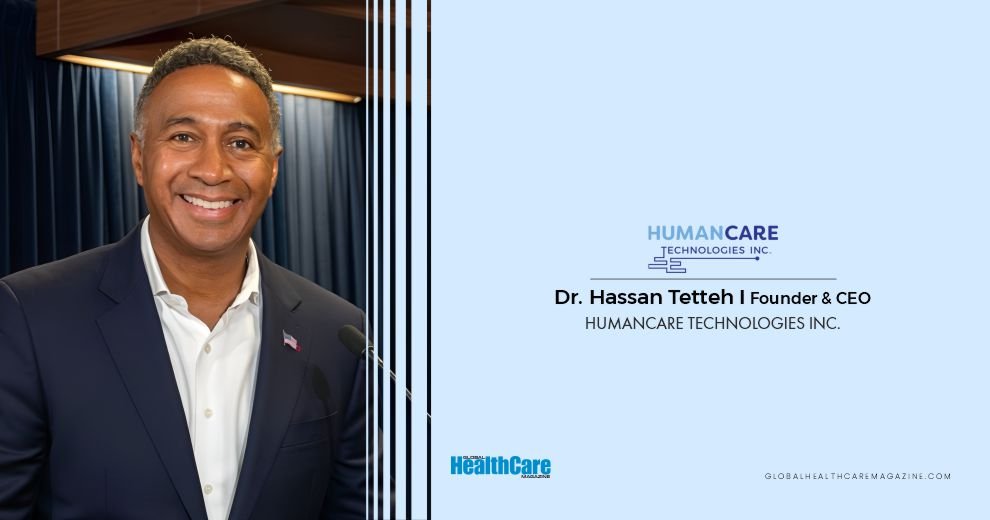
Dr. Hassan Tetteh has stood inside that stillness many times. He is a thoracic surgeon. He has held human hearts in his hands. He has transplanted lungs. He has performed some of the most technically demanding procedures in medicine, achieving a 98% surgical success rate in complex cases. And somewhere inside the discipline and weight of that work, a belief took shape that would eventually carry him far beyond any operating room.
Technology must serve humanity. Not work around it. Not tolerate it. Serve it.
That belief is the thread running through every chapter of a career that is, by any measure, extraordinary.
A Life Forged in Service
Few careers contain the range that Dr. Tetteh’s does.
He is a thoracic surgeon, a retired U.S. Navy Captain, a bestselling author, a professor at three distinguished institutions, a TEDMED Front Line Scholar, a TEDx speaker, an IRONMAN athlete, and the Founder and CEO of HumanCare Technologies, Inc. He has performed heart and lung transplants. He has shaped AI strategy inside the Department of Defense. He has contributed to conversations in Congress.
And yet, when he talks about where it all began, he returns to something quieter.
“My journey has been shaped by a deep commitment to service, forged early through family, faith, and a calling to medicine,” he says. “Growing up, I learned that leadership is not about position. It is about responsibility.”
That principle became his compass. It followed him from medical school into the Navy, from the operating room into the corridors of the Department of Defense, and eventually from the battlefield into the boardroom. Each environment added something new. Each one reinforced the same essential truth.
What the Operating Room Teaches
There is a kind of knowledge that can only be earned inside an operating room. It is not solely technical knowledge, though the technical demands are formidable. It is knowledge of precision. Of what it means to function as a team when the margin for error is effectively zero. Of humility as a professional discipline rather than a personal virtue.
Dr. Tetteh founded STAR Teams, an organ recovery innovation initiative that has helped save over 1,200 lives. That achievement alone would define most careers. For Dr. Tetteh, it was a chapter in a longer story, an essential and deeply human one, but a chapter nonetheless.
“In the operating room, I witnessed the most profound human moments,” he reflects. “Life, death, and everything in between. Those experiences instilled in me a deep respect for precision, teamwork, and humility.”
That humility, earned in the most human of settings, is what distinguishes his approach to artificial intelligence from those who arrive in the field from a purely technical direction. Dr. Tetteh came to AI by way of the patient. He has never lost sight of that.
When the Mission Expanded
At a certain point in his career, Dr. Tetteh’s lens shifted. Not away from the individual patient. Outwardly, to include the millions he could not personally treat.
That expansion led him to the Department of Defense Joint Artificial Intelligence Center, where he served as Mission Chief. In that role, he helped develop and shape AI strategies that impacted 9.6 million beneficiaries across the Military Health System. The scale of that number is genuinely difficult to hold in one’s mind. From a single patient on an operating table to nearly ten million people whose care was quietly, systematically shaped by the policy architecture he helped design.
It was also during an earlier period, as the Chief Medical Informatics Officer for the U.S. Navy, leading large-scale digital modernization efforts, including enterprise EHR implementation, that Dr. Tetteh confronted the human complexity of transformation. Clinician fatigue was real. Resistance was real. And the lesson he took from navigating all of it was one he now carries into every engagement.
“Change cannot be imposed,” he says. “It must be co-created.”
Building HumanCare Technologies
HumanCare Technologies, Inc., headquartered in Potomac, Maryland, was not born out of ambition alone. It was born out of a gap.
Dr. Tetteh had watched health systems pour billions of dollars into digital health infrastructure, only to find their leaders still struggling with the same foundational failures: fragmented data that could not communicate across systems, poor interoperability, and decision support tools that paradoxically failed to support better decisions. The technology was accumulating. The intelligence was not.
He built HumanCare Technologies to solve three specific, unglamorous, and critically important problems. The first: turning raw data into actionable decision intelligence. The second: enabling genuine interoperability across complex ecosystems. The third: embedding AI into clinical and operational workflows in ways that actually change behavior and outcomes.
“Our focus has always been on transformation, not just technology,” he says.
Successful platforms integrate disparate data sources, build longitudinal views of individual patients, and deliver real-time insights to both clinicians and administrators, from predictive analytics to AI-driven clinical decision support. The guiding idea is deceptively simple. Better decisions lead to better outcomes.
Operationalizing that principle at scale is anything but simple. It requires integrating hard-won lessons from the Military Health System, where Dr. Tetteh saw firsthand how improved interoperability and thoughtfully redesigned workflows could reduce documentation burden on clinicians, improve care quality, and generate measurable safety gains. At Vituity, he continues to extend these ideas through AI-first organ recovery initiatives.
When technology is deployed without that kind of grounding, he is clear about what it becomes.
Noise rather than signal.
Innovation Without Equity Is Incomplete
One of the most revealing decisions Dr. Tetteh made as an innovator was not a business decision. It was a values decision. Alongside HumanCare Technologies, with a cadre of talented and visionary innovators, he co-founded AI MINDSystems Impact, a not-for-profit organization focused specifically on underserved and clinically complex communities. Communities that are, as he puts it, often left out of innovation cycles.
The reasoning is not sentimental. It is strategic and ethical in equal measure. AI does not arrive neutral. It arrives shaped by the data it was trained on and the populations that data represents. If underserved communities are absent from the design and testing of AI tools, that absence will be faithfully reproduced in the tools themselves and in the outcomes they generate.
“Innovation without equity is incomplete,” Dr. Tetteh says.
The not-for-profit allows him to pilot solutions in the communities that need them most, to engage those communities as genuine co-creators rather than passive recipients, and to hold his own work accountable to a standard that goes beyond commercial success. His belief, stated plainly, is that impact and innovation must coexist. Not sequentially. Together.
The Risks Worth Taking Seriously
For all his advocacy for AI adoption in healthcare, Dr. Tetteh is not a starry-eyed booster of the technology. He is, if anything, among the more measured and clear-eyed voices on the dangers that come with accelerating AI deployment in clinical settings.
“The greatest risk is not that AI will fail,” he says. “It is that it will succeed without guardrails.”
He is specific about what those risks look like: bias baked into data and algorithms, a lack of transparency in how AI systems arrive at their conclusions, fragmented governance frameworks that leave accountability diffuse and unclear, and data sovereignty challenges that grow more complex as systems span institutions and cross borders.
His message to healthcare leaders is equally direct. AI governance must be treated as a core competency, not an afterthought. That means establishing ethical frameworks, ensuring that AI systems can explain their reasoning, and maintaining clear, designated lines of accountability.
And underneath all of it, there is one principle he returns to again and again.
“Trust is the currency of healthcare,” he says. “If we lose that, we lose everything.”
The Misconceptions Worth Correcting
Ask Dr. Tetteh what concerns him most about how healthcare leaders currently approach AI, and he does not hesitate. The first misconception, he says, is the belief that AI is coming for clinicians. “AI is a force multiplier,” he says firmly. “Not a replacement.”
The second is that AI adoption is primarily a technical challenge. It is not. In his view, it is a leadership challenge, one that requires governance structures, cultural transformation, and the kind of institutional trust that takes years to build and can erode quickly without sustained attention.
The third is perhaps the most quietly damaging: the assumption that value will follow automatically from implementation. It will not. Without genuine integration into clinical workflows, without alignment with how decisions are actually made at the bedside, and without an honest and relentless focus on outcomes, AI becomes an expensive distraction.
Human-centered AI, as Dr. Tetteh defines it, augments clinical judgment, preserves the relationship between patient and physician, and improves outcomes in ways that are measurable and meaningful, not just presentable in a quarterly dashboard.
The Scholar, the Author, the IRONMAN
It would be a mistake to understand Dr. Tetteh only through his clinical and entrepreneurial work.
He is a former Associate Professor of Surgery at the Uniformed Services University, adjunct faculty at Howard University College of Medicine, and professional adjunct faculty at the Center for Digital Health and AI at Johns Hopkins Carey Business School. Teaching, for him, is not a side endeavor. It is a core part of the mission of developing the leaders who will carry this work forward.
His books reach readers that the classroom cannot.
His latest, Smarter Healthcare with AI (Forbes Books-Simon & Schuster), explores how artificial intelligence is reshaping medicine, optimizing efficiency, personalizing care, and improving patient outcomes. His acclaimed The Art of Human Care® series examines how purpose, personalization, and partnership impact lives, both in medicine and in leadership.
As a TEDMED Front Line Scholar and TEDx speaker, he has carried these ideas to some of the most influential platforms in global health, arguing consistently that AI and human compassion are not competing forces but complementary ones.
That he is also an IRONMAN athlete will come as no surprise to anyone who has spent time understanding the way Dr. Tetteh approaches his work. The discipline required to finish an IRONMAN, the training, the endurance, the refusal to stop, is the same discipline visible across every dimension of what he does.
The Decade Ahead
When Dr. Tetteh talks about what comes next, he does not reach for vague optimism. He reaches for specifics. He calls the years ahead “a defining decade for healthcare,” and the phrase carries the weight of someone who has been inside enough defining moments to recognize them from the inside.
His vision is to build an ecosystem where AI, data, and human care converge to deliver personalized, equitable, and high-quality care for everyone, everywhere. Not a segment of the population. Not the well-insured and the geographically fortunate. Everyone.
That means scaling AI-first service lines. It means advancing global partnerships. It means continuing to shape the policy and governance frameworks that will determine how AI develops inside health systems across North America and around the world.
His partners in this work span a wide and deliberate spectrum: healthcare systems, federal agencies, academic institutions, and technology companies. His experience across the Department of Defense, Congress, academic medicine, and private industry has repeatedly reinforced that cross-sector collaboration is not a luxury in this work. It is a requirement.
“The goal,” he says, “is not just innovation. It is a transformation.”
What Technology Cannot Change
There is a question worth sitting with at the end of a career that has spanned surgery and military service and policy architecture and technology entrepreneurship and education: What does a person who has seen this much believe is, ultimately, most important?
Dr. Tetteh’s answer is neither complicated nor hesitant.
“Technology will change everything, except what matters most. Purpose. Compassion. Human connection. Those are timeless.”
He returns, in his work and in his thinking, to three words: purpose, personalization, partnership. They appear in his books. They appear in the design of his platforms. They appear in the way he describes the patients whose lives he has shaped, sometimes with a scalpel, sometimes with policy, sometimes with code.
The future of healthcare, in his telling, will not be written by algorithms alone. It will be written by the choices that people make about how to use those algorithms, and in whose service they choose to deploy them.
That is the work Dr. Tetteh has given himself. And by every measure, it is just beginning.
Quote