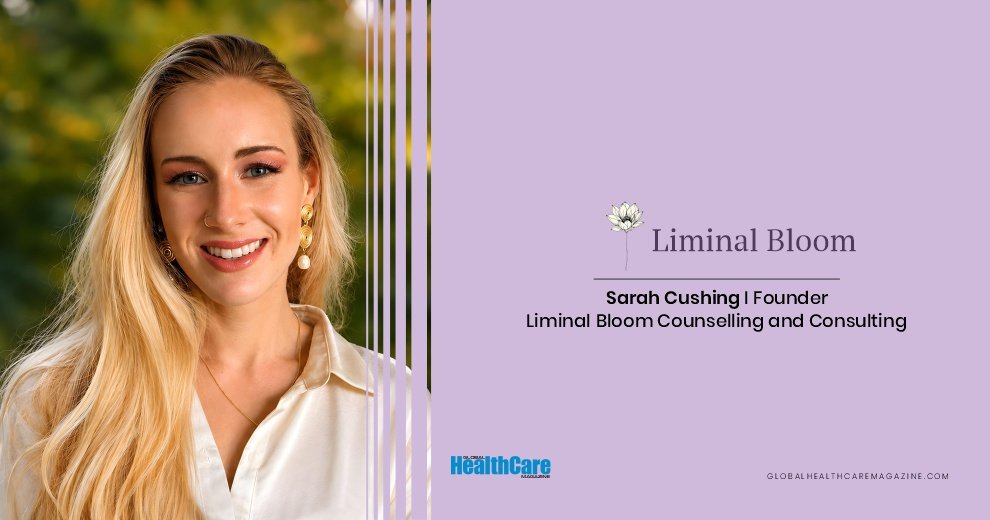
Liminality, the word at the centre of one private practice’s name, refers to “the space between what was and what is becoming.” It describes a threshold where old ways of surviving no longer serve a person, and new ways of living have yet to fully emerge.
Sarah Cushing, a psychotherapist at Liminal Bloom Counselling and Consulting, has built her work around that threshold. “I believe so much of healing happens in that uncertain, transitional space,” she says.
Her practice supports individuals navigating eating disorders, trauma, and complex relational challenges.
A Path Through Three Universities
Sarah entered post-secondary education as an NCAA Division I golfer at Radford University in Virginia, USA. She believed she wanted to become a medical doctor, so she began studying biology and biochemistry.
The road to that point had been “rife with my own mental health challenges.” They included time spent in hospital for an eating disorder, which became increasingly pervasive after she moved to the United States for school. Recognizing that she needed to heal, and that she needed more support to do so, she transferred in her second year to the University of Ottawa. There she could be closer to family, friends, and the resources she needed.
Her direction shifted. After realizing she had very little interest in mathematics, she moved from biochemistry to a double major in Anthropology and Sociology. She was drawn to qualitative research, particularly the chance to hear the stories and lived experiences of participants. Her professors gave her the flexibility to explore, and much of her research focused on the sociocultural influences surrounding food, body image, and people’s relationships with themselves.
During the COVID-19 pandemic, she found that online learning suited her. It let her balance her own healing with her academic responsibilities. It also allowed her to begin collaborating with Hopewell, a local eating disorder support centre in Ottawa, where she mentored individuals navigating recovery and facilitated workshops.
She then pursued a Master’s in Counselling Psychology at Yorkville University in New Brunswick. The online format again matched her learning style and kept her engaged in volunteer work and advocacy. Her own recovery journey continued throughout, and it taught her “an extraordinary amount about the intersection of eating disorders, trauma, and relationships.”
She came to see parallels among people’s relationships with food, their bodies, themselves, and other people, with relational trauma often residing at the root of these difficulties. Those insights carried into graduate school and solidified her passion for healing through a holistic, relational, and trauma-informed lens.
A Practice Built for Nuance
Liminal Bloom began with Sarah’s wish to offer a more nuanced approach to mental healthcare. Over time, she became increasingly aware of the limitations of treatment approaches that focus predominantly on symptom reduction without adequately exploring the psychological, relational, and sociocultural contexts in which symptoms develop.
Recovery, she points out, is rarely linear. It involves different stages, changing relationships with body image, and often a complete reconsideration of what structure, safety, and self-care mean to an individual. Above all, her practice is client-centred. Individuals have autonomy in defining what recovery means to them, and harm reduction is respected when appropriate. The work explores not only how to reduce suffering but how to build a life that feels meaningful and sustainable.
Her central conviction is that eating disorders often serve several protective functions. Sarah challenges the idea that they are predominantly behavioural problems. The behaviours, she says, almost always fulfil “deeply rooted psychological needs.” They may offer safety, control, emotional regulation, identity, or protection from experiences that feel intolerable.
In some cases, abruptly removing a coping mechanism without first establishing alternative sources of safety and regulation can actually increase psychological distress. Trauma and eating disorders also coexist with remarkable frequency. For this reason, she believes eating disorder treatment cannot be comprehensive without a genuinely trauma-informed approach. That view also means acknowledging the limitations of conventional recovery frameworks, since healing may look different from one person to another.
She also resists the notion that body image is simply about vanity or appearance. For Sarah, it concerns how a person experiences themselves in the world and their sense of belonging within it. Discomfort in one’s own skin frequently extends into relationships, sexuality, careers, and the capacity to experience joy. Part of the work is cultivating comfort and self-worth around the Self, rather than using the body as a proxy for personal value.
Phases, Patterns and Self-Trust
Sarah’s approach is loosely informed by the triphasic model of trauma treatment. Its three overlapping phases are safety and stabilization, trauma processing, and integration. She draws on several modalities because each offers something valuable, and no single one can address the complexity of human suffering.
In the initial stages of therapy, skills-based interventions, including Dialectical Behaviour Therapy (DBT), alongside somatic attunement, can help clients cultivate a greater sense of safety and develop coping strategies that do not rely exclusively on eating disorder behaviours or other protective responses. Attachment-based and psychodynamic exploration, alongside Eye Movement Desensitization and Reprocessing (EMDR), can then support clients in understanding and processing the experiences that contributed to these patterns. Finally, Acceptance and Commitment Therapy (ACT), particularly values exploration, becomes invaluable during integration. Once clients have begun cultivating safety and processing trauma, they can start exploring what it means to operate from their values rather than from survival mode.
What makes this integration particularly meaningful to Sarah is that each approach can address limitations that may arise when another is used in isolation. DBT can sometimes feel pathologizing when the focus is on changing behaviours without appreciating the somatic urges and protective adaptations that perpetuate them. These responses are often deeply rooted in trauma. Similarly, exploring values through ACT before someone has developed a sufficient sense of safety can sometimes result in identifying priorities that reflect what they have been taught to value, rather than what genuinely aligns with their authentic Self. When this happens, there is a risk of continuing to neglect parts of ourselves that may eventually emerge through symptoms, relational difficulties, or emotional distress. For Sarah, “therapy is about integrating these approaches in a way that honours the complexity of each individual, rather than expecting the individual to fit within the limitations of a particular modality.”
Within that frame, she approaches perfectionism, emotional dysregulation, and disconnection by identifying their function. “How are these patterns actually protecting you? And what are they protecting you from?” The aim is self-trust. By understanding what does not feel good, clients can begin exploring what does and establish boundaries around experiences that compromise their well-being. These boundaries help build trust in their own capacity to care for themselves. Over time, repeatedly recognizing their needs, responding to discomfort, and establishing protective boundaries can create a meaningful shift in their nervous systems, allowing their bodies to begin experiencing greater safety. Core beliefs can then evolve around actual evidence that a person is capable of caring for themselves, strengthening their ability to validate their own decisions rather than moving passively through life at the mercy of mental health challenges.
In psychodynamic work, Sarah sometimes describes this as moving out of what is referred to as the “victim trance.” She is careful to add, “I am not suggesting people are never victims of circumstances beyond their control.” Trauma, oppression, and interpersonal harm are real. Healing, she explains, involves recognizing where we have agency in our lives, including the ways we may unintentionally participate in patterns that perpetuate our own suffering. “This is not about blame. It is about reclaiming our capacity to respond differently, establish boundaries, and build lives that are no longer organized exclusively around survival.”
Healing Within a System
Sarah believes individuals cannot be expected to heal while remaining embedded in the same relational and environmental dynamics that contributed to their suffering; meaningful recovery often requires changes in external conditions, including family dynamics, relationships, professional expectations, and sociocultural pressures. Sometimes, she says, “The symptoms cannot meaningfully subside until the conditions that make them necessary begin to change.”
That does not necessarily mean families are responsible for the development of eating disorders. It means recovery does not occur in isolation. In eating disorder treatment, she often works with the broader system around a person so that appropriate boundaries, communication patterns, and sources of support are in place. Eating disorders, and mental health challenges more broadly, frequently thrive in isolation. Individuals must develop their own self-reliance, self-compassion, and emotional regulation. Yet external supports that model care, compassion, and healthy accountability can be extraordinarily helpful.
She is equally passionate about empowering caregivers. She reminds families that “there is no room for blame or shame when we are healing.” Many carry tremendous guilt. When shame becomes overwhelming, it can interfere with recognizing where accountability or change may be needed. It also consumes emotional energy better directed toward meaningful support.
As an attachment-based therapist, Sarah recognizes that relational trauma can be deeply embedded in eating disorder presentations. She helps clients explore those experiences safely, develop appropriate boundaries, and establish healthier relational dynamics without necessarily disconnecting entirely from the people they love. The aim is for clients and caregivers alike to take part in recovery in ways that are compassionate, sustainable, and respectful of everyone’s humanity.
The Work Beyond the Session
Client work remains the heart of Sarah’s practice and, by her account, its most meaningful part. Yet leading a private practice involves considerably more. She places importance on her own personal and professional development, including how she cares for herself throughout the day so she can show up fully and authentically.
Networking and interdisciplinary collaboration matter because complex presentations often call for comprehensive treatment teams. She maintains a trusted network of healthcare professionals and community resources for referrals. She also creates personalized therapeutic resources, since healing continues well beyond the therapy room. She develops free educational resources for people who may lack the financial means or access required for comprehensive care.
Advocacy completes the picture. With social media and pop psychology more accessible than ever, she believes mental health professionals have a responsibility to challenge the all-or-nothing narratives that often dominate popular discussion. Oversimplified messages can inadvertently perpetuate stigma, shame, and unrealistic expectations around healing. She wants her work to contribute to a more compassionate, nuanced, and informed understanding of mental health, both within and beyond the therapy room.
On impact, Sarah speaks as a regulated psychotherapist, mindful of the ethical limits on claims about treatment outcomes. Recovery is deeply individualized, and no clinician can guarantee a result. She does not provide client totals or other numerical measures, emphasizing instead the individual changes she has been privileged to witness. She has supported people who lived with chronic eating disorders for many years and have reached a place where the disorder is no longer at the centre of their lives.
For some, that means a more sustainable relationship with food and their bodies. For others, it means reclaiming relationships, careers, and personal interests, with changes that can meaningfully transform the dynamics of entire families. She has also supported individuals whose eating disorders had raised concerns about reproductive health and the capacity for childbearing. Witnessing some of these clients move through recovery and into pregnancy and parenthood has been particularly meaningful. For her, recovery is about more than symptoms. “It is about the possibilities that begin to emerge when an individual is no longer organizing their entire life around an eating disorder.”
Collaboration at an Emerging Frontier
Ketamine-assisted psychotherapy (KAP) preparation and integration form part of Sarah’s practice. She stresses interdisciplinary collaboration and respect for the professional scopes of practice involved in medication-assisted treatment. She collaborates with Flowstate Therapy in Ottawa, where nurses, physicians, psychologists, and psychotherapists work together on assessment, treatment planning, and delivery of care. This collaborative model is essential to ensuring that the medical and psychological dimensions of KAP are approached responsibly, with each professional working within their scope of practice.
Her training has included both Western clinical approaches and shamanic perspectives on psychedelic healing. She sees tremendous value in bringing these frameworks into thoughtful dialogue, while keeping clear ethical boundaries and grounding care in evidence-informed practice and professional regulatory standards. She also believes psychedelic healing should be approached with humility and reverence for the cultures and lineages that have maintained relationships with altered states of consciousness and plant medicines for generations. She encourages practitioners to seek appropriate education and, where invited, to learn respectfully from Indigenous healers, elders, and traditional knowledge keepers, mindful of cultural context, consent, and the need to avoid appropriation.
KAP, in her view, is not simply about the medication experience. It is about helping clients establish safety, approach their experiences with curiosity, and meaningfully integrate emerging insights into everyday life.
Her greatest achievements, Sarah says, reside in the ways her clients’ lives change. Among the clinical initiatives she is proudest of is bringing KAP into eating disorder treatment, an integration that remains relatively uncommon. The work has been “both exciting and, at times, isolating.” There is still much to learn about its potential applications, limitations, and safety considerations for individuals with eating disorders.
A second milestone is establishing a private practice that prioritizes trauma work through psychodynamic and somatic lenses. It honours the fact that two people with seemingly similar symptoms may require entirely different therapeutic approaches. It also keeps her collaborating with other professionals to expand the possibilities for individualized care.
What Comes Next
One of Sarah’s priorities is increasing accessibility to nuanced, trauma-informed, and resilience-informed mental healthcare. She is exploring several avenues for expanding her practice’s reach, including app development, building a team of aligned professionals, developing educational platforms, and pursuing more speaking and advocacy opportunities.
Her long-term vision extends beyond traditional outpatient psychotherapy. She would like to establish a nonprofit organization that serves as a landing space for individuals transitioning out of inpatient eating disorder or trauma treatment. Too often, people leave intensive treatment environments having made meaningful progress in symptom stabilization, yet still face the enormous task of rebuilding their lives outside survival mode. She envisions holistic support through psychotherapy, community connection, practical life skills, relational support, and opportunities for individuals to rediscover their identities beyond illness. She is also interested in expanding access to more intensive psychotherapy formats. While meaningful healing often unfolds over a long period, she believes there can be considerable value in intentionally creating space for deeper, more comprehensive therapeutic work.
A Life That Makes Room for Healing
Sarah believes that “in many ways, this profession chooses you.” She notes that in some shamanic traditions, becoming a healer is understood not simply as an honour, but as a responsibility that can involve tremendous sacrifice. Controversy aside, she finds meaning in recognizing that the work changes you. She believes it is important to understand that work-life balance will not always look conventional: this work follows you, challenges you, and transforms how you understand yourself and the world. Some days, she truly lives and breathes it.
That said, part of this transformation necessarily involves learning how to care for herself so she can continue showing up for others in the ways they need her. She works regularly with several mentors, guides, and healers who support her psychological, physical, and spiritual well-being. Her daily practices include yoga, running, meditation, and sauna.
Her message about lasting healing is that it is not about having a perfect life or always being able to live in an ideal way. It is about learning to tolerate life’s inevitable hardships and navigate them without letting those experiences derail holistic well-being. It is about building relationships with ourselves and others that nourish us, hold us accountable, and empower us. And perhaps most importantly, it is about “developing the capacity to return to this breath, this moment, and the full range of emotions that naturally accompany being human.”
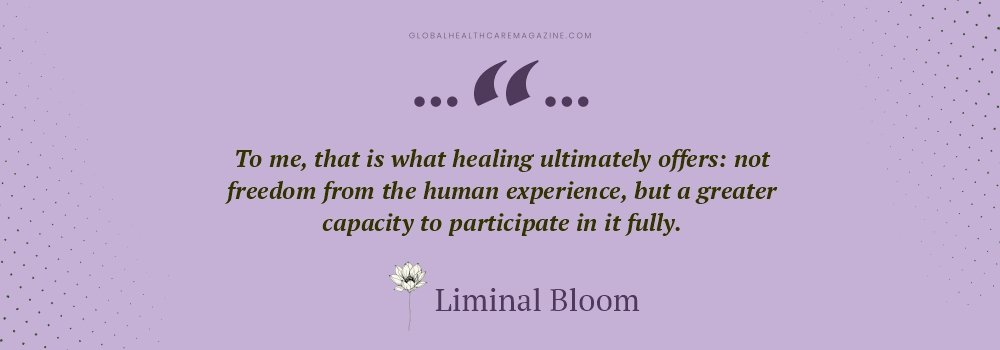
To Sarah, that is what healing ultimately offers: not freedom from the human experience, but a greater capacity to participate in it fully.
Quote