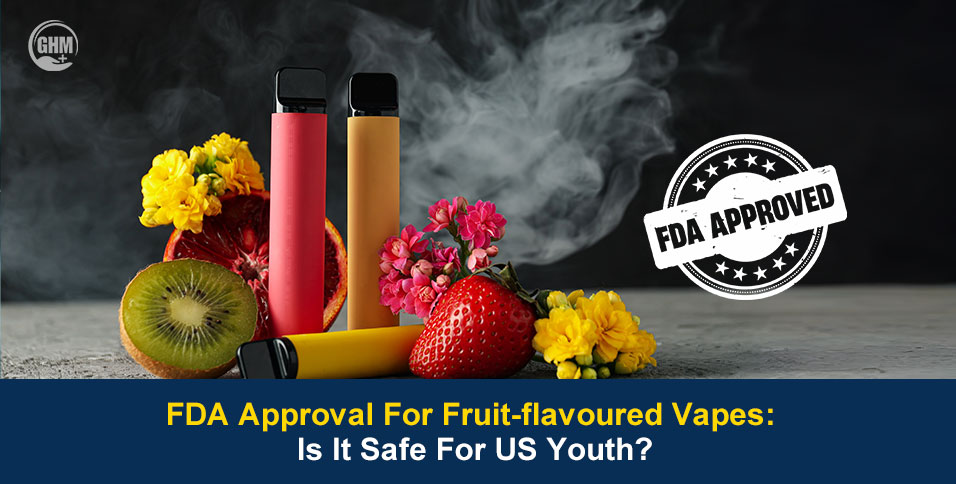
The U.S. Food and Drug Administration (FDA) has authorized the marketing of four new electronic nicotine delivery systems (ENDS), signaling a new phase in flavored e-cigarette regulation and harm reduction strategies. The FDA approval for fruit-flavoured vapes has marked a significant shift in how regulators approach e-cigarettes in the United States.
This approval for fruit-flavoured vapes by the FDA is the first time the agency has allowed non-tobacco flavored vaping products under its strict review system.
Historically, the FDA has been cautious about approving flavored vaping products due to their appeal among younger users. However, this latest fruit-flavoured vape authorization by the FDA comes amid growing political and industry pressure to expand access to vaping alternatives.
For millions of adult smokers in the USA, this could open the door to alternatives that may reduce exposure to harmful chemicals found in traditional cigarettes.
What Did the FDA Approve In the New Vape Authorization
The FDA vape approval includes four products developed by Glas, authorized through the PMTA (Premarket Tobacco Product Application). This is the FDA’s scientific review process to determine whether a product is appropriate for public health.
Key Details of the Flavoured Vapes Approval:
- Four e-liquid pod variants approved. i.e., Classic Menthol, Fresh Menthol, Gold, and Sapphire
- Nicotine strength should be 5% (50 mg/ml)
- Legal sale restricted to adults aged 21 and older
- First authorization of non-tobacco flavored ENDS products
According to the official U.S. Food and Drug Administration announcement, these products met the agency’s requirement that benefits to adult smokers outweigh potential risks, especially among youth.
The agency has maintained that flavored products can only be approved if companies demonstrate strong safeguards against youth usage.
As the vaping industry changes, many consumers are also becoming more mindful of the ingredients and manufacturing practices behind the products they choose. Those looking for alternatives with specific formulation preferences may consider exploring vegan certified vape juice, which reflects the growing demand for greater transparency and ingredient-focused product options within the vaping industry.
Breakthrough Technology For Youth Vaping Prevention
A central factor in this FDA vape approval is the technology used to prevent youth vaping.
The fruit-flavoured vape system requires government-issued ID verification with biometric or periodic identity checks. The device must be paired with a smartphone via Bluetooth. The device stops functioning if disconnected from the verified phone.
These Bluetooth-enabled e-cigarettes are designed to ensure that only the registered adult user can operate the device.
FDA official Bret Koplow described this innovation as a “potential game changer,” emphasizing its role in reducing youth access while supporting adult smokers seeking alternatives.
How Will The FDA’s Vape Approval Affect Public Health
Smoking remains the leading cause of preventable death in the United States, responsible for one in five deaths annually. More than 25 million Americans still smoke combustible cigarettes.
The FDA’s rationale is rooted in harm reduction. While no tobacco product is safe, vaping products may expose users to fewer toxic substances than traditional cigarettes.
However, the agency has been clear about the risks. Youth vaping remains a serious concern, especially given the addictive nature of nicotine. This is why the approval includes strict conditions to prevent underage access.
Recently, the British Parliament approved the landmark UK Tobacco and Vapes Bill, putting a ban on smoking in the UK. The proposal would stop anyone born on or after January 1, 2009, from ever legally buying tobacco products, leading towards a smoke-free generation in Britain.
Strict Marketing and Compliance Rules For Vaping
The FDA has imposed rigorous marketing restrictions on vaping alongside the approval.
Key Requirements:
- Advertising must target only adults aged 21+
- Companies must track and report audience demographics
- Ongoing monitoring of youth usage trends
- Mandatory reporting of prevention effectiveness
If these conditions are not met, the FDA can suspend or withdraw authorization, which could alter the USA vape market.
With FDA approval for fruit-flavoured vapes, the total number of FDA-authorized ENDS products has reached 45. This creates new opportunities for companies operating within regulatory frameworks.
Major nicotine industry players such as Altria Group and British American Tobacco are closely watching these developments as the market evolves.
At the same time, the FDA continues enforcement against unauthorized vaping products, including crackdowns at retail outlets and border checkpoints.
What Comes Next For Flavoured Vapes
The FDA has made it clear that this ENDS product approval is not permanent or unconditional. The agency will closely monitor real-world data, including youth usage rates, marketing practices, and public health outcomes.
If evidence shows increased harm or misuse, the vape authorization can be revoked.
Future approvals may depend heavily on similar technological safeguards and strong scientific evidence demonstrating public health benefits.
Conclusion
The FDA approval for fruit-flavoured vapes represents a turning point in U.S. tobacco regulation. By allowing flavored vaping products with strict safeguards, the FDA is attempting to strike a balance between reducing smoking-related harm and protecting young people from nicotine addiction.
While the long-term impact remains uncertain, this move could reshape both the regulatory landscape and the future of smoking alternatives in the United States.