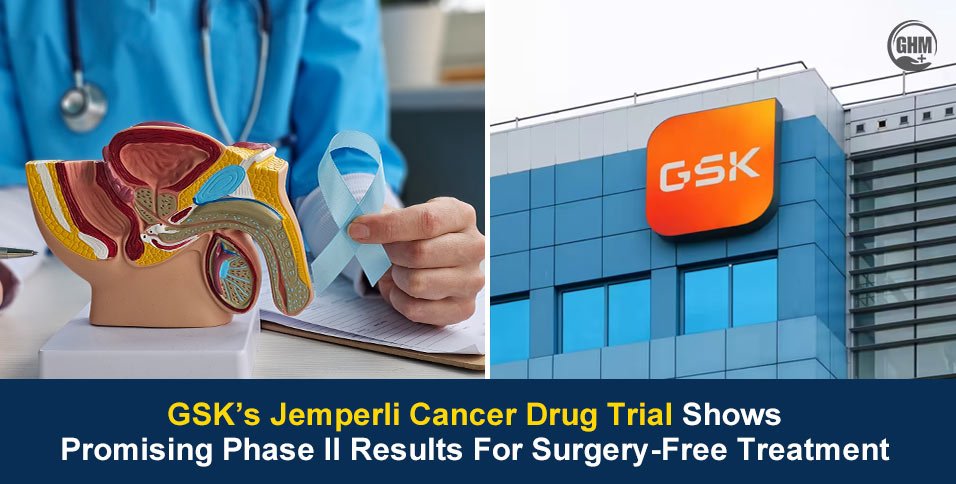
In a milestone achievement for oncology, the biopharma giant GSK’s Jemperli cancer drug trial has met positive interim Phase II results from its registrational AZUR-1 study. The Jemperli clinical trial demonstrated that patients with a specific subtype of rectal cancer showed no detectable signs of cancer for at least 12 months after treatment.
Previously, Jemperli has secured approvals for certain endometrial cancers and other advanced solid tumors.
GSK’s Jemperli drug results could replace traditional, invasive interventions like chemotherapy, radiation, and surgery, fundamentally altering rectal cancer care in the future.
What Is GSK’s Jemperli Cancer Drug Trial?
The Jemperli AZUR-1 Trial is a study evaluating the efficacy of dostarlimab as a standalone therapy.
- GSK’s Jemperli cancer drug trial enrolled 154 participants diagnosed with stage II/III locally advanced rectal cancer, utilizing an open-label, single-arm design.
- Over a six-month period, patients received nine cycles of dostarlimab administered via a 500 mg intravenous infusion every three weeks.
The primary goal of this Jemperli drug trial for rectal cancer was a sustained clinical complete response at 12 months. If successful, it will prove that a single immunotherapy agent can eliminate visible tumors for over a year without multi-modality treatments.
How Does Jemperli (Dostarlimab) Work?
Dostarlimab, marketed as Jemperli, is a programmed death receptor-1 (PD-1) immune checkpoint inhibitor. It works by unmasking cancer cells that try to hide from the body’s defenses, effectively reactivating the patient’s own immune system to recognize and destroy the tumor.
Because Jemperli is particularly effective in tumors with a high volume of genetic mutations, it has previously secured approvals for certain dMMR endometrial cancers and other advanced solid tumors. However, it is important to note that it is not yet approved anywhere in the world for rectal cancer.
Type of Rectal Cancer Studied In Dostarlimab Rectal Cancer Trial
The GSK’s Jemperli cancer drug trial specifically targets a distinct molecular subset of rectal cancer.
- dMMR Rectal Cancer:
Mismatch repair deficiency (dMMR) is a genetic characteristic where tumor cells cannot properly repair DNA damage. As a result, these tumors rapidly accumulate genetic mutations. While dMMR tumors notoriously exhibit a poor response to conventional chemotherapy, their hyper-mutated nature makes them highly visible and exceptionally responsive to immunotherapy.
- MSI-H Rectal Cancer:
Microsatellite instability-high (MSI-H) is the condition of genetic hyper-mutability that results directly from a dMMR state. Together, dMMR/MSI-H serves as a critical biomarker. Instead of treating cancer purely based on its anatomical location, the Dostarlimab rectal cancer trial highlights a modern shift toward biomarker-driven treatment tailored to the tumor’s genetic profile.
Key Findings of The Jemperli AZUR-1 Trial
The phase II trial results of the Jemperli drug trial for rectal cancer have delivered highly encouraging efficacy and safety data:
- Primary Endpoint Achieved: GSK’s Jemperli cancer drug trial successfully met its core goal, showing a clinically meaningful rate of sustained clinical complete responses at 12 months.
- No Detectable Disease: Patients who responded to the drug showed absolutely no detectable signs of cancer upon follow-up clinical assessments.
- Consistent Safety Profile: The safety and tolerability of dostarlimab remained entirely consistent with previous studies across other solid tumors, with no unexpected safety concerns reported.
These interim findings mark a substantial improvement compared with historical standard-of-care outcomes, where complete tumor eradication without surgery is exceedingly rare.
Important Limitations of the GSK Jemperli Drug Trial
While the results of GSK’s Jemperli cancer drug trial are undeniably historic, balanced medical reporting requires noting several key limitations:
- Interim Analysis: These are early data points, and the trial is still ongoing.
- Single-Arm Study: There is no direct, randomized comparison group in AZUR-1 to evaluate it side-by-side against chemoradiation.
- Follow-Up Needed: Longer-term data are required to confirm the durability of these complete responses and ensure the cancer does not return.
- Awaiting Peer Review: Full, detailed patient-level data tables are still awaited for presentation at an upcoming medical congress.
Future Plans For GSK’s Jemperli
Following the positive outcome of the Dostarlimab rectal cancer trial, GSK plans to officially submit the trial data to global regulatory authorities. In the United States, the drug holds both Breakthrough Therapy and Fast Track designations, positioning it perfectly for the FDA’s accelerated review pathway.
The interim findings of GSK’s Jemperli cancer drug trial strongly suggest that utilizing immunotherapy alone may successfully help select patients avoid the grueling side effects of chemotherapy, radiation, and surgery while maintaining a clinically complete response.