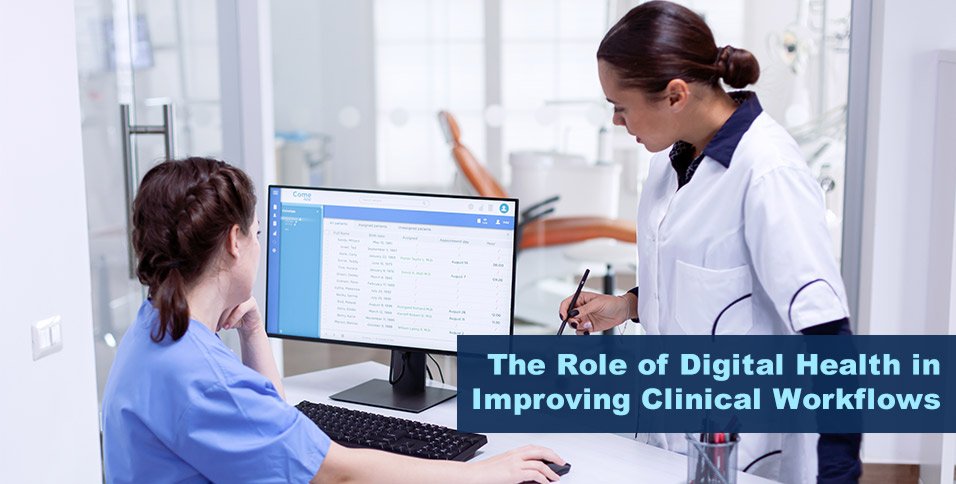
The UK has announced plans to launch a fully digital “online hospital” service under the NHS, aiming to improve access to care and reduce growing waiting lists. The model, expected to roll out in 2027, will allow patients in England to consult specialists remotely through the NHS app.
Similar models have already been tested in countries including China, the United States, Saudi Arabia and Singapore, where digital platforms are being used to expand access to specialist care.
While these systems have helped improve access in some cases, they have also exposed challenges around coordination, quality of care and patient follow-up.
Understanding Online Hospital Model
An online hospital model is a healthcare delivery system where patients can consult specialists, manage treatments, or receive diagnostic support through digital channels like video, remote monitoring, or virtual wards, without always visiting a physical facility.
For the UK’s NHS Online, this model would let patients see specialists via the NHS app and schedule tests or scans nearer their homes.
1. China: The Internet Hospital Revolution
China has been a major pioneer in the online hospital care model, especially since the COVID-19 pandemic. Its “internet hospitals” allow patients in smaller cities or rural areas to connect with specialists in major urban centres.
- In China’s model, patients often go to a local clinic or tele-facility, which connects them to top-tier doctors via the internet.
- These systems help address the uneven distribution of medical resources across regions.
- However, challenges remain: ensuring quality across many providers, integrating local diagnostics, and managing patient follow-ups.
The NHS must build strong referral systems and local diagnostic to support its digital hospital model.
2. Saudi Arabia: Seha Virtual Hospital at Scale
Saudi Arabia’s Seha Virtual Hospital is now recognised as one of the world’s largest virtual hospital systems.
- It offers 44 speciality services and connects with 224 traditional hospitals.
- Seha reduces geographical barriers, enabling patients in remote or underserved areas to access specialist care virtually.
- It uses digital monitoring, virtual consultations, and coordination with physical hospitals for tests or treatments when needed.
The UK must ensure its online hospital model can coordinate broadly across in-person facilities and virtual services, not operate as an isolated silo.
3. U.S.A.: Mercy Virtual & Hospital-at-Home Hybrids
In the U.S., the online hospital concept is embodied by Mercy Virtual.
- Mercy Virtual functions entirely via telemedicine with no patient beds on site. It remotely monitors, consults, and manages patients across a network.
- The U.S. also uses hospital-at-home hybrid models, where patients receive hospital-level care in their homes, with virtual oversight plus in-person nursing visits.
- These hybrid models report lower readmission rates and higher patient satisfaction.
Purely virtual care rarely suffices, therefore, the NHS online hospital model would likely benefit from hybrid in-home support in complex cases.
4. Singapore: Teleconsult & Hospital-at-Home Integration
Singapore has long embraced teleconsultation and hospital-at-home care, giving it a useful model for integration.
- Its TeleConsult program allows follow-up outpatient visits via video, when clinically appropriate.
- NUHS@Home delivers true hospital-level care in patients’ homes, combining remote monitoring, home visits, lab testing, and IV therapy.
- Singapore has also trialled virtual wards during COVID, keeping patients out of the hospital while under remote supervision.
Digital-first services must be paired with robust home-care logistics and physical backup when needed.
Critiques & Risks to Watch
These international models also highlight risks the UK must address:
- Digital exclusion: patients without reliable internet, digital skills, or devices could be left behind.
- Integration complexity: ensuring smooth coordination between virtual and physical services is difficult.
- Clinical safety: remote diagnosis may miss subtle signs that a hands-on exam would catch.
- Equity of care: ensuring underserved or rural communities benefit equally requires deliberate planning.
Suggestions for the UK’s Online Hospital Care Plan
- Hybrid structure: Combine virtual consultations with in-home care, diagnostics, or local clinics when necessary.
- Local Facility: Embed community diagnostic centres or clinics as the physical arm of the model.
- Inclusivity programs: Provide tech support, access devices, or digital training to marginalised patients.
- Quality oversight: Establish standards, clinical audits, and feedback loops across virtual services.
- Phased rollout: Begin with specialities where remote care is safer (e.g. dermatology, follow-up care) before expanding.
Conclusion
The NHS online hospital plan has the potential to ease pressure on the system and improve access to care. But global experience suggests that success will depend less on the technology itself, and more on how well it is integrated into existing services.
If done right, it could become a model for other countries. If not, it risks becoming another layer of complexity in an already strained system.