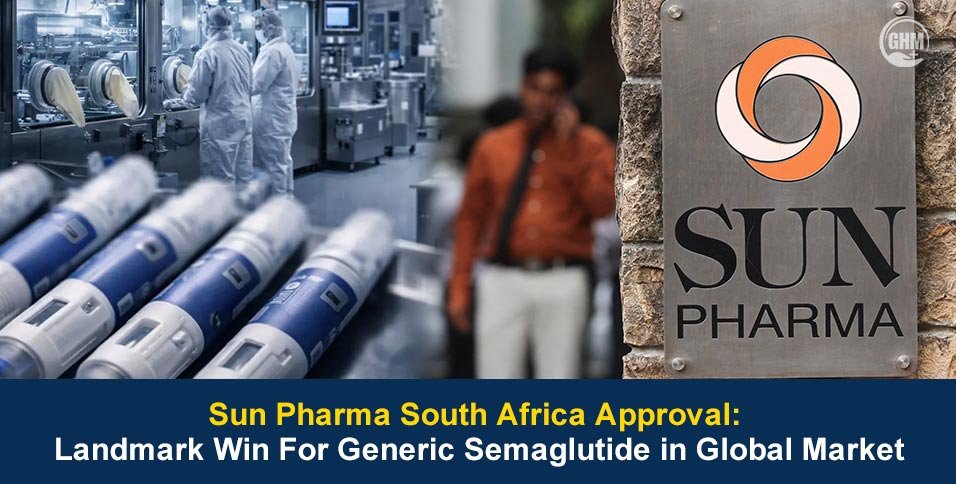
Sun Pharmaceutical Industries has secured marketing approval for its generic semaglutide medicine from the South African Health Products Regulatory Authority (SAHPRA). With Sun Pharma South Africa approval, the company can manufacture and distribute its generic semaglutide injection in the country. Novo Nordisk’s semaglutide patent expiry in Africa created a space for Sun Pharma in the generic medicine market.
South Africa has now officially become the second global market after India to grant clearance for Sun Pharma’s diabetes drug. The medication is indicated specifically for adults dealing with inadequately controlled type 2 diabetes mellitus.
With the commercial rollout planned for the coming days, Sun Pharma’s Semaglutide approval in South Africa will rapidly shift diabetes care in South Africa.
About Sun Pharma’s Semaglutide In South Africa
The Sun Pharma South Africa approval brings an affordable alternative to branded glucagon-like peptide-1 (GLP-1) receptor agonists in the country. Designed to improve blood sugar control, generic semaglutide introduces convenient treatment options:
- Product Design: The medication will be supplied as user-friendly, pre-filled, multidose injectable pens.
- Available Doses: It will launch in two strengths: a 2mg/1.5 mL pen and a 4 mg/3 mL pen.
- Dosing Schedule: It allows for a flexible, once-weekly injection routine.
Sun Pharma’s generic Semaglutide is meant to be used alongside diet and exercise to help adults manage type 2 diabetes effectively.
Significance of South Africa Semaglutide Approval
Driven by rapid urbanization and shifting lifestyle habits, diabetes care in South Africa faces an escalating burden. The rising prevalence of the disease places profound pressure on patients and local medical systems. Additionally, there is an urgent need for accessible, lower-cost diabetes treatments.
By introducing affordable generic alternatives, healthcare systems can reduce expenses while expanding patient coverage.
In the official statement on Sun Pharma South Africa approval, Sun Pharma Chief Operating Officer Aalok Shanghvi noted that “The expansion reflects the company’s focus on delivering complex, high-quality generics to patients and providers globally.”
Patent Expiry Opens the Generic Market For Sun Pharma
A major factor behind the Sun Pharma South Africa approval is the patent expiration of Novo Nordisk’s semaglutide in South Africa earlier this year. Semaglutide is the active ingredient found in highly popular branded medications like Ozempic and Wegovy.
The Novo Nordisk patent expiration has opened the doors for generic manufacturers to enter the market. Capturing a share of the high-demand GLP-1 sector presents a significant commercial opportunity for generic drug makers. Ultimately, approval for Sun Pharma shifts the diabetes market away from Novo’s monopoly toward a highly competitive landscape.
Competitive Landscape Shifts in South African Pharma
With the launch of Sun Pharma’s generic semaglutide, market dynamics are shifting rapidly. Sun Pharma will directly compete against Novo Nordisk’s original branded formulations.
Furthermore, the entry of generic options introduces a fresh challenge to U.S. pharmaceutical heavyweight Eli Lilly, which markets its own prominent diabetes and obesity therapies in the region. This growing competition among major manufacturers is anticipated to improve overall affordability and offer diverse treatment paths for consumers.
The Outlook
After India, South Africa represents the next step in Sun Pharma’s strategy to scale its advanced manufacturing capabilities worldwide. With an increasing international demand for accessible GLP-1 treatments, the generic version of this treatment can be an affordable option for South Africa. The Sun Pharma South Africa approval will be a turning point that bridges healthcare resource gaps in developing nations.