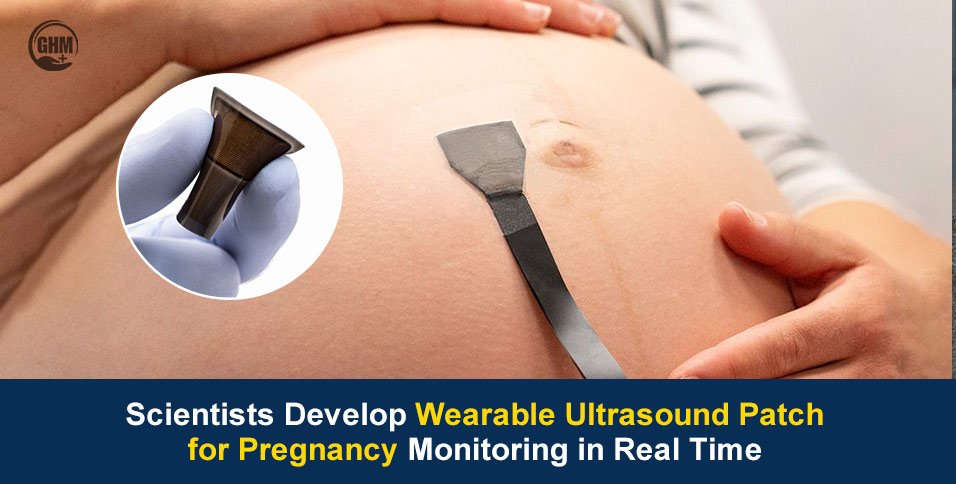
A new wearable ultrasound patch for pregnancy developed by researchers in the United States and the United Kingdom could change how doctors monitor fetal health during pregnancy. The soft wearable prenatal device continuously tracks fetal heart rate, blood flow, and fetal movement in real time, offering a potential breakthrough for high-risk pregnancy monitoring.
The technology, described in a study published in Nature Biotechnology, was created by researchers from the University of California, San Diego, Stanford University, and the University of Oxford. Experts say the wearable ultrasound device may help doctors identify dangerous pregnancy complications earlier and could eventually support at-home prenatal monitoring.
According to the researchers, current prenatal ultrasound technology often provides only short snapshot scans during scheduled hospital visits. Continuous monitoring is typically difficult outside clinical settings.
What is The New Wearable Fetal Monitoring Device
The new wearable ultrasound patch is a soft, flexible device worn on the abdomen that can continuously image the fetus and umbilical cord for hours at a time. Unlike traditional ultrasound systems, the patch does not require constant manual operation by trained technicians.
Researchers said the wearable ultrasound patch for pregnancy supports real-time fetal monitoring by tracking:
- Fetal heart rate
- Blood flow through the umbilical cord
- Fetal anatomy and movement
- Changes linked to pregnancy complications
Antoniya Georgieva, one of the senior authors involved in the research, noted that the technology demonstrates how continuous fetal monitoring can become practical in real-world care settings. “This paper marks a very important step,” said Antoniya.
How Continuous Ultrasound Monitoring Works
One of the biggest challenges in non-invasive fetal monitoring is that both the fetus and the umbilical cord move constantly during pregnancy. To solve this issue, researchers developed autonomous tracking algorithms that automatically follow the umbilical cord even when the fetus changes position.
The tracking system uses AI-powered ultrasound monitoring to maintain stable readings without requiring continuous adjustment from healthcare workers.
Researchers also designed the wearable ultrasound patch for pregnancy using soft, bendable materials so it can remain comfortable during long-term wear. While the current version still connects to external electronics and requires traditional ultrasound for initial placement, scientists are working toward a compact wireless version suitable for home use.
“Our long-term vision is a wearable ultrasound system that can be used continuously in daily life,” said study co-first author Geonho Park, in a media statement.
Promising Results for High-Risk Pregnancy Monitoring
The wearable prenatal device was evaluated through multi-center clinical studies in the US and UK involving 62 pregnancies, including both healthy pregnancies and high-risk cases involving preeclampsia, gestational diabetes, hypertension, and fetal growth restriction.
Researchers reported that measurements from the wearable ultrasound patch for pregnancy closely matched those from standard handheld ultrasound devices. In one significant case, the new wearable ultrasound device detected prolonged abnormal fetal signals during a pregnancy complicated by preeclampsia.
According to researchers, the findings on the new ultrasound patch prompted an early Cesarean delivery that may have helped prevent stillbirth.
The study also revealed that fetal blood flow can fluctuate significantly over time, highlighting limitations in relying solely on brief ultrasound appointments.
“Current diagnosis devices are intermittent,” said Prof Sheng Xu of Stanford University and a senior author of the study in media comments. “Patients can only do such measurements in the hospital. They miss a lot of information and data between hospital visits.”
Summary: Potential Impact on Prenatal Care
Experts believe the technology of the wearable ultrasound patch for pregnancy could improve access to prenatal care in low-resource regions where trained ultrasound specialists and advanced imaging equipment are limited.
Researchers say continuous monitoring could help doctors detect warning signs earlier, reduce emergency complications, and improve maternal-fetal outcomes globally. The project also reflects growing investment in prenatal care innovation and wearable healthcare technologies designed for remote monitoring.
Although the device remains in the research stage, scientists believe future wireless versions could eventually support safer at-home pregnancy monitoring, especially for patients facing elevated pregnancy risks.