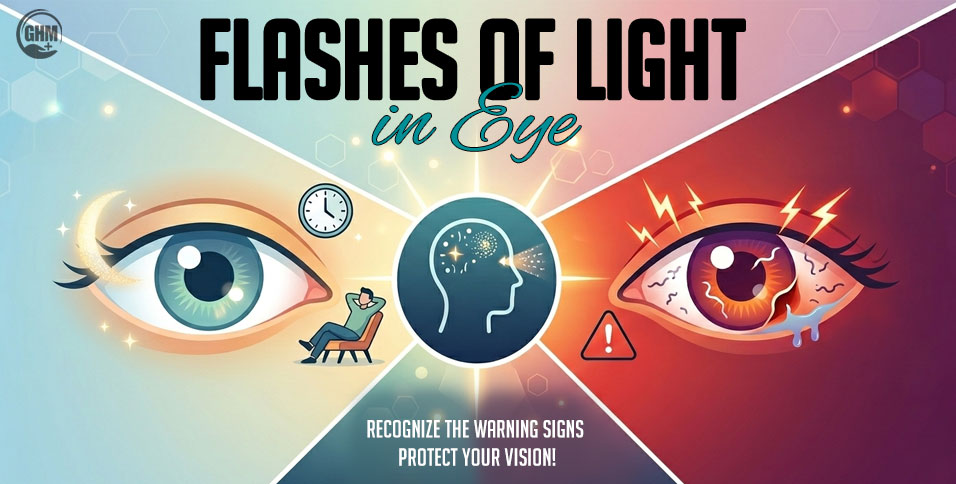
When you are relaxing in a dark room, have you ever noticed sudden, flickering flashes of light in eye? Seeing these eye flashes can be a jarring experience that leaves you questioning your eye health. Well, experiencing these at an old age is common, but if you are still young, these patterns indicate a high risk of permanent vision loss.
The reality is that these flashes exist on a spectrum. They can be a harmless byproduct of the eye’s natural aging process or a warning sign for a medical emergency.
If you want to keep your eyes healthy for a long time, you must know and understand the difference between a harmless quirk and a red flag occurring with your eyes.
This guide will help you understand the science behind the flashes of light in your eye, classify your different triggers for these vision flashes, and also help you determine exactly when you need to call a specialist to ensure your peace of mind.
Let’s Know More About Flashes of Light In Eye
What Are Flashes of Light in Vision?
Medical professionals call these visual phenomena eye flashes, photopsia. They typically appear as sparkles, lightning streaks, or quick flickers within your field of vision. Interestingly, these light shows happen without any external light source triggering them. You might notice flashes of light in the corner of your eye more prominently when you move your eyes rapidly or step into a dim environment.
Why Do Eye Flashes Occur?
Your eyes have a gel-like substance called the vitreous inside them. This gel fills the space between your lens and the retina. When the gel moves, rubs, or tugs against the light-sensitive retina, it creates mechanical friction. Because the retina only knows how to send “light” signals to the brain, it interprets this physical tugging as a bright flash.
While mechanical stimulation often causes these episodes, they serve as a vital signal of internal eye activity. According to the American Academy of Ophthalmology, most people will experience some form of vitreous changes in their lifetime.
When Eye Flashes Are Usually Harmless?
Not every sparkle in your vision requires a trip to the emergency room. In many cases, flashes of light in eye fall into a low-risk category.
These conditions cause flashes of light in the eye:
1. Posterior Vitreous Detachment (PVD)
The most common cause of eye flashes is posterior vitreous detachment, especially in adults over age 50. As we age, the vitreous gel liquefies and shrinks. Eventually, it pulls away from the retina. This process often causes brief flashes of light in the corner of the eye.
While the initial tugging creates flashes, these symptoms usually settle within a few weeks as the separation completes. Research indicates that over 60% of people over age 70 experience PVD. Even though it sounds scary, PVD is a normal aging process and usually does not damage vision.
2. Migraine Aura
Sometimes, the cause isn’t in the eye at all, but in the brain. A “migraine aura” can cause shimmering, zigzag lines in both eyes. These visual displays usually last between 10-60 minutes and often fade before a headache begins.
3. Minor Mechanical Triggers
Sometimes, simple physical factors trigger brief flickers. These include:
- Rapid head or eye movements.
- Sudden changes in lighting.
- Mild eye strain or exhaustion.
These flashes are generally harmless if they are occasional, brief, and occur without new floaters in the eye or dark shadows.
When Flashes May Signal A Serious Eye Emergency?
When the vitreous gel doesn’t pull away cleanly, it can cause significant damage to the back of the eye. If you experience a sudden onset of intense light bursts, you may be facing a high-risk condition, such as,
1. Retinal Tears
If the vitreous gel pulls too hard on the retina, it can create a small tear. Frequent flashes of light in corner of the eye or in the middle occurring within seconds or hours often signal this damage. A retinal tear is a serious precursor to permanent vision loss. It is a warning sign because it allows fluid to leak behind the retina.
Statistics show that approximately 10% to 15% of people with symptomatic PVD will develop a retinal tear. Constant or repeated flashes are the primary symptom here.
2. Retinal Detachment
A retinal detachment occurs when the retina peels away from its underlying supportive tissue. A tear allows fluid to seep behind the retina, lifting it off the back of the eye like peeling wallpaper. This is a true medical emergency. Without immediate surgical intervention, this condition often leads to permanent blindness.
3. Inflammatory Conditions
Occasionally, internal inflammation, such as uveitis, or nerve issues, such as optic neuritis, can also stimulate the retina or optic nerve. These often come with pain, redness, or significant blurred vision. These conditions require specialized medical intervention to prevent long-term complications and preserve peripheral vision.
Which Warning Signs You Should Never Ignore?
You must monitor your symptoms closely. If you notice any of the following red flags, seek an emergency eye exam immediately:
Emergency Red Flags
- Sudden Shower of New Floaters: A dramatic increase in eye floaters (tiny dark spots or “cobwebs”).
- The Shadow Effect: A dark shadow or curtain blocking your peripheral vision.
- Blurred Vision: A sudden drop in clarity or a narrowed field of view.
- Intense flashes: Light bursts that become more frequent or much brighter.
- Trauma-Related Flashes: Flickers that start immediately after a blow to the head or eye.
If you notice these symptoms, contact an ophthalmologist immediately. Early detection of a tear can often be treated with a simple laser procedure in the office, preventing the need for major surgery.
Who Is at Higher Risk for Dangerous Eye Flashes?
Not everyone faces the same level of risk. Specific factors make your eyes more vulnerable to retinal issues. You should be extra vigilant if you fall into these categories:
| Risk Factor | Why It Matters |
| Age 50+ | The vitreous naturally thins and shrinks over time. |
| High Myopia | Nearsighted eyes are longer, making the retina thinner and prone to tears. |
| Prior Surgery | Procedures like cataract surgery can increase the risk of PVD. |
| Eye Trauma | Physical injury can mechanically detach the retina. |
How Are Light Flashes In the Eye Diagnosed?
You cannot diagnose the cause of flashes of light in eye by looking in the mirror. A doctor must perform a dilated retinal examination. During this exam, the doctor uses special lenses to view the far edges of your retina.
This is the only way to ensure no small tears are hiding in your peripheral view. Early detection is everything if you want to maintain your eye health.
What Are The Treatment Options For Eye Flashes?
The treatment for flashes of light in eye depends entirely on the underlying cause. If a specialist confirms your flashes stem from a standard posterior vitreous detachment, you likely won’t need medical intervention. The flashes usually subside on their own as the vitreous gel settles.
According to data, early laser treatment for retinal tears can reduce the risk of detachment by over 90%. Because eye floaters often accompany these flashes, your doctor will monitor both to ensure your vision remains stable.
However, if an exam reveals a more serious condition, doctors must act quickly to prevent permanent vision loss.
Common Medical Interventions For Eye Flashes
- Laser Photocoagulation
If you have a retinal tear, a surgeon uses a medical laser to weld the retina back to the underlying tissue. This prevents fluid from seeping through the tear and causing a detachment.
- Cryopexy
This treatment uses extreme cold to freeze the area around a retinal tear. This creates a scar that secures the retina in place.
- Surgical Repair
For a full retinal detachment, a surgeon may perform a vitrectomy or a scleral buckle procedure. These advanced surgeries reposition the retina and restore its blood supply.
Final Note
While flashes of light in eye are often a standard part of the aging process, they should never be dismissed without thought. Most episodes stem from harmless vitreous changes, yet the overlap in symptoms with retinal detachment makes professional screening vital. By staying aware of symptoms, you can take the fast action needed to save your sight.
Because early treatment for retinal tears is highly successful, it is always better to be cautious. Future advancements in retinal imaging continue to make it even easier and more accurate.
However, your awareness remains the first line of defense. If your vision changes suddenly, don’t hesitate to contact a professional.
If you found this guide helpful, please share it with friends or family who may be experiencing vision changes!
Frequently Asked Questions
- Can stress cause flashes of light in the eye?
High stress or fatigue can sometimes trigger ocular migraines or eye strain, which may cause brief visual disturbances. However, you should still rule out retinal issues if the flashes persist.
- Are eye flashes and floaters the same thing?
No. Flashes are perceived light (photopsia) caused by retinal stimulation. Floaters are tiny clumps of gel or cells casting shadows on the retina. They often appear together during a PVD.
- How long do harmless eye flashes last?
Flashes from a PVD may last for a few weeks to months as the gel settles. Migraine auras typically resolve within an hour.