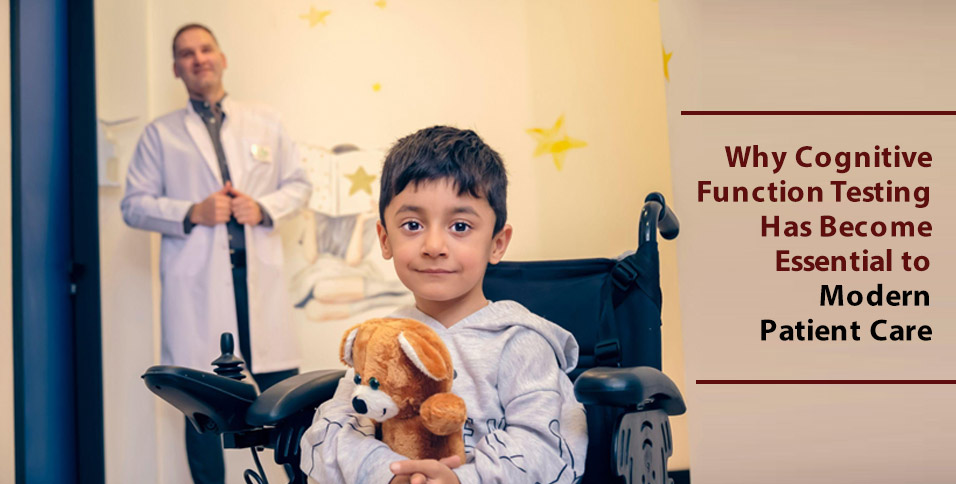
The way we think, remember, plan, and process everyday information sits at the heart of what makes us who we are.
Yet for most of medical history, cognitive ability has been treated as something to assess only when problems become impossible to ignore, rather than as a routine part of healthcare.
That approach is rapidly changing as researchers, clinicians, and patients increasingly recognise that subtle cognitive changes often appear years before any obvious diagnosis.
Catching those early signals can transform treatment outcomes across a long list of neurological, psychiatric, and chronic medical conditions.
What Cognitive Function Actually Means
Cognitive function is the umbrella term for the mental processes that allow us to make sense of the world, including memory, attention, reasoning, language, processing speed, and executive function.
These domains work together every moment of the day, shaping how we drive, work, parent, communicate, and navigate life.
When one or more of these domains begins to slip, the practical effects can show up long before any clinical diagnosis is made.
Forgetting names, struggling to follow conversations, missing appointments, or feeling mentally slower are all subtle indicators worth taking seriously rather than brushing aside.
Why Early Detection Genuinely Matters
Early identification of cognitive change creates a wider range of options for both patient and clinician across virtually every category of brain-related condition.
From mild cognitive impairment and early Alzheimer’s to concussion recovery, ADHD, depression, and side effects of certain medications, timing strongly influences the success of any intervention plan that follows.
For neurodegenerative conditions specifically, mounting evidence suggests that the earliest stages of decline are also the period when lifestyle changes, medication trials, and supportive therapies have the greatest measurable impact.
Waiting until symptoms become obvious to family and colleagues often means waiting until critical windows for genuine intervention have already passed for good.
Who Actually Benefits From Routine Testing
Cognitive function testing has traditionally been reserved for older patients showing clear signs of decline, but that narrow approach is increasingly being challenged by modern research.
Adults of all ages can experience meaningful changes due to medication effects, sleep disorders, mental health conditions, head injuries, or chronic illnesses such as diabetes and cardiovascular disease.
Even children and adolescents may benefit from cognitive evaluation when learning, attention, or behavioural concerns are present in everyday life.
The reality is that cognitive function is a vital sign for the whole person, not just an indicator reserved for one specific demographic group.
Why Traditional Testing Methods Often Fall Short
Pen-and-paper tests such as the MMSE, MoCA, and SLUMS have served as the standard cognitive screening tools in primary care for decades.
While useful as quick baseline checks, these tools were never designed to capture the subtle, early changes that actually matter most for prevention and timely intervention.
Comprehensive neuropsychological evaluations sit at the other extreme, offering deep clinical insight but often requiring four to eight hours, costing thousands of dollars, and carrying wait times of many months.
The gap between these two extremes leaves a wide and important middle ground where most patients genuinely need to be assessed.
The Rise of Modern Digital Cognitive Assessment
Modern digital platforms are now closing that gap by offering objective, validated, and remarkably quick assessments that can be completed in around fifteen minutes.
These tools measure multiple cognitive function domains in a structured, standardised way that delivers nuanced data without the weeks of waiting tied to traditional neuropsych referrals.
Digital tasks also benefit from built-in randomisation, meaning they cannot easily be memorised or rehearsed by patients, which has historically been a significant problem with paper-based screens.
The result is far more reliable longitudinal data when the same patient is reassessed over months or even years.
What Quality Cognitive Testing Actually Looks Like
A truly useful cognitive assessment is grounded in established neuroscience, validated against large normative datasets, and delivers results that can guide real clinical decisions on the day.
Anything less risks generating false reassurance, missed early signals, or unnecessary alarms in patients who would have otherwise been doing perfectly well in their everyday lives.
Quality assessments also test multiple cognitive domains rather than just memory alone, since impairments in attention, processing speed, or executive function often present long before noticeable memory decline.
This multi-domain approach gives clinicians a far more complete picture of what may be changing inside any given patient’s brain.
Removing the Barriers to Routine Testing
One of the most exciting developments in cognitive care is the steady removal of barriers that historically kept many patients from being tested at all.
At-home assessment options eliminate appointment anxiety, travel time, and the cognitive load of unfamiliar clinical environments that can themselves skew test results.
Digital platforms also integrate directly with electronic medical records, automatically generating clear reports and tracking change over time without endless manual paperwork.
Clinicians gain richer data while saving administrative hours, and patients gain easier access to objective insight that simply was not previously available outside specialist clinics.
A Wider Role for Cognition in Whole-Person Care
Cognitive screening is increasingly being incorporated into preventative care, occupational health, sports medicine, and chronic disease management programs around the world.
Just as routine blood pressure checks have become a standard part of every visit, brief cognitive checks are quietly emerging as a similarly valuable habit for the modern healthcare system.
This shift reflects a deeper understanding that cognitive health is connected to nearly every other aspect of wellbeing, including sleep, mental health, cardiovascular fitness, hormone balance, and metabolic function.
Caring for the brain is not a separate medical specialty but rather a thread that runs through almost every clinical decision made today.
What Patients Can Do Right Now
Patients curious about their own cognitive baseline no longer need to wait for symptoms before asking their healthcare provider about screening options available locally.
Knowing your typical performance across memory, attention, reasoning, and processing speed gives you a meaningful reference point that becomes especially valuable if anything noticeable changes later in life.
Lifestyle factors also play a significant role in maintaining strong cognitive function across the years, including regular physical exercise, quality sleep, active social engagement, lifelong learning, stress management, and a balanced diet.
None of these is a guarantee on its own, but together they offer the best evidence-based protection currently available to anyone wanting to look after their long-term brain health.
Looking Ahead at the Future of Cognitive Care
As digital cognitive assessment becomes faster, more affordable, and better validated by ongoing research, it is realistic to expect routine cognitive screening to become a standard part of healthcare within the next decade.
Early adopters across primary care, neurology, psychiatry, and occupational therapy are already demonstrating how powerful this proactive approach can genuinely be in everyday practice.
Cognitive function is far too important to ignore until something obvious goes wrong, especially when modern tools now make catching subtle changes both practical and accessible for everyday clinics.
Embracing this new standard of care is one of the simplest yet most impactful steps the medical community can take toward genuinely better long-term patient outcomes for everyone involved.