To understand the human experience, you must first understand the architecture that holds it upright. The spine is a marvel of biological engineering. It is a precarious, beautiful stack of twenty-four moving bones, a vertical landscape of nerves and marrow that dictates exactly how we inhabit the world. When it functions properly, it is entirely invisible to us. We walk, we reach, we tilt our heads to catch the morning light without a second thought. But when it fails, our universe shrinks. The horizon narrows to the distance between the bed and the door, and the simple act of standing becomes an agonizing feat.
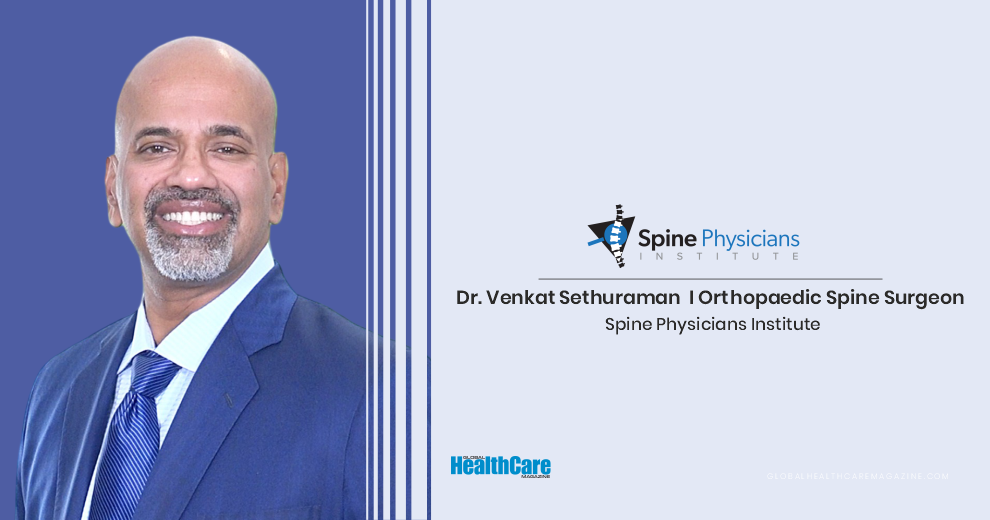
In a quiet, technologically advanced suite located at 3450 Forest Lane in Dallas, Texas, a very specific kind of restoration takes place. Here, at the Spine Physicians Institute, Dr. Venkat Sethuraman spends his days negotiating this delicate geometry. He is an orthopedic spine surgeon, a founder, and an innovator. Yet, to observe him at work is to realize he is less a mere technician and more a custodian of human potential. Since founding the institute in 2012, he has operated at the intersection of extreme mechanical precision and profound empathy.
The Weight of the Axis
The journey into the marrow of this profession began with a quiet realization during his early medical training. Dr. Sethuraman found himself increasingly captivated by the spine and its undeniable centrality to human existence. It is the core of movement, strength, and balance. He recognized early on that when patients suffer from spinal ailments, the injury ripples outward. It is never just a structural failure. It erodes a person’s confidence, steals their independence, and dismantles their ability to live a full, vibrant life.
He was naturally drawn to the immense complexity of spine surgery and the unforgiving precision it demands. However, the true motivation ran much deeper. It was the potential for profound impact that cemented his path. Helping someone transition from debilitating pain and neurologic limitation back to an active life is a uniquely rewarding experience. For Dr. Sethuraman, becoming a fellowship-trained spine specialist was about combining technical excellence with life-changing care.
Spine surgery is one of the rare fields where advanced skill, critical thinking, and relentless innovation can literally restore both function and hope.
Over the years, this initial passion has expanded into a comprehensive commitment. He is no longer just treating isolated structural issues. His focus has broadened to helping patients optimize their overall health, their recovery, and their long-term performance. This holistic philosophy is the invisible hand that guides his practice every single day.
The Calculus of Compassion
When a patient arrives at the Spine Physicians Institute, they are almost always carrying more than just a physical burden. They bring with them a heavy suitcase of fear, uncertainty, and the sheer exhaustion of having lived through a major disruption to their daily lives. Dr. Sethuraman understands this implicitly. The core values that guide his practice are compassion, precision, integrity, and an unwavering commitment to patient-centered care.
His first responsibility, he believes, is simply to listen. He must understand the full picture before he can even begin to sketch a solution. He operates on the principle that every patient deserves a thoughtful, highly individualized approach. In the realm of spinal health, no two problems are exactly alike, and no two patients share the same goals, lifestyle, or medical needs. Therefore, a one-size-fits-all treatment plan is not just ineffective, it is a disservice. His role is to synthesize his clinical experience, his advanced training, and his sound judgment to develop a plan that is medically appropriate and perfectly aligned with the patient’s long-term well-being.
This requires a brand of honesty that can sometimes be rare in high-stakes medicine. Patients need clear, direct guidance they can completely trust. For Dr. Sethuraman, this means explaining the diagnosis with absolute clarity, reviewing all appropriate options, and being radically transparent about the risks, the benefits, and the realistic expectations for recovery.
“The Patient’s Interest is Our ONLY Interest,” reads the guiding philosophy of the practice. In his day-to-day work, this phrase is not a marketing slogan; it is a governing law. It means that every decision begins and ends with asking what is truly best for the specific person sitting in the exam room. The right answer is never simply the most aggressive treatment; it is the most appropriate one. Sometimes, the best care is indeed advanced surgery. Other times, it is conservative management, rehabilitation, pain control, or simply careful observation.
Dr. Sethuraman will not hesitate to tell a patient when surgery is not the right answer. He believes in treating people exactly the way he would want his own family treated, with respect, compassion, and a commitment to their best outcome.
The Geometry of Innovation
In the operating room, Dr. Sethuraman is a pioneer of the subtle. He stays meticulously current on the newest advances in spinal care, recognizing that better tools lead to better lives. He has heavily integrated minimally invasive spine surgery and disc replacement into his practice because these techniques allow his team to achieve the core goals of decompression, stabilization, and pain relief while drastically reducing unnecessary tissue disruption.
Minimally invasive spine surgery utilizes smaller incisions and muscle-sparing techniques. The biological math is simple but profound. Less disruption translates into less blood loss, a lower risk of infection, and significantly shorter hospital stays. For the patient, this means getting out of bed sooner. It means needing less time for postoperative recovery and returning to the rhythms of daily life with greater efficiency.
Disc replacement has been an equally important advancement, particularly within the cervical spine. Traditional spinal fusion intentionally eliminates motion at a specific vertebral level to provide stability. Disc replacement, conversely, is designed to preserve that motion. Maintaining more natural biomechanics reduces the mechanical stress placed on adjacent levels of the spine. Clinical reviews and comparative studies demonstrate that cervical disc arthroplasty provides outcomes that are at least comparable to fusion, and in some settings, distinctly better. This includes lower rates of reoperation and adjacent-level degeneration in appropriately selected patients.
Yet, Dr. Sethuraman is quick to anchor this technological optimism with clinical pragmatism. The key to these innovations is rigorous patient selection. Not every individual is a candidate for minimally invasive techniques or artificial discs. The technology is incredibly powerful, but human judgment still matters most. The best outcomes are always the result of matching the right procedure to the right anatomy, the correct diagnosis, and the patient’s ultimate goals.
A Concierge for the Human Frame
It is a telling metric of success that patients travel from across the local geographic area, from multiple other states, and even internationally to seek his care. They undertake these journeys because they are searching for a team that combines deep expertise, sound judgment, and genuine compassion. In the complex world of spine care, trust is the ultimate currency. Patients frequently arrive after enduring months, or even years, of pain, failed treatments, and conflicting medical opinions.
What sets the Spine Physicians Institute apart is how seriously they take this responsibility. The approach is deeply individualized. Dr. Sethuraman frequently reminds his team that they do not treat MRI scans, they treat living, breathing people. This philosophy extends into a highly specialized concierge spine care model that blends elite surgical expertise with innovative regenerative medicine.
Dr. Sethuraman, who holds an MD and an MBA, and is recognized, as both a Fellow of the American Academy of Orthopaedic Surgeons (FAAOS) and a Fellow in Anti-Aging, Metabolic and Functional Medicine (FAARM), has built a practice that looks beyond the scalpel. His protocols integrate precision-guided biologics, targeted peptide therapy, and medical-grade photobiomodulation utilizing red-light technology. These noninvasive therapies are designed to accelerate cellular recovery, repair tissue, reduce inflammation, and enhance overall musculoskeletal resilience.
To further boost the body’s healing potential, the institute incorporates whole-body cryotherapy and hyperbaric oxygen therapy (HBOT). Both modalities are proven to dramatically improve circulation, oxygenation, and stem-cell activity. Each treatment plan is custom-built to reflect the patient’s unique biomechanics, metabolic profile, and long-term performance goals. This allows the practice to address the root causes of pain and degeneration, rather than relying solely on symptom-driven interventions.
Convenience and safety are also engineered directly into the patient experience. The headquarters on Forest Lane handles most necessary services on-site. This seamless integration reduces delays, eliminates the frustration of coordinating care across multiple locations, and saves invaluable time for patients who are often dealing with severe pain. From consultation to advanced imaging, treatment planning, and follow-up, having one experienced team oversee the entire process reduces fragmentation. It ensures that findings are reviewed in real time and that every step of the journey is aligned with the patient’s ultimate goals.
Navigating the Threshold of Surgery
Spine problems are uniquely terrifying because they threaten our very autonomy. When patients face major treatment decisions, Dr. Sethuraman’s priority is ensuring they feel heard, understood, and supported. Education is his primary tool for dismantling fear. He takes the time to walk through the diagnosis, explaining the root cause of the symptoms in a way that is clear and entirely honest.
When a patient is presented with multiple treatment options, Dr. Sethuraman relies on a fundamental question to guide the process. What is the least invasive treatment that has the best chance of meaningfully helping this specific patient? This decision is never based on imaging alone.
Major orthopedic and neurosurgical patient resources, such as OrthoInfo, note that spine surgery is usually considered only after a reasonable course of nonoperative treatment has failed to relieve symptoms over several weeks.
In most cases, lacking urgent neurologic issues or structural instability, Dr. Sethuraman advocates for a thoughtful non-surgical approach. This might include physical therapy, activity modification, medications, and targeted injections. Surgery only becomes the superior option when the patient’s anatomy clearly matches their symptoms, the source of nerve compression is confidently identified, and the patient faces persistent, disabling pain or progressive neurologic deficits.
Two patients can present with the same MRI results and require vastly different treatment plans based on their daily demands, medical risks, and personal ambitions. Dr. Sethuraman views surgery not as the default next step, but as the right step only when it offers a definitively better likelihood of restoring function and improving the quality of life. His goal is never to sell a procedure. His goal is to facilitate the best possible decision for the human being sitting across from him.
The Horizon of 2026 and Beyond
Looking toward the future of spine care in the United States, Dr. Sethuraman sees a landscape that is becoming more precise, personalized, and far less invasive. As we move through 2026, he envisions an era where technology and data allow surgeons to make better decisions earlier in the disease process.
He is particularly enthusiastic about the integration of robotics and artificial intelligence. Robotics, paired with advanced navigation and preoperative planning, helps improve implant accuracy and consistency in the operating room. As noted in recent Medtronic news releases, robotics is a vital tool that helps surgeons execute well-planned procedures with unprecedented precision. Furthermore, artificial intelligence holds tremendous potential for improving imaging interpretation and risk stratification. Dr. Sethuraman anticipates a future where AI helps predict which patients will benefit most from specific treatments, pushing the field from a reactive stance to a highly predictive one.
He is also closely monitoring augmented reality and advanced visualization platforms. Technologies offering real-time anatomical guidance, combined with 3D planning, will make complex reconstructive surgeries safer and more efficient. Beyond hardware, he is deeply encouraged by innovations in motion preservation and biologic restoration.
The future of spine care, he insists, must be as much about preserving natural function through disc regeneration and biologics as it is about surgical correction.
This technological evolution is happening alongside significant shifts in national healthcare policy. There is a clear movement toward value-based and episode-based care models. For instance, the Centers for Medicare & Medicaid Services (CMS) has announced the Ambulatory Specialty Model for specialists treating low back pain in selected regions, set to begin on January 1, 2027. Dr. Sethuraman believes this will rightfully push the field to focus even more heavily on evidence-based decision-making, care coordination, and measurable patient outcomes.
Yet, amid all this technological and systemic advancement, his ultimate hope is that the future of spine care becomes more profoundly human. The most sophisticated technology in the world is only valuable if it delivers safer care and a better overall experience for the patient.
The Quiet Discipline of Balance
Balancing the intense demands of patient care with the responsibilities of running and growing a successful practice requires immense discipline. For Dr. Sethuraman, leadership is not a separate task; it is a direct extension of patient care. He believes that if the clinical standard remains uncompromisingly strong, the practice will naturally grow in a healthy, sustainable manner.
He relies on a talented team of clinical and administrative professionals, utilizing strong operational support to ensure the practice runs efficiently. He views intentional growth not simply as expanding for the sake of size, but expanding to become better. If a new service or technology does not meaningfully enhance the patient experience, it is discarded.
In his personal life, he approaches the concept of work-life balance with the same pragmatic intentionality. He does not view balance as a perfect, static state, but rather as something that must be constantly managed. When he is with patients or in the operating room, he is fiercely present. When he steps away from the clinic, he is equally intentional about his time.
Beyond the walls of the institute, he seeks out experiences that help him reset and reconnect. He values his time with his family, traveling, and being outdoors in nature. He uses his time away from the surgical cabin to explore new ideas, staying actively engaged with concepts of wellness and performance optimization. These hobbies are vital. They create the mental space required to think differently, allowing him to return to his practice with renewed energy and clarity. True balance, he observes, is simply making sure that the things that matter most in life are never neglected.
A Legacy of Service
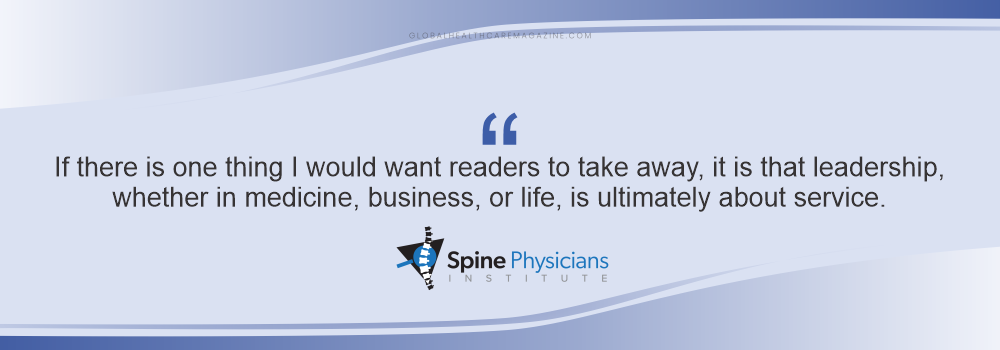
Ultimately, the story of Dr. Venkat Sethuraman and the Spine Physicians Institute is a narrative about the quiet power of service. Titles, medical degrees, and accolades hold weight, but their true value is measured entirely by how they are used to help others heal and move forward.
His leadership is defined not by dramatic declarations, but by the quiet, unseen moments. It is found in the extra time taken to listen to a worried patient. It is found in the courage required to make a difficult but honest recommendation, and the discipline to stay steady when the path forward is complex.
Through his unique blend of elite surgical skill, regenerative innovation, and an unwavering moral compass, Dr. Sethuraman is redefining what it means to heal the human frame. He is an architect of the vertical world, dedicated to ensuring that every patient who walks through his doors has the opportunity to stand tall, move freely, and reclaim the vibrant life they deserve.
Quotes