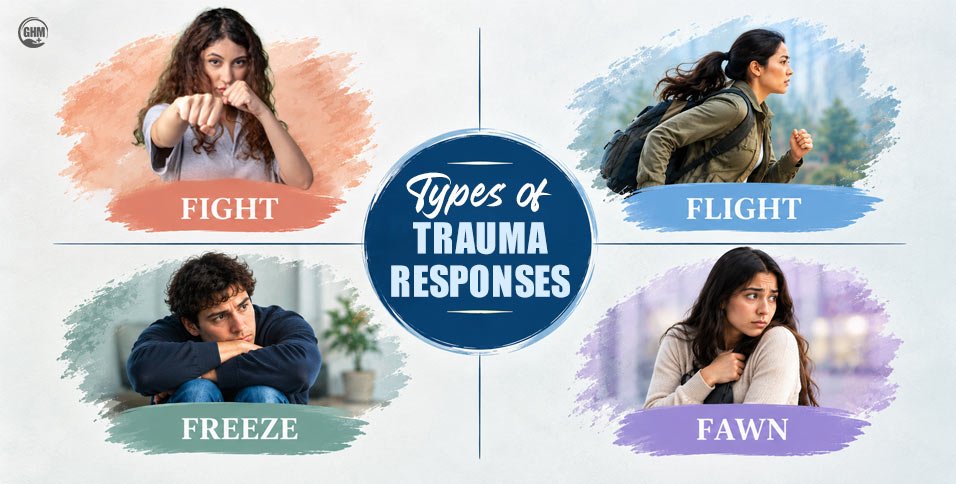
In a population of millions of people, two people could be found facing the same frightening or overwhelming experience. But they both can react in completely opposite ways. One person might instantly jump into action or confront the situation head-on, while another might feel completely paralyzed, shut down, or feel an urgent need to run away. These varied behaviors are not random; they are trauma responses. When a person perceives a threat, the brain and body react automatically to ensure survival. While these reactions serve a vital protective purpose during a crisis, they often persist long after the danger has passed.
These trauma responses are commonly grouped into fight, flight, freeze, and fawn and understanding them is a powerful step toward breaking cycles of stress and finding lasting healing.
What Are Trauma Responses?
A trauma response is an automatic physical, emotional, cognitive, or behavioral reaction to perceived danger or reminders of a past traumatic experience. This process originates in the brain’s survival systems, particularly the amygdala, which processes emotions like fear, and the autonomic nervous system. According to the National Institute of Mental Health, this rapid response sequence triggers before the conscious mind has time to evaluate the situation.
During overwhelming events, the nervous system prepares the body to defend itself, escape, or shut down. Reminders such as specific sounds, places, smells, or interpersonal conflicts can later trigger these trauma responses even when no actual danger is present. These responses vary greatly between individuals and are never evidence of personal weakness or a character flaw.
What Causes Trauma Responses to Develop?
Trauma encompasses a wide range of overwhelming experiences, including natural disasters, serious accidents, personal assaults, violence, or abuse. When experiencing such events, the brain forms strong associations between the context and various sensory details. Notably, not every stressful event causes trauma, and not everyone exposed to trauma develops lasting symptoms.
Later encounters with similar sensory cues can activate a protective response, even years down the road. Multiple factors, including previous life experiences, ongoing stress, and the availability of social support, can influence the recovery from trauma.
What Can Trigger a Trauma Response?
Reminders of a past traumatic experience can unexpectedly activate a protective reaction. Common triggers of trauma response include:
- Particular sounds, smells, or physical locations.
- Anniversaries of difficult events.
- Internal physical sensations, unexpected interpersonal conflict, or sudden interactions.
Triggers differ widely between people and are not always immediately obvious. Recognizing personal triggers helps individuals prepare for distressing situations and discuss them effectively with a mental health professional. Feeling distressed by a reminder does not automatically indicate a formal clinical disorder.
What Are the Four Main Types of Trauma Responses?
Mental health frameworks commonly discuss four primary patterns of trauma responses. While individuals often lean toward a dominant pattern, responses can shift across different contexts.
1. Fight Response
The fight response prepares an individual to confront a perceived threat directly. Common signs of fight response are irritability, defensiveness, verbal confrontation, anger, muscle tension, and a strong need for control. While this behavior of the fight response reflects a protective survival reaction, it does not excuse harming others.
- Everyday example: Reacting with intense verbal argument or anger to mild criticism that feels psychologically threatening.
2. Response
The flight response drives an urgent urge to escape, withdraw, or avoid perceived danger. Common signs of flight response are restlessness, difficulty relaxing, constant busyness, and active avoidance of trauma reminders. This flight response to trauma separates temporary escape from persistent avoidance that interferes with daily life.
- Everyday example: Consistently altering daily routines to avoid driving past a location associated with a frightening accident.
3. Freeze Response
Freezing as a trigger response involves feeling physically or mentally immobilized when fighting or escaping is impossible. Common signs of freeze response can be the inability to move, speak, or decide, alongside emotional numbness, mental fog, and dissociation. Freezing is a physiological shutdown, not a deliberate choice or a sign of laziness.
- Everyday example: Becoming completely mute and spaced out during a high-stress interpersonal confrontation.
4. Fawn Response
Fawning during a trigger involves trying to reduce perceived danger through appeasement, compliance, and excessive accommodation. Common signs of fawn response are chronic people-pleasing, difficulty saying no, conflict avoidance, and total neglect of personal needs. Fawning is a behavioral framework utilized in trauma recovery, rather than a universal category or formal psychiatric diagnosis.
- Everyday example: Agreeing to an uncomfortable or unwanted request purely out of fear of another person’s negative reaction.
What Are the Common Signs & Symptoms of Trauma Responses?
The physical and psychological impact of trauma manifests across multiple dimensions:
- Physical Trauma Responses: Racing heartbeat, sweating, shaking, muscle tension, headaches, fatigue, and sleep disruptions.
- Emotional Trauma Responses: Fear, intense anxiety, anger, sadness, shame, guilt, and emotional numbness.
- Cognitive Trauma Responses: difficulties in concentrating, intrusive memories, confusion, and memory lapses.
- Behavioral and Relational Trauma Responses: Social withdrawal, avoidance, difficulty trusting others, and trouble maintaining healthy boundaries.
How Trauma Responses Affect Everyday Life
Persistent reactions can significantly disrupt daily routines, work performance, education, and interpersonal relationships. Fear of trauma triggers often leads to isolation or avoidance of necessary daily tasks. Furthermore, difficulty trusting others or expressing authentic needs strains personal bonds, while chronic stress contributes to exhaustion and poor concentration.
Trauma Responses vs. PTSD: What Is the Difference?
A trauma response is an immediate or delayed reaction to perceived danger or triggers. In contrast, post-traumatic stress disorder (PTSD) is a diagnosable mental health condition characterized by a specific pattern of persistent symptoms lasting over a month.
PTSD symptoms include intrusive memories, avoidance behaviors, negative alterations in mood, and heightened physiological arousal. Experiencing trauma or exhibiting trauma responses does not automatically mean an individual has PTSD. Professional clinical assessment is recommended when symptoms persist and interfere with functioning.
How to Manage Trauma Responses and Support Recovery
Healing from trauma is an individual, gradual process. Several effective strategies support recovery:
- Recognize triggers: Notice recurring thoughts, situations, or physical sensations that precede an automatic reaction.
- Practice grounding: Focus on immediate environmental and sensory details to reconnect with the present moment.
- Use calming strategies: Incorporate gentle breathing exercises or predictable self-care routines.
- Build supportive connections: Reach out to trusted peers without feeling pressured to share details prematurely.
- Consider professional treatment: Evidence-based care such as trauma-focused cognitive behavioral therapy (CBT) and eye movement desensitization and reprocessing (EMDR) helps reprocess memories and reduce symptom severity.
When Should You Seek Professional Help?
Professional guidance is valuable when trauma responses intensify, persist, and start to affect relationships, employment, or sleep.
Warning signs of severe trauma include recurring nightmares, severe anxiety, frequent dissociation, or relying heavily on alcohol and substances to cope. Anyone experiencing thoughts of suicide or immediate crisis should contact emergency services or a dedicated crisis hotline immediately.
Take A Step Toward Healing
Trauma responses are valuable protective reactions that can sometimes outlive their usefulness long after danger has passed. Recognizing personal patterns to the triggers without self-judgment allows individuals to realize that no single response defines them.
By building awareness and seeking appropriate clinical support, healing and long-term emotional resilience from the past trauma are entirely possible.
Frequently Asked Questions
- Can trauma responses develop years after an event has passed?
Yes. Trauma responses can develop years after. The nervous system can store memories of overwhelming events implicitly, meaning that a trigger encountered decades later can activate an immediate survival response even if the individual had seemingly moved on from the event.
- Is it possible to experience symptoms without conscious memories of the trauma?
Yes, it is possible to experience symptoms without conscious memories of the trauma. Somatic and emotional memory can react physically through hypervigilance, sudden panic, or muscle tension even when explicit cognitive memory of the original event is fragmented or absent.