Have you noticed your baby acting slightly different, perhaps appearing more irritable than usual? While Most parents might think this is a sign of a common cold, it can even be a life- threatening infection, such as meningitis. Meningitis is a rare but critical medical emergency that requires immediate intervention, and meningitis in newborns is even more severe and challenging. Meningitis occurs when the protective membranes, called the meninges, that surround the brain and spinal cord, become infected.
These tissue layers normally shield the brain from injury, but an infection of the meninges can cause dangerous swelling. Meningitis in newborns can spread quickly because a newborn’s immune system is still developing, and they lack the strength to fight off these aggressive pathogens.
As a new parent, understanding meningitis in newborns can be a good start towards protecting your child’s health.
This article explains infectious meningitis in newborns and the early signs. It also provides the causes and treatments of meningitis, so that you can take immediate action to save your infant’s life.
What Is Meningitis In Newborns?
In simple terms, meningitis is a serious inflammation of the brain’s lining called the meninges, caused by bacteria or viruses. Meningitis in newborns is also called “neonatal meningitis”.
Unlike older children who might complain of a stiff neck, newborns cannot communicate their pain. This makes the condition particularly dangerous because the symptoms are often subtle.
Furthermore, babies have an immature “blood-brain barrier,” allowing bacteria to travel from the bloodstream to the brain more easily than in adults, which can lead to rapid swelling and potential brain damage.
What Causes Meningitis In Newborns?
While various germs can trigger the condition, bacterial meningitis in infants is the most severe and life-threatening form.
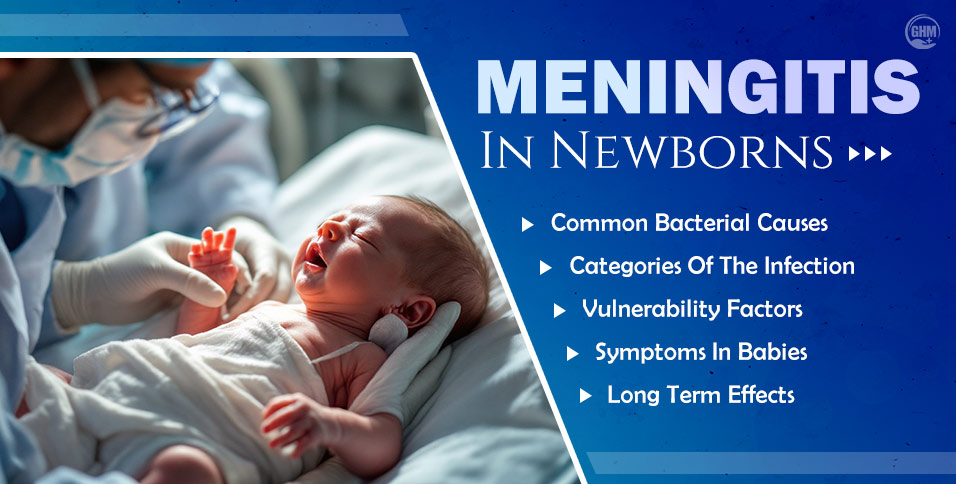
Common Bacterial Causes:
- Group B Strep (GBS): Group B Strep is the most common cause, often passed from mother to child during delivery.
- E. coli: This bacterium is another frequent culprit in neonatal cases.
- Listeria: Rarely, this can infect a mother through unpasteurised dairy or raw fish, subsequently affecting the baby.
Primary Categories of The Infection:
The causes of meningitis in newborns generally fall into two categories: bacterial and viral. Bacterial meningitis is much rarer but far more life-threatening.
- Early-onset: Occurs within the first three days and usually comes from the mother.
- Late-onset: Starts after three days and typically comes from the environment or hospital setting.
Babies face a higher risk of meningitis because their immune systems are still developing and cannot easily fight off aggressive germs.
Factors Increasing the Vulnerability of Meningitis in Infants:
- Premature Birth: Babies born before 37 weeks have even less developed defenses.
- Low Birth Weight: Infants weighing under 1500g face significantly higher risks.
- Maternal Transmission: Many cases stem from bacteria the baby picks up from the mother during the birthing process.
- NICU Exposure: Babies in intensive care may be exposed to environmental bacteria through life-saving equipment like ventilation tubes.
Symptoms of Meningitis In Babies Every Parent Must Know
Symptoms of meningitis in infants are often subtle and can be easily confused with common illnesses.
You must stay alert for the following signs:
- Behavioral Changes: Your baby may be extremely “floppy,” lazy, or irritable.
- Feeding Issues: A sudden refusal to feed or frequent vomiting is a major red flag.
- Temperature Fluctuations: Look for a very high fever or an unusually low body temperature.
- Physical Signs: A bulging soft spot (fontanelle) on the head or a high-pitched moan can indicate pressure.
- Breathing: If your baby is showing rapid breathing, it is a sign of meningitis, which needs immediate medical attention.
- The Meningitis Rash: Patches of purple or red spots on a baby’s body that look like bruises can be critical. Use the “glass test” by pressing a clear glass against the skin; if the spots do not fade, the situation can be an emergency.
If you suspect any of the above symptoms of meningitis, do not wait for any rash to appear, as it is a late-stage symptom. If your baby is unresponsive, having seizures, call emergency services or go to the nearest medical facility immediately.
In newborn patients, meningitis can worsen in a matter of hours, making every minute count for better treatment.
Trust your parental instincts above all else, as approximately 7 out of 10 children with bacterial meningitis recover fully with quick diagnosis.
How Is Meningitis Diagnosed in Newborns?
Doctors must act quickly to identify the cause of the infection.
They typically perform:
- Physical Examination: Checking for visible signs like bulging fontanelles or skin changes.
- Blood Tests: These check for general signs of infection in the bloodstream.
- Lumbar Puncture (Spinal Tap): Lumbar Puncture is the only definitive test to confirm or rule out the Meningitis disease. A doctor inserts a small needle into the lower back to collect spinal fluid for testing inflammation and pathogens.
Can Meningitis Be Prevented In Newborns?
Prevention of Meningitis starts during pregnancy. Doctors often screen mothers for Group B Strep (GBS) and provide IV antibiotics during labor if they test positive.
About 25% of pregnant women carry GBS, which can be passed to the baby without proper screening.
While the meningitis vaccine is a powerful tool, the routine schedule (like the MenB vaccine) typically starts at 8 weeks of age. Therefore, maintaining strict hygiene—such as frequent handwashing—is required to help limit the spread of germs.
What Is The Treatment For Newborns With Meningitis?
Once a diagnosis of bacterial meningitis is suspected, the medical team will begin the treatment for meningitis immediately, often before test results return.
Meningitis Treatment usually involves:
- IV Antibiotics: Usually administered for 7 to 21 days in the hospital.
- Supportive Care: This includes oxygen support if the baby has breathing difficulties and potentially steroids to reduce brain swelling.
- Intensive Care: Seriously ill babies receive specialized monitoring in a NICU.
Is There A Possibility of Long-Term Effects From Meningitis?
While many babies make a full recovery with prompt treatment, about 20% to 50% of survivors may face long-term challenges.
The Effects of Meningitis include:
- Hearing loss: This is a common after-effect, and babies should receive additional hearing tests.
- Epilepsy: Recurrent seizures can occur due to brain scarring.
- Developmental Delays: This may involve learning difficulties or cerebral palsy.
End Note
Meningitis is a frightening prospect for any parent, but knowledge is your best defense. By understanding meningitis in newborns, you can protect your toddler from the most severe outcomes. By recognizing subtle symptoms early and trusting your instincts, you provide your baby with the best chance of a healthy future.
Stay informed, keep your medical team’s number handy, and never hesitate to seek help for any health concerns.
As medical research advances in infant care, we move closer to a future with fewer neonatal infections.
Share this article with other parents and caregivers to help spread life-saving awareness!
Sanskruti Jadhav
Frequently Asked Questions
- Where did the meningitis outbreak in the UK start?
The recent deadly meningitis outbreak in the UK is believed to have originated at a nightclub in Canterbury, Kent.
- Can a baby get meningitis from a person with a cold?
Yes. Viruses that cause common colds, the flu, or diarrhea can sometimes lead to viral meningitis in vulnerable infants.
- Does the meningitis vaccine protect my newborn immediately?
No. Routine vaccinations usually begin at 8 weeks of age, so newborns rely on maternal screening and hygiene for protection.