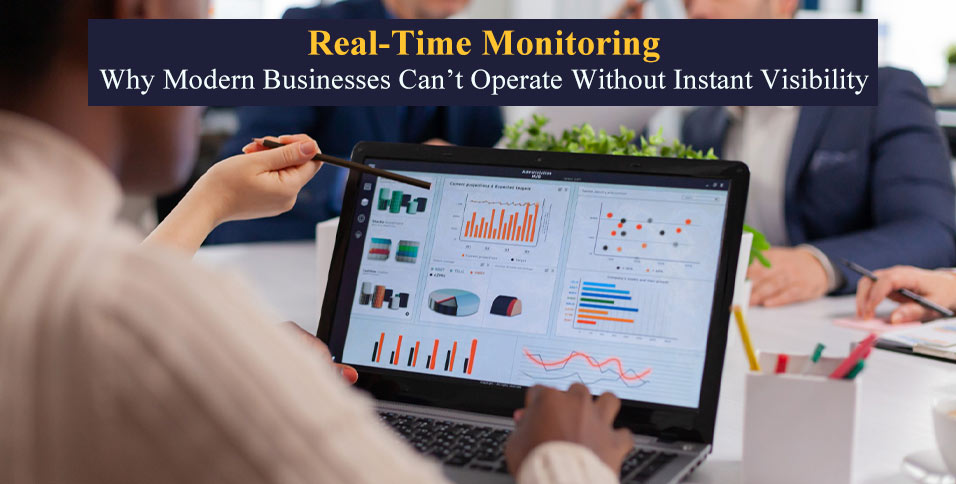
In today’s digital economy, speed matters more than ever. Businesses can no longer afford to wait hours—or even minutes—to detect problems inside their systems, applications, websites, or infrastructure. A single unnoticed outage, cyberattack, or performance issue can result in lost revenue, damaged reputation, and frustrated customers.
This is where real-time monitoring becomes essential.
From cloud infrastructure and cybersecurity to manufacturing and healthcare, organizations now depend on live monitoring systems to track operations continuously and respond instantly when something goes wrong.
What Is Real-Time Monitoring?
Real-time monitoring is the process of continuously collecting, analyzing, and displaying data the moment it is generated. Instead of reviewing historical reports after an issue occurs, businesses can identify and resolve problems instantly.
The monitored data may include:
Website uptime
Server health
Network traffic
Application performance
Security threats
Customer activity
IoT sensor readings
Machine performance
Financial transactions
The goal is simple: gain immediate visibility into operations and react before small issues become major failures.
Why Real-Time Monitoring Matters
Modern systems are highly interconnected. Even a small disruption can affect multiple departments, customers, or services simultaneously.
Key Benefits
1. Faster Problem Detection
Traditional monitoring often discovers issues after customers complain. Real-time systems detect anomalies immediately.
For example:
A website slowdown can trigger alerts within seconds
A failed server can automatically notify IT teams
Suspicious login attempts can activate security protocols instantly
2. Reduced Downtime
Downtime is expensive. Live monitoring minimizes interruptions by allowing teams to respond quickly before systems completely fail.
3. Better Customer Experience
Customers expect fast and stable digital services. Monitoring ensures:
Faster website loading
Stable applications
Fewer transaction errors
Improved service reliability
4. Enhanced Security
Cyber threats evolve rapidly. Real-time monitoring helps organizations:
Detect unauthorized access
Identify malware activity
Monitor unusual traffic spikes
Prevent data breaches
5. Data-Driven Decisions
Executives and operational teams can make smarter decisions using live dashboards and analytics instead of outdated reports.
Industries That Depend on Real-Time Monitoring
Healthcare
Hospitals use monitoring systems for:
Patient vital signs
Medical equipment performance
Emergency alerts
Drug inventory tracking
Immediate alerts can literally save lives.
Manufacturing
Factories monitor:
Machine temperatures
Production line efficiency
Equipment failures
Energy consumption
This reduces maintenance costs and prevents production shutdowns.
Finance
Banks and fintech companies rely on instant monitoring for:
Fraud detection
Transaction verification
ATM performance
Trading systems
Even milliseconds matter in financial systems.
E-Commerce
Online businesses monitor:
Website uptime
Payment gateways
Customer traffic
Inventory systems
A few minutes of downtime during peak sales periods can result in massive revenue losses.
IT and Cloud Infrastructure
Technology companies use real-time monitoring for:
Servers
APIs
Databases
Network performance
Cloud resources
This helps maintain high availability and scalability.
Core Components of a Real-Time Monitoring System
A successful monitoring setup typically includes several essential elements.
1. Data Collection
Sensors, applications, servers, and devices continuously generate operational data.
Examples:
CPU usage
Memory consumption
Network latency
Error logs
2. Data Processing
The monitoring system processes incoming information instantly to identify abnormalities or trends.
3. Dashboards
Visual dashboards display live metrics in an easy-to-understand format.
Common dashboard features:
Graphs
Charts
Heatmaps
Traffic indicators
Alert summaries
4. Automated Alerts
When predefined thresholds are exceeded, notifications are sent through:
SMS
Slack
Mobile apps
Incident management platforms
5. Reporting and Analytics
Historical reports help teams analyze long-term trends and improve operational efficiency.
Most Important Metrics to Monitor
Different industries track different KPIs, but several metrics are universally important.
Technical Metrics
Server uptime
CPU usage
Disk space
Network latency
API response time
Database performance
Security Metrics
Failed login attempts
Firewall events
Malware detections
Unusual traffic patterns
Business Metrics
Conversion rates
Revenue per minute
Cart abandonment
Customer activity
Real-Time Monitoring vs Traditional Monitoring
| Feature | Real-Time Monitoring | Traditional Monitoring |
| Data Updates | Instant | Delayed |
| Problem Detection | Immediate | Often late |
| Response Time | Seconds | Hours or days |
| Automation | High | Limited |
| Business Impact | Preventive | Reactive |
How AI Improves Real-Time Monitoring
Artificial intelligence has transformed monitoring systems significantly.
AI-powered platforms can:
Predict failures before they occur
Detect abnormal behavior patterns
Reduce false alerts
Automate responses
Improve threat detection accuracy
Machine learning models continuously improve as they process more operational data.
Common Challenges
Despite its benefits, implementing real-time monitoring comes with challenges.
Data Overload
Organizations generate massive amounts of information every second. Managing and filtering useful insights becomes difficult.
Alert Fatigue
Too many unnecessary notifications can overwhelm teams and cause important warnings to be ignored.
Integration Complexity
Many businesses use multiple systems and cloud platforms. Integrating all monitoring tools into one centralized dashboard can be challenging.
Security Risks
Monitoring systems themselves must be protected from cyber threats and unauthorized access.
Best Practices for Effective Real-Time Monitoring
Prioritize Critical Systems
Focus on monitoring the infrastructure and services that have the highest business impact.
Define Smart Alerts
Avoid excessive notifications by creating intelligent thresholds and escalation rules.
Use Centralized Dashboards
Unified dashboards simplify operations and improve visibility across teams.
Automate Responses
Automation reduces manual intervention and accelerates incident resolution.
Examples include:
Restarting failed services
Blocking suspicious IP addresses
Scaling cloud resources automatically
Continuously Optimize
Monitoring strategies should evolve alongside infrastructure and business growth.
Future Trends in Real-Time Monitoring
The future of monitoring technology is evolving rapidly.
Emerging Trends
Predictive Monitoring
AI systems will increasingly forecast failures before they happen.
Edge Computing Monitoring
More devices will process monitoring data closer to the source for faster analysis.
IoT Expansion
Billions of connected devices will require scalable live monitoring systems.
Autonomous Operations
Future platforms may resolve many incidents automatically without human intervention.
Real-Time Monitoring Tools Popular Today
Several platforms dominate the monitoring landscape.
Popular Solutions
Datadog
New Relic
Grafana
Prometheus
Splunk
Zabbix
Nagios
Dynatrace
Each platform offers different capabilities depending on business size and technical requirements.
Visual Content Suggestions
Recommended Infographics
Infographic 1:
“How Real-Time Monitoring Works”
Data Collection
Analysis
Alert Trigger
Automated Response
Resolution
Infographic 2:
“Top Benefits of Real-Time Monitoring”
Faster detection
Lower downtime
Better security
Improved customer experience
Higher operational efficiency
Suggested Video Resources
YouTube Video Ideas
“Introduction to Real-Time Monitoring Systems”
“How AI Improves Infrastructure Monitoring”
“Best Monitoring Tools for Cloud Environments”
“Real-Time Security Monitoring Explained”
Conclusion
As digital infrastructure becomes more complex, organizations need immediate operational visibility to remain competitive and secure. Real-time monitoring enables businesses to detect problems instantly, improve system reliability, strengthen cybersecurity, and deliver better customer experiences.
Whether it’s healthcare, finance, manufacturing, or cloud computing, live monitoring systems are now a critical part of modern operations. Companies that invest in intelligent monitoring solutions today will be far better prepared for the challenges of tomorrow.
The future belongs to organizations that can see, analyze, and respond in real time.