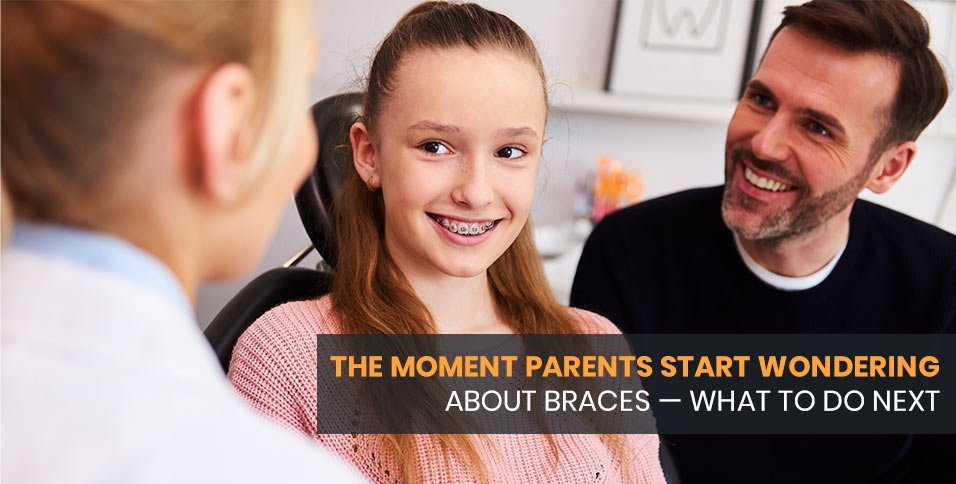
There’s a particular stage in parenting when you stop seeing your child’s smile as simply “cute” and start wondering whether everything is lining up as it should. Maybe the front teeth seem crowded. Maybe the bite looks slightly off in photos. Or perhaps your child has started breathing through their mouth at night, chewing awkwardly, or complaining that their teeth “feel funny”.
That moment of uncertainty is common, and it doesn’t mean you need to rush into treatment. But it is usually a sign that it’s worth paying closer attention.
Braces rarely become a question overnight. More often, parents notice a handful of small things over time. One baby tooth falls early, another seems stubbornly stuck, adult teeth arrive at odd angles, and suddenly you’re asking the same question many parents do: is this something they’ll grow out of, or should we get it checked?
Why braces concerns often begin earlier than expected
Many people assume orthodontic treatment only becomes relevant in the teenage years, once all the adult teeth have come in. In reality, the early clues often show up much sooner. Orthodontists frequently recommend an initial assessment around age seven, not because every child will need braces then, but because the jaw, bite, and eruption pattern can already reveal useful information.
At that age, a specialist can spot whether there’s enough room for incoming teeth, whether the upper and lower jaws are developing in balance, and whether habits such as thumb sucking or mouth breathing may be affecting growth. Sometimes the best outcome of an early check is reassurance. Other times, it helps families monitor an issue before it becomes more complicated.
That distinction matters. Early evaluation is not the same thing as early treatment. In many cases, the right next step is simply to keep watching.
What parents should actually look for
A slightly crooked tooth on its own is not always a red flag. Children’s mouths change quickly, and temporary awkward stages are normal. What tends to matter more is the overall pattern.
Here are a few things worth noticing:
- Teeth that are severely crowded, overlapping, or erupting far out of position
- Front teeth that stick out noticeably
- Difficulty biting or chewing comfortably
- Jaws that seem to click, shift, or close unevenly
- Persistent mouth breathing or thumb sucking beyond the early years
- Teeth that meet poorly, or don’t meet at all, when the mouth is closed
- Baby teeth lost much earlier or later than expected
If you’re unsure what counts as normal versus something worth checking, a good starting point is learning the warning signs of developing bite problems. The value of that kind of checklist isn’t that it tells you your child definitely needs braces. It simply helps you spot patterns that deserve a professional opinion.
Not every concern means immediate treatment
This is where parents often feel torn. They notice something unusual, but they don’t want to overreact. That instinct is fair.
Orthodontic decisions are rarely based on appearance alone. A child whose teeth look mildly uneven may not need treatment for years, or at all. Meanwhile, a child whose smile seems broadly straight could still have an underlying bite issue affecting chewing, speech, or jaw development.
That’s why “wait and see” only works when someone is actually seeing what they’re waiting on. Monitoring is useful when it’s informed. Left completely unchecked, some problems become harder to correct later, particularly when spacing, crossbites, or jaw discrepancies are involved.
When to book an orthodontic assessment
Timing matters, but panic doesn’t help
If your child is around seven and you’ve started noticing signs that make you wonder about braces, it’s reasonable to schedule an orthodontic consultation. If they’re older and certain issues are becoming more obvious, it’s still not too late. Plenty of children begin treatment in the pre-teen or teenage years with excellent results.
The point of the first visit is usually not to commit to braces on the spot. It’s to answer a few practical questions:
What a specialist is trying to understand
An orthodontic assessment typically looks at:
- how the upper and lower teeth fit together
- whether there is enough space for adult teeth
- how the jaws are growing
- whether any habits or airway issues may be influencing development
- whether treatment is needed now, later, or not at all
Sometimes the recommendation is to review things in six or twelve months. Sometimes early intervention is useful. And sometimes a parent’s worry turns out to be part of a normal developmental phase.
That clarity alone can be valuable.
Questions parents should ask at the first appointment
The first consultation can feel a little overwhelming, especially if you’re hearing new terminology. It helps to keep the conversation grounded in practical terms.
Ask what problem, if any, the orthodontist is seeing. Ask whether it is dental, skeletal, or habit-related. Ask what might happen if you do nothing for now. Ask whether treatment would be simpler if started later, or more difficult. And ask how growth is likely to affect the picture over the next few years.
These questions shift the conversation away from “Do they need braces?” and toward a more useful one: “What is the best timing and plan for this child?”
That’s important because orthodontics is not one-size-fits-all. Two children with similar-looking front teeth may need very different approaches depending on jaw growth, spacing, and age.
What to do while you’re deciding
If you’re in that in-between stage — not sure whether your concern is minor or meaningful — focus on observation, not anxiety. Take note of chewing habits, speech changes, mouth breathing, and whether the teeth seem to be becoming more crowded as new ones erupt. Keep regular dental check-ups. Dentists are often the first to flag whether a referral is worth making.
Most of all, remember that wondering about braces is not a sign you’ve missed something. It’s usually the moment you’re paying attention at exactly the right time.
Parents don’t need to diagnose bite problems at home. They just need to notice when a smile, a bite, or a pattern of habits no longer seems straightforward. From there, the next step is simple: get informed, ask questions, and let a professional tell you whether it’s time to act or simply time to watch.