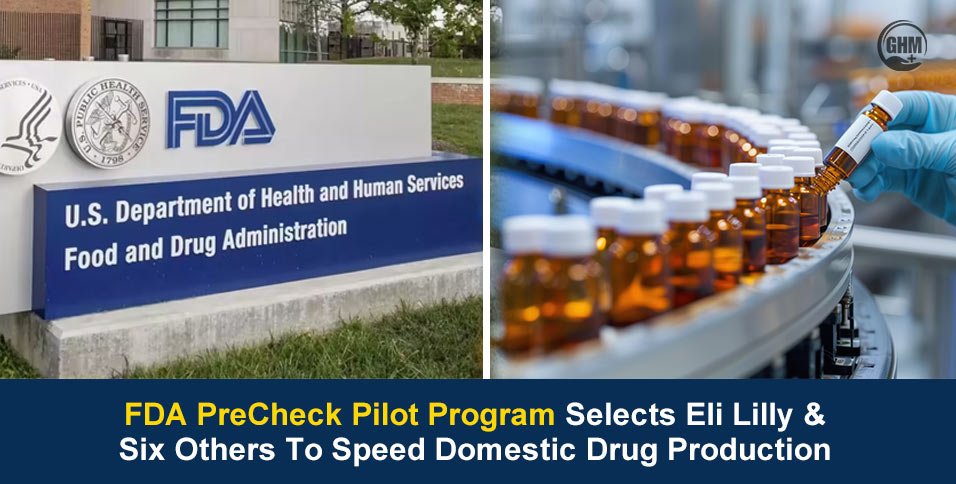
The U.S. Food and Drug Administration (FDA) has launched a groundbreaking initiative to accelerate regulatory reviews for new domestic drug production plants. Seven prominent drugmakers have been officially selected to participate in the new FDA PreCheck Pilot Program, including big players like Eli Lilly and Regeneron. The initiative is an effort designed to fast-track facility approvals while strengthening the nation’s pharmaceutical supply chain.
By engaging with manufacturers during the early stages of plant construction, the agency aims to secure the domestic drug supply chain and improve American global competitiveness.
What Is the FDA PreCheck Pilot Program?
This initiative is a major shift in how the government oversees pharmaceutical production. The FDA created the PreCheck Pilot Program in response to Executive Order 14293, which focused on expanding US domestic drug manufacturing capacity.
Historically, regulatory bottlenecks have delayed facility openings. But this new model allows regulators to inspect sites and review processes during the design and construction phases rather than waiting for completion. By providing earlier FDA regulatory review, the agency can catch and correct engineering or compliance issues before they cause lengthy delays.
According to reports, the FDA estimates that catching structural issues early during construction can shave up to 14 months off the traditional approval timeline, allowing vital treatments to reach patients far ahead of schedule.
Which Companies Were Selected For FDA’s PreCheck Pilot Program?
The initial recipients for FDA’s PreCheck Program for drug manufacturing span from global pharmaceutical giants to specialized biotechnology firms. The FDA received more than 80 applications, but only seven initial participants were selected in this pilot program.
The seven selected companies will use their designated U.S. facilities to target critical therapeutic areas:
- Eli Lilly and Company: This critical facility in Lebanon, Indiana, will manufacture the active pharmaceutical ingredients required for the company’s high-demand GLP-1 weight-loss pills and shots.
- Amneal Pharmaceuticals: Located in Long Island, New York, this facility will produce small-molecule sterile liquid products focused on pain management, respiratory illnesses, and ophthalmic diseases.
- Cellares: Based in Bridgewater, New Jersey, this site will manufacture complex cell-based gene therapies for oncology and hematology.
- FUJIFILM Biotechnologies: Operating a large-scale cell culture site in Holly Springs, North Carolina, this contract manufacturer will produce monoclonal antibodies.
- Kriya Therapeutics: Situated in Durham, North Carolina, this plant will focus on adeno-associated virus (AAV) gene therapies for chronic conditions.
- Kyowa Kirin: Located in Sanford, North Carolina, this facility will manufacture biotechnology drug substances specifically targeting rare diseases.
- Regeneron Pharmaceuticals: This $2 billion site in Saratoga Springs, New York, will produce novel protein therapeutics, sterile injectables, and biologics.
How Does The FDA PreCheck Pilot Program Work?
The FDA Drug Manufacturing Pilot Program is structured into two distinct, highly collaborative phases designed to streamline the traditional US drug plant review timeline.
Phase 1: Facility Readiness
During this initial phase, selected drugmakers for FDA’s PreCheck Pilot Program receive early technical guidance directly from the FDA before the facility becomes operational. Companies submit detailed information via a facility-specific Drug Master File (DMF). Regulators provide real-time feedback on facility design, automated infrastructure, and construction plans, ensuring the plant aligns with safety expectations from day one.
Phase 2: Application Submission
Once construction progresses, participants in the FDA drug review initiative transition to the application stage. This phase enables manufacturers to engage through specialized pre-submission meetings. It allows the FDA to conduct facility evaluations and physical inspections much earlier in the review cycle. Ultimately, this reduces regulatory friction when companies submit their New Drug Applications (NDA), Biologics License Applications (BLA), or Abbreviated New Drug Applications (ANDA).
Importance of This Initiative To the US Pharma Industry
Shifting manufacturing back to American soil addresses long-standing vulnerabilities regarding foreign dependencies. By prioritizing local infrastructure, the program ensures a more stable supply of critical medicines, reducing the risk of widespread drug shortages.
Furthermore, this level of early transparency injects unprecedented regulatory predictability into corporate planning.
What Comes Next
The participants in the FDA PreCheck Pilot Program have responded with strong enthusiasm. Eli Lilly noted it is actively evaluating how the program will optimize its Indiana timeline, while Regeneron CEO Leonard Schleifer praised the initiative for encouraging direct collaboration between innovators and regulators.
Meanwhile, Shankar Ramaswamy, M.D., CEO of Kriya Therapeutics, emphasized that the selection recognizes the value of integrated, internal manufacturing capabilities for advanced gene therapies.
Moving forward, the FDA plans to continuously evaluate the metrics and operational success of this pilot. If the data proves that early communication successfully shortens timelines without compromising safety, the agency may expand the framework to transform broader U.S. pharmaceutical policies.