Polycystic ovary syndrome affects an estimated 10 to 13 percent of women worldwide, yet up to 70 percent of cases go undiagnosed. Many women experience unpredictable periods, skin breakouts, and their energy levels dropping.
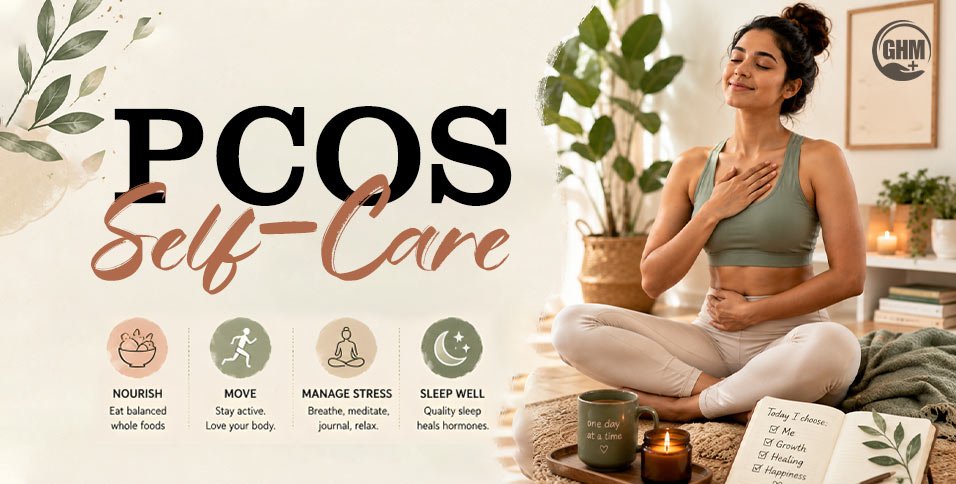
The good news is PCOS management is possible with certain lifestyle changes, just like self-care to improve health. PCOS self-care is about building small, consistent habits that calm inflammation, steady your hormones, and help you feel like yourself again and make living with PCOS a little easier.
In this guide, you’ll learn what PCOS is, which self-care can realistically help with PCOS symptoms, common flare-up triggers of PCOS, and the point at which it’s time to call your doctor.
What Is Polycystic Ovary Syndrome?
PCOS is a hormonal and metabolic condition, not just a “reproductive” issue. PCOS typically involves three overlapping problems: higher-than-average androgen (male hormone) levels, irregular or absent ovulation, and insulin resistance, where your cells don’t respond well to insulin. These three factors feed into one another, which is why PCOS symptoms can affect your skin, weight, mood, and fertility all at once.
Why PCOS Self-Care Is Important?
Because PCOS is influenced so heavily by daily habits, PCOS self-care plays a genuinely medical role for a woman’s health. A woman’s diet, physical health, sleeping pattern, and emotional health all directly affect insulin sensitivity, inflammation, and hormone levels.
That said, PCOS self-care works alongside medical treatment and improves its effectiveness — it does not replace it.
Common Symptoms That PCOS Self-Care Can Help Manage
PCOS Symptoms vary widely from person to person, and you may not experience all of them.
Common signs of PCOS include:
- Irregular or missed periods
- Acne and oily skin
- Excess facial or body hair (hirsutism)
- Thinning hair on the scalp
- Weight gain or difficulty losing weight
- Persistent fatigue
- Mood swings, anxiety, or depression
- Fertility challenges
- Bloating
It’s worth noting that even though pelvic pain and bloating aren’t unique to PCOS, conditions like fibroids and endometriosis can cause similar symptoms, so it’s helpful to understand how PCOS differs from endometriosis and if your symptoms don’t quite match the PCOS description.
10 Essential PCOS Self-Care Tips To Help Manage The Symptoms
1. Eat a Blood Sugar-Friendly Diet
Since insulin resistance is an important factor in PCOS, food choices matter enormously. For a PCOS diet, favor low-glycemic foods, lean proteins, fiber-rich vegetables, and healthy fats, while limiting refined carbs and added sugar.
2. Exercise Regularly
PCOS exercise, such as a mix of strength training, moderate cardio, walking, and yoga or pilates, improves insulin sensitivity and supports a healthy weight. Even a modest, sustainable weight loss can meaningfully improve PCOS symptoms. However, do not overtrain, as it can raise cortisol and worsen them.
3. Prioritize Quality Sleep
Sleep directly regulates the hormones that control appetite, insulin, and stress. In the PCOS self-care routine, aim for 7 to 9 hours of sleep every night, keep the lights dim, avoid screens, and keep a consistent bedtime.
4. Learn to Manage Daily Stress
Chronic stress raises cortisol, which can throw other hormones further out of balance. To manage daily stress, add meditation, journaling, deep breathing, and time outdoors to the PCOS self-care routine. Notably, hormonal fluctuations are also a well-known trigger behind migraines in women, so stress management can pay off in more ways than one.
5. Track Your Symptoms and Menstrual Cycle
A menstrual cycle-tracking app or a simple symptom journal helps you spot patterns and triggers in PCOS. It gives the doctor much more useful information to work with at your next visit.
6. Stay Hydrated and Reduce Processed Foods
Drinking enough water supports metabolism and digestion, while cutting back on highly processed foods can reduce bloating during periods and ease the metabolic load on your body.
7. Support Your Mental and Emotional Well-Being
Menstruation and related conditions like PCOS are big reasons behind women’s mental health. Research shows the pooled prevalence of depression among women with PCOS is around 51 percent, and anxiety around 45 percent. Taking care of mental health through therapy, support groups, and simply building a support system of people who understand what you’re going through during PCOS can make a real difference.
8. Keep Up with Regular Medical Checkups
Routine monitoring of hormone levels, blood sugar, cholesterol, and blood pressure helps catch complications early and gives you a chance to discuss medication options if lifestyle changes with PCOS self-care alone aren’t enough.
What Are The PCOS Triggers?
PCOS symptoms often worsen in response to specific triggers, including:
- Chronic, unmanaged stress
- Poor or inconsistent sleep
- A high-sugar or highly processed diet
- Skipping exercise for extended periods
- Rapid weight fluctuations
- Natural hormonal shifts (like puberty or perimenopause)
- Inconsistent use of prescribed medication
Final Thoughts
PCOS isn’t something you fix once and move on from; it calls for ongoing, lifelong management. But consistent PCOS self-care habits, from a blood sugar-friendly diet to better sleep and stress management, can meaningfully improve your symptoms and your quality of life. Pair these habits with regular medical guidance, and you can take control of your symptoms and protect your long-term health.
Remember that every person experiences PCOS differently, so finding a personalized routine that works for your body is key to long-term success.
Frequently Asked Questions
- Can PCOS go away on its own?
No. PCOS is a chronic condition with no cure, but symptoms can improve significantly and, for some women, even become unnoticeable, with consistent lifestyle management, PCOS self-care, and, when needed, medical treatment.
- Is PCOS hereditary?
Genetics appear to play a role in PCOS. Women with a mother or sister who has PCOS are more likely to develop it themselves, although environmental and lifestyle factors also contribute.
- How is PCOS actually diagnosed?
There’s no single test for PCOS. Most doctors use the Rotterdam criteria, which requires at least two of three findings: irregular or absent ovulation, signs of excess androgens (on a blood test or visible as acne/hirsutism), and polycystic-appearing ovaries on ultrasound. A blood test also rules out thyroid disorders and other conditions with similar symptoms.
- What are the long-term health risks if PCOS is left unmanaged?
Beyond fertility and skin symptoms, untreated PCOS raises long-term risk for type 2 diabetes, high cholesterol, high blood pressure, and endometrial cancer from prolonged irregular periods. This is why ongoing management matters even when symptoms feel mild.