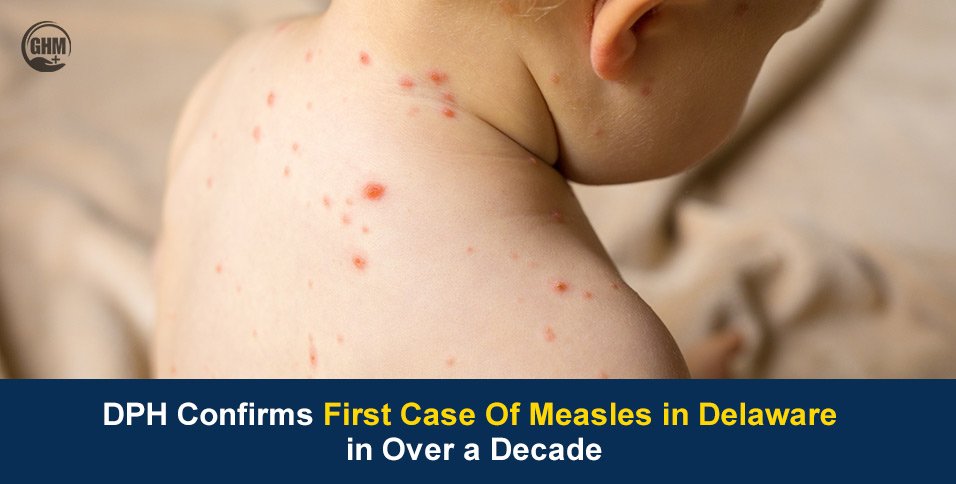
The Delaware Division of Public Health (DPH) confirmed the state’s first case of measles in Delaware since 2014. The patient was identified as an unvaccinated adult resident of Kent County, sparking immediate public health measures across the region. State officials are carrying out extensive contact tracing to identify potential exposures, while urging residents to check their immunizations as a broader measles outbreak in US communities continues to raise concern.
While no public exposure sites have been identified yet, health authorities warned earlier this month that the state faced an elevated risk due to regional transmission. Delawareans are encouraged to review their immunization records via the DelVAX Public Portal or consult their healthcare providers.
Health Officials Respond To Measles In Delaware
The public health response for measles in Delaware is centered on swift contact tracing and proactive public communication. DPH epidemiology staff are directly contacting individuals who may have been exposed to the Kent County resident.
Key public health measures currently underway include:
- Direct Notifications: DPH is contacting exposed individuals to verify their immunization records.
- Resource Distribution: Exposed individuals receive direct guidance on measles symptoms, educational resources, and post-exposure treatment recommendations if appropriate.
- Provider Coordination: Healthcare providers and emergency departments are instructed to report suspect cases immediately to the state’s 24-hour reporting line (1-888-295-5156) or the DPH Office of Infectious Disease Epidemiology to coordinate testing and prevent further exposure.
What Are the Symptoms of Measles?
Measles is an acute, highly contagious viral infection that typically begins with flu-like symptoms before progressing to a distinct body rash. Measles is not a simple skin rash; it can lead to severe, life-threatening complications, including pneumonia (lung infection), encephalitis (brain inflammation), and death, especially among young children, pregnant women, and immunocompromised individuals.
Early Symptoms (2 to 4 Days Before Rash)
- High fever
- Cough
- Coryza (runny nose)
- Conjunctivitis (red, watery, or “pink” eyes)
Advanced Symptoms
Between 3 to 5 days after initial Measles symptoms start, a red rash appears, usually starting on the face and spreading downward over the neck, trunk, arms, and legs.
How Dangerous is The Measles Infection?
The virus is one of the most infectious pathogens known. It spreads via airborne droplets when an infected person coughs, sneezes, or talks.
- Airborne Persistence: The measles virus can remain active and infectious in ambient air or on surfaces for up to two hours after an infected individual leaves the area.
- High Contagiousness: An infected person can transmit the virus from four days before the rash appears to four days after the rash develops.
- Incubation Period: Fever typically develops about 10 days post-exposure (range 7–12 days), while rash onset occurs around 14 days post-exposure (range 7–21 days).
MMR Vaccination Guidance for Delaware Residents
The Measles, Mumps, and Rubella (MMR) vaccine remains the single most effective defense against infection. Two doses of the MMR vaccine are approximately 97% effective at preventing infection in non-immunocompromised individuals.
Recommended Measles Vaccination Schedule
- First Dose: Given to children between 12 and 15 months of age.
- Second Dose: Given between 4 and 6 years of age.
- Adult Catch-up: Any unvaccinated adult should receive their missed dose(s) as soon as possible.
- Infant Travel Guidance: Infants aged 6 to 11 months traveling internationally or residing in an active outbreak zone should receive one early MMR dose.
Delaware Was on Alert for Measles Spread
The discovery of the Kent County measles case follows a multi-month measles outbreak in Pennsylvania officials have been tracking since late April 2026. Given frequent cross-border travel between the states, Delaware public health officials had warned the community to prepare.
Earlier in July, Dr. Ayanna Buckner, chief physician in the DPH Office of Epidemiology, noted that Delaware was at high risk for seeing its first measles case in a decade.
“We spend so much time doing investigations around infectious diseases, and measles is the one that we are on pins and needles about this summer,” she warned.
If You May Have Been Exposed To Measles?
If you suspect exposure or begin showing symptoms, do not visit a medical facility without calling ahead. Inform transport services and medical staff in advance so proper infection control measures can be implemented to protect other patients.
For individuals who are unvaccinated and exposed to Measles in Delaware:
- Post-Exposure Vaccine: Receiving an MMR shot within 72 hours (3 days) of exposure can provide post-exposure protection.
- Immune Globulin: High-risk individuals (such as infants, pregnant women, or immunocompromised individuals) may receive immune globulin antibodies within six days of exposure to reduce disease severity.