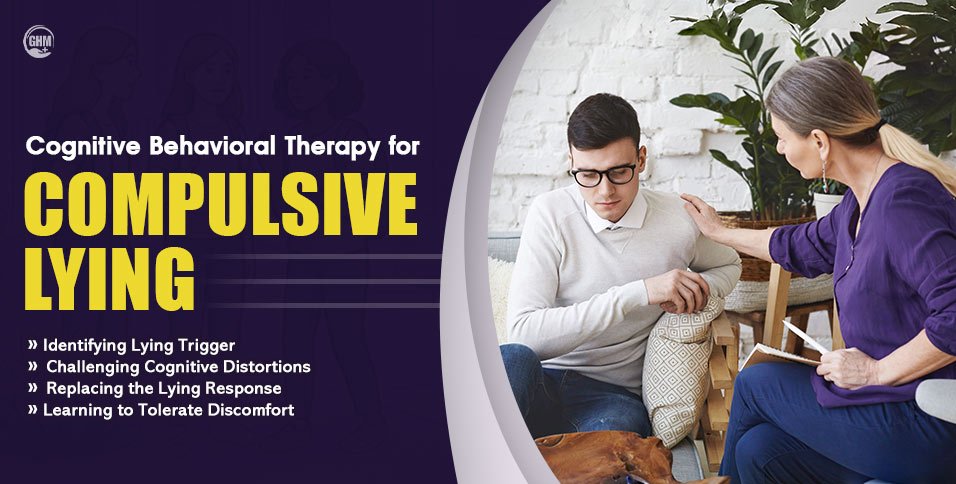
Do you ever wonder why some people tell stories that do not add up, even when the truth would be much easier? Occasional white lies happen to everyone, but a persistent pattern of dishonesty is entirely different. Compulsive or pathological lying involves repeated falsehoods that often occur without any obvious external benefit or reason.
If you or someone you care about struggles with the cycle of constant lying, finding a way out can feel overwhelming. Fortunately, cognitive behavioral therapy for compulsive lying offers a structured path forward. Yes, Cognitive behavioral therapy (CBT) may help people reduce compulsive lying by identifying triggers, challenging unhelpful thoughts, and practicing healthier responses.
This article explores how cognitive behavioral therapy for compulsive lying works as a treatment option. It also shares therapeutic techniques, and treatment expectations for compulsive lying behavior.
What Is Compulsive Lying?
Compulsive or pathological lying is best understood as a repeated behavioral pattern rather than an automatic label for a psychiatric disorder. People who experience this pattern often fabricate stories about minor or inconsequential matters. Over time, these stories become increasingly elaborate to support the original deception.
While it is not listed as a standalone diagnosis in clinical manuals, compulsive lying frequently occurs alongside other psychological or behavioral concerns. Understanding how compulsive lying behavior works is the first step toward lasting recovery.
Characteristics of a compulsive-lying personality include:
- Difficulty controlling the urge to fabricate stories.
- Continuing the behavior despite facing severe negative social consequences.
- A distinct difference from occasional or socially motivated dishonesty.
Mental health professionals use overlapping terminology, such as habitual lying, pathological lying, and pseudologia fantastica, to describe the liar’s behaviors. Effective treatment for compulsive lying focuses on the underlying function of the behavior rather than simply demanding that someone stop lying.
What Are The Causes of Compulsive Lying?
The underlying psychological functions behind lying vary from person to person.
Common factors causing compulsive lying include,
- Deep-seated fear of rejection
- Shame or low self-worth
- Constant need for validation
Other triggers of compulsive lying involve,
- avoiding conflict
- escaping negative consequences
- protecting oneself emotionally from past pain
Compulsive lying disorder can also occur alongside underlying conditions such as anxiety, depression, ADHD, trauma-related difficulties, borderline personality disorder, narcissistic personality disorder, or antisocial personality disorder. However, not everyone who lies compulsively has a mental health disorder, and having one of these conditions does not guarantee that someone will develop a lying habit.
What Happens During CBT for Compulsive Lying?
Cognitive behavioral therapy acts as a powerful tool for restructuring unhelpful behaviour patterns. Structured cognitive behavioral therapy for compulsive lying treatment typically follows several key phases:
- Initial Assessment: The therapist explores personal history, triggers, and potential co-occurring conditions.
- Treatment Goals: Setting clear objectives, such as improving emotional regulation and reducing lying frequency.
- Pattern Identification: Pinpointing recurring thoughts and high-risk environments.
- Skills Training: Learning cognitive restructuring, mindfulness, and communication strategies.
- Real-Life Practice: Applying new tools outside of therapy sessions.
- Relapse Prevention: Developing a comprehensive plan to handle future urges safely.
How Cognitive Behavioral Therapy for Compulsive Lying Works
Therapists guide individuals with compulsive lying disorder through several essential stages to regain control over their communication. Research shows a 68% symptom reduction with intensive CBT for compulsive lying.
1. Identifying Lying Triggers
Therapy helps individuals recognize the exact situations, environments, and uncomfortable emotions that precede a falsehood. Recognizing automatic thoughts immediately before speaking allows people to map out their behavioral cycles.
2. Recognizing Unhelpful Thought Patterns
People often harbor thoughts like, “They will reject me if I tell the truth,” or “I need to make myself sound more successful.” CBT treatment brings these hidden assumptions to light.
3. Challenging Cognitive Distortions
CBT therapists encourage individuals to examine whether the unhelpful thought patterns are accurate, helping them develop more balanced, realistic alternatives.
4. Replacing the Lying Response
Instead of merely suppressing a lie, therapy develops alternative behaviors such as pausing, giving a truthful response, setting a boundary, or admitting uncertainty.
5. Learning to Tolerate Discomfort
CBT helps individuals tolerate the anxiety, embarrassment, and shame that previously triggered deceptive coping mechanisms.
Through this step-by-step process of cognitive behavioral therapy for compulsive lying, individuals learn to address the root functions of their behavior rather than just trying to stop lying.
What Are The CBT Techniques Used for Compulsive Lying?
Therapists utilize a variety of practical, action-oriented CBT techniques for compulsive lying treatment:
- Thought Records: Patients record specific situations, automatic thoughts, emotional reactions, and evidence for and against their beliefs to evaluate their cognitive patterns.
- Trigger and Behavior Tracking: Keeping a behavior log helps individuals spot recurring patterns and urges before they turn into full stories.
- Cognitive Restructuring: This technique challenges catastrophic beliefs and unrealistic assumptions that make lying appear necessary for survival or social acceptance.
- Response Delay: Creating a brief pause between an urge to lie and speech allows space for grounding and deep breathing exercises.
- Behavioral Experiments: Patients test predictions about what actually happens when they tell the truth compared to what they feared would happen.
- Honest Response Practice: Practicing phrases like “I don’t know” or “I’d rather not discuss that” builds tolerance for vulnerability and builds authentic communication habits.
- Reinforcing Honest Behavior: Celebrating progress rather than demanding perfection keeps motivation high while tracking what helped honesty succeed.
What Are The Other Therapy Options for Compulsive Lying?
While cognitive behavioral therapy for compulsive lying is widely regarded as a supportive, evidence-based approach, research specifically studying compulsive lying as a standalone behavior remains limited. Therefore, combining CBT with other therapy options often give the best results.
- Dialectical Behavior Therapy (DBT): Focuses on emotional regulation, mindfulness, and distress tolerance.
- Psychodynamic Therapy: Explores past experiences and underlying emotional conflicts.
- Trauma-Informed Therapy: Addresses trauma-related causes and deep-seated survival coping mechanisms.
- Group and Family Therapy: Offers community accountability, perspective, and support for rebuilding damaged relationships.
How to Practice Honesty Between CBT Sessions
- Pause before answering difficult questions instead of rushing to fill silence.
- Write down emotional triggers in a personal journal.
- Practice saying “I’d rather not discuss that” when feeling pressured.
- Correct a mistake gently if you catch a falsehood slipping out.
End Note
Compulsive lying is far more complex than a simple choice to be dishonest. Lying often provides immediate relief from emotional discomfort, which reinforces the behavior and makes it feel automatic over time. CBT interrupts this cycle before a falsehood occurs.
Through cognitive behavioral therapy for compulsive lying, individuals learn to identify triggers, challenge unhelpful thoughts, interrupt automatic responses, as well as tolerate uncomfortable emotions.
When individuals experience triggers, therapy teaches them to process their feelings safely instead of running behind a wall of fabrication.
With the right professional assessment, motivation, and support, meaningful and lasting change is entirely possible for a compulsive liar.
Frequently Asked Questions
- Can compulsive lying be completely cured?
While habits take time to change, with compulsive lying treatment individuals can experience significant, lasting improvement in their honesty and relationship health through dedicated therapy and personal motivation.
- Is medication used to treat compulsive lying?
Medication is not prescribed directly for lying, but a doctor may prescribe medication if compulsive lying accompanies conditions like severe anxiety, depression, or ADHD.
- Can pathological liars stop lying without professional help?
Some individuals successfully reduce minor habits of lying through mindfulness and journaling, but deep-seated compulsive patterns usually require professional guidance to address root causes.