When a stressful moment hits out of nowhere, we experience body reactions like a sudden racing heart, shallow breathing, and mental overload. Whether you are dealing with a demanding presentation at work or stuck in frustrating traffic, these moments of acute stress can hijack your nervous system and disturb your calm. Fortunately, nervous system regulation techniques can help you recognize these responses and use practical strategies to move toward a calmer, more balanced state.
Nervous system regulation does not mean eliminating stress completely. Instead, it focuses on helping the body respond appropriately to stress and return to a calmer baseline afterward. Simple nervous system reset techniques such as diaphragmatic breathing, grounding, gentle movement, meditation, and selected vagus nerve exercises can become useful tools for managing everyday stress and supporting emotional resilience.
This article explains the actionable nervous system regulation techniques you can use during acute stress, anxiety, and physical tension. It also explains how nervous system regulation works and the signs of dysregulation.
What Is Nervous System Regulation?
The human nervous system acts as the body’s primary control and communication center, managing everything from movement to emotions. Two key parts of the nervous system control how you respond to daily pressures:
- Sympathetic nervous system: Associated with your immediate “fight or flight” stress response, quickening your heart rate and sharpening your senses when facing a challenge.
- Parasympathetic nervous system: Associated with recovery, relaxation, digestion, and sleep, helping your body return to a safe baseline.
Healthy regulation involves smoothly moving between activation and recovery rather than remaining permanently calm. These nervous system regulation techniques work through consistent, repeated use rather than acting as an instant medical switch.
10 Best Nervous System Regulation Techniques For Body Relaxation
Finding the right nervous system regulation techniques can transform how you handle daily pressures.
Here are 10 categories with the best exercises for nervous system:
- Diaphragmatic Breathing
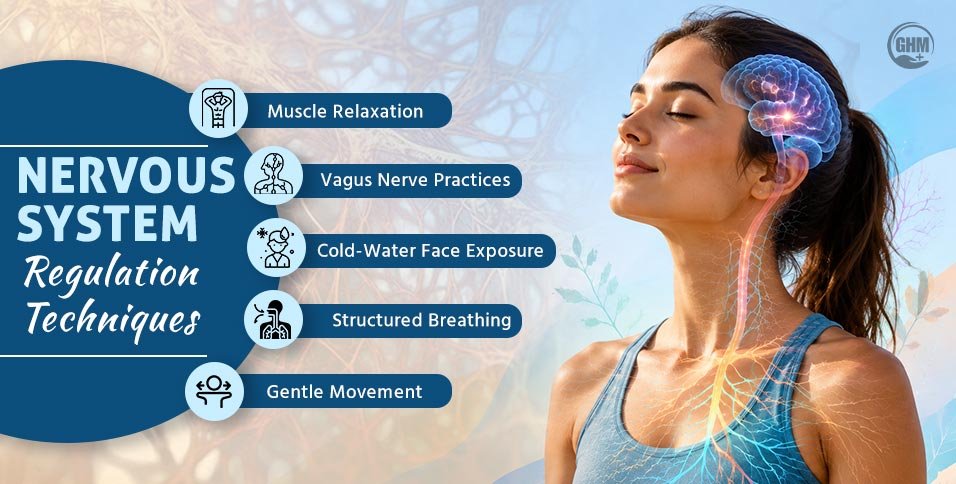
Slow, deep breathing from the belly is one of the most effective nervous system calming techniques. In diaphragmatic breathing, inhale gently through your nose, allow your abdomen to expand, and exhale slowly while ensuring your exhale is longer than your inhale. Research shows that even 10 minutes of diaphragmatic breathing can reduce anxiety and lower your heart rate.
- Physiological Sigh and Other Structured Breathing
Structured breathing patterns give your mind an easy anchor during racing thoughts. One of the breathing patterns is the physiological sigh. It involves a deep inhalation immediately followed by a second smaller inhalation and a long, relaxing exhalation. Alternative patterns like box breathing or 4-7-8 breathing offer similar structured support for nervous system regulation.
- Cold-Water Face Exposure
Briefly applying cool or cold stimulation to your face triggers the diving reflex, which quickly slows your heart rate. Splash cold water on your face or press a cool washcloth to your skin for 30 seconds to regulate the nervous system. Always start conservatively and avoid extreme temperatures, especially if you have a heart condition.
- Grounding and Orienting to Safety
When panic or anxiety strikes, your body can get stuck in threat-detection mode. In such times, nervous system regulation techniques for anxiety, such as grounding or orienting, can help a lot. Orienting to safety involves deliberately looking around your environment and noticing comforting sights, sounds, or textures, such as the 5-4-3-2-1 sensory method. The grounding method shifts your attention away from racing thoughts and back to the present moment.
- Progressive Muscle Relaxation and Body Scans
Physical tension often mirrors emotional stress. Nervous system regulation techniques such as progressive muscle relaxation involves briefly tensing and then releasing different muscle groups from your feet up to your face. Alternatively, a body scan helps you notice physical sensations without judgment, increasing your awareness of tension and relaxation.
- Gentle Movement, Walking, and Yoga
Movement is a powerful stress-buster that helps release trapped physical tension. Activities like walking, gentle stretching, yoga, or tai chi support stress resilience. If intense exercise triggers activation, start gently at a pace that feels completely manageable to regulate the nervous system.
- Vagus Nerve Practices: Humming, Singing, and Chanting
Sound vibrations directly stimulate the vagus nerve, which helps regulate your parasympathetic nervous system. Vagus nerve exercises include chest humming, singing, or OM chanting. Complete five to ten slow rounds to incorporate these soothing practices into your daily routine.
- Meditation and Guided Visualization
Mindfulness meditation and safe-place guided visualizations offer a structured alternative when conventional “clear your mind” meditation feels too difficult. Focusing on peaceful mental imagery helps reduce stress hormones and inflammation, ultimately supporting nervous system regulation.
- Nature and Environmental Regulation
Nervous system regulation techniques associated with nature and environment can have a calming effect on the body. Activities like spending time outdoors through a quiet walk, gardening, or sitting in nature naturally calm the body. Additionally, reducing excessive noise, harsh lighting, and visual clutter creates a much calmer home environment.
- Laughter and Rhythmic Social Connection
Genuine laughter alters your breathing patterns and engages the diaphragm, creating a natural calming influence. Enjoying positive social interactions or listening to comforting music helps soothe an overworked nervous system.
What Are the Signs of a Dysregulated Nervous System?
When stress hormones remain active constantly, your nervous system can become dysregulated. Symptoms of dysregulated nervous system typically show up in three key ways:
- Physical Symptoms: Rapid heartbeat, shallow breathing, muscle tension, digestive discomfort, headaches, and sleep problems.
- Emotional Symptoms: Persistent anxiety, irritability, feeling overwhelmed, hypervigilance, and emotional numbness.
- Cognitive Symptoms: Brain fog, racing thoughts, difficulty focusing, and trouble making decisions.
Which Nervous System Regulation Technique Is Best For You?
| Situation | Techniques to Consider |
| Sudden anxiety | Physiological sigh, slow breathing, grounding |
| Racing thoughts | 4-7-8 breathing, orienting, guided meditation |
| Physical tension | Progressive muscle relaxation, stretching |
| Feeling overwhelmed | Sensory grounding, gentle movement |
| Daily stress | Diaphragmatic breathing, walking, mindfulness |
| Trouble winding down | Longer-exhale breathing, gentle yoga, guided meditation |
| Feeling disconnected or shut down | Gentle rhythmic movement, body awareness, supportive connection |
There is no single nervous system regulation exercise for everyone. The primary goal is to identify approachable methods that help you reset the nervous system without increasing your discomfort.
Lifestyle Habits That Support a Regulated Nervous System
Daily habits send ongoing cues of safety or stress to your body. You can build long-term neurological resilience by maintaining a healthy lifestyle.
Follow these lifestyle habits to support your nervous system and overall well-being:
- Maintaining a consistent sleep schedule
- Engaging in regular physical activity
- Daily intake of balanced nutrition and hydration
- Managing excessive caffeine and alcohol intake
- Spending time outdoors and nurturing positive social connections
- Reducing excessive sensory stimulation
When Should You Talk to a Healthcare Professional?
Nervous system regulation techniques are powerful supportive tools to relax and calm the body, but they do not replace medical evaluation or treatment.
You should reach out to a healthcare professional if,
- your symptoms are persistent or worsening
- anxiety significantly interferes with your daily life
- your sleep remains severely disrupted
- you experience unexplained physical symptoms or trauma-related distress
The Bottom Line
Nervous system regulation techniques can help recover from stress rather than eliminating stress entirely. By starting with simple practices like diaphragmatic breathing, sensory grounding, or gentle movement, you can build a sustainable routine that fosters lasting inner calm and resilience.
The key is consistency rather than trying every exercise at once. Starting with one or two simple techniques and practicing them regularly can help make regulation part of your daily routine.
Frequently Asked Questions
- How long does it take for nervous system relaxation exercises to work?
Immediate somatic tools like the physiological sigh or cold-water face exposure can help shift your state within seconds or minutes. However, building long-term vagal tone and retraining a chronically dysregulated system requires several weeks of consistent, daily practice.
- Can children practice nervous system regulation exercises?
Yes. Simple, playful techniques of nervous system regulation like belly breathing, blowing bubbles to practice long exhales, gentle stretching, and rhythmic rocking can help children safely self-regulate when feeling overwhelmed.
- Do lifestyle factors like nutrition really impact nerve regulation?
Yes, nutrition impacts nerve regulation. Balanced nutrition rich in omega-3 fatty acids, antioxidants, and B vitamins helps support cellular repair and nerve function, while excess caffeine and sugar can amplify feelings of physical anxiety and restlessness.