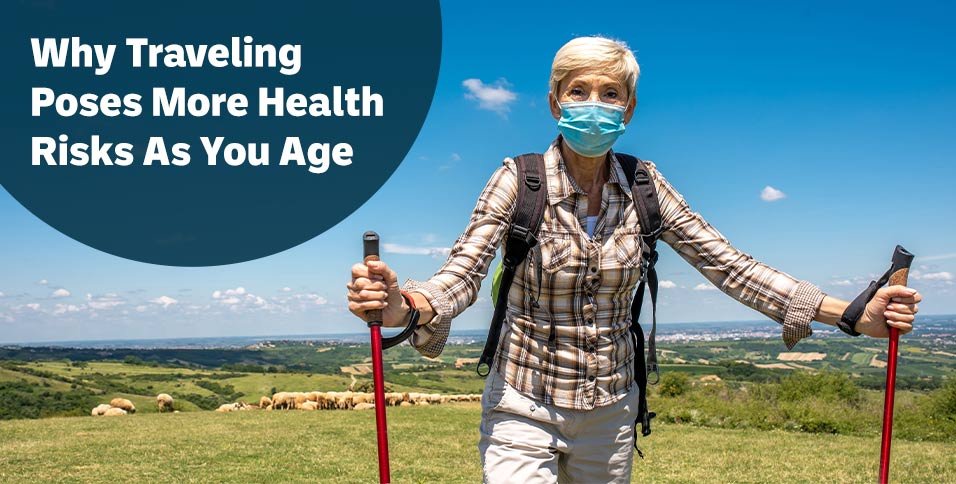
Traveling in later life. There’s just something… special about it. Almost 37% of travelers are seniors, and they are making the most of these opportunities.
Maybe it’s because there’s finally time. You can do it properly. No more rushing through a long weekend. No more squeezing a trip into limited vacation days. For many seniors, travel becomes a chance to slow down. You get to explore new places. You get to reconnect with family. You get to finally take the trip they’ve been talking about for years.
But getting older also changes how the body handles travel.
Things that barely mattered in your 30s or 40s – sitting too long on a flight, sleeping poorly at night, carrying heavy bags through the airport – suddenly leave you sore, exhausted, even sick. That doesn’t mean seniors should avoid traveling. It just means the body needs a little more care and attention along the way.
Here are a few reasons travel tends to pose more health risks as we age:
1. Higher Risk of Blood Clots and Circulation Issues
Long travel days are rough. Particularly on circulation for older adults. Sitting still for hours on a plane or a busy slows down blood flow in the legs. This increases the risk of blood clots. You’ve probably heard people talk about deep vein thrombosis, or DVT – and that’s the condition doctors worry about during long-haul travel.
The risk gets higher with age, though. This is especially true for those with diabetes, heart problems, or high blood pressure. Even without a serious condition, many seniors notice physical changes. Swelling in their ankles. Stiff joints. Leg discomfort after a long trip.
So, what’s frustrating here? Well, travel itself almost encourages inactivity. You’re sitting at the gate. You’re still on the plane. You’re sitting in taxis. You’re then sitting in hotels or restaurants. After a while, the body begins to feel this.
Small habits help, though. Getting up to walk every hour or so during a flight makes a major difference. Stretch your legs. Drink enough water. Avoid too much alcohol. These are simple things that help circulation stay healthy.
And honestly, travel feels less stressful when you know you’re prepared for emergencies. That’s one reason lots of older travelers look for travel insurance for seniors specifically. Do this before taking bigger trips, especially internationally.
2. Increased Vulnerability to Infections and Illness
Travel exposes you to a lot of things. Mainly people, and with that comes a lot of germs. Airports. Airplanes. Cruise ships. Public transportation. They’re all packed with people from everywhere, sharing the same spaces for hours at a time.
When you’re younger, your body bounces back. Whether it’s a cold or stomach bug, you get better pretty fast. As we age, though, the immune system naturally weakens a bit. Illnesses hit harder at times. They linger longer than they used to. That’s frustrating.
Even the travel routine itself wears the body down. Poor sleep. Jet lag. Skipped meals. Dehydration. Stress. All of that makes it easier to become ill. Sometimes, it’s not even one big thing – it’s just the combination of little things piling up over several days.
A lot of seniors take regular medications or manage ongoing health conditions, too. This could complicate things if they get sick while away from home.
That’s why preparation matters so much. Bringing enough medication, staying updated on vaccines, washing your hands often, and giving yourself time to rest… It all goes a long way. Most people focus on planning activities for a trip, but planning for their health matters just as much.
3. Great Chance of Falls and Mobility-Related Injuries
Travel is physically demanding. That’s a fact. But people often underestimate that. Airports alone can involve miles of walking – and you don’t even realize it. Add stairs, or uneven sidewalks, or crowded streets, or carrying luggage, and it’s too easy to see why travel can become more tiring with age.
Lots of things change over time. Balance and mobility, for example. A small misstep on a slippery floor or uneven pavement is enough, especially for healthy and active seniors. That slip could lead to injuries. And such injuries might be a lot more serious than they would’ve been years ago.
And remember, when people travel, they tend to push themselves more than usual. You don’t want to miss out on sightseeing, tours, or activities, so keep going even when your body’s asking for a break.
After all, that’s typically when accidents occur.
The smartest thing to do? Pace yourself. There’s no prize for cramming five activities into one day. So, take breaks, wear comfortable shoes, choose accommodations that are easy to navigate. This makes a trip far more enjoyable.
Travel should feel exciting – not exhausting.
To conclude, getting older doesn’t mean you give up on travel. If anything, it makes you appreciate the experience more. But it does mean being realistic – particularly about what your body can handle now compared to years ago.
With a little planning and patience, seniors can still travel comfortably, safely, confidently – and enjoy every moment of it.