Modern life moves at a relentless pace, keeping schedules full and demands high with work pressure, financial uncertainty, or family responsibilities. Among all of this, stress often feels like an unavoidable constant. Studies indicate that 35.1% of global respondents experience frequent stress.
While stress is a normal biological response to pressure, prolonged or overwhelming emotional weight can drain your energy, disrupt your sleep, and impact your physical health and daily functioning. Many people view professional support, such as counselling for stress, as a proactive approach to understanding your triggers, shifting unhelpful thought patterns, and building healthier coping mechanisms.
In this article, you will learn how counselling for stress can improve your everyday life and how early support prevents stress from escalating into burnout.
What Is Counselling for Stress?
Stress counselling is a specialized form of talk therapy where a trained mental health professional helps individuals navigate physical and emotional tension.
Counselling for stress provides a confidential, supportive, and non-judgmental environment tailored entirely to your unique lifestyle and needs.
Stress can stem from major life events or accumulate through a series of small, daily frustrations. Understanding the root cause is essential for effective management.
Common Causes of Stress
- Workplace pressure: Tight deadlines, demanding workloads, and professional burnout.
- Academic expectations: High performance standards and examination pressure.
- Financial uncertainty: Ongoing worries regarding money, debt, and career stability.
- Relationship conflicts: Interpersonal friction and family responsibilities.
- Chronic illness and caregiving: Managing long-term health conditions or supporting vulnerable loved ones.
- Major life changes: Unpredictable transitions, moving, or unresolved difficult experiences.
Common Signs of Stress
- Physical signs: Frequent headaches, muscle tension, sleep difficulties, fatigue, digestive discomfort, and an increased heart rate.
- Emotional and Behavioural signs: Irritability, mood swings, constant worrying, difficulty focusing, social withdrawal, and trouble making decisions.
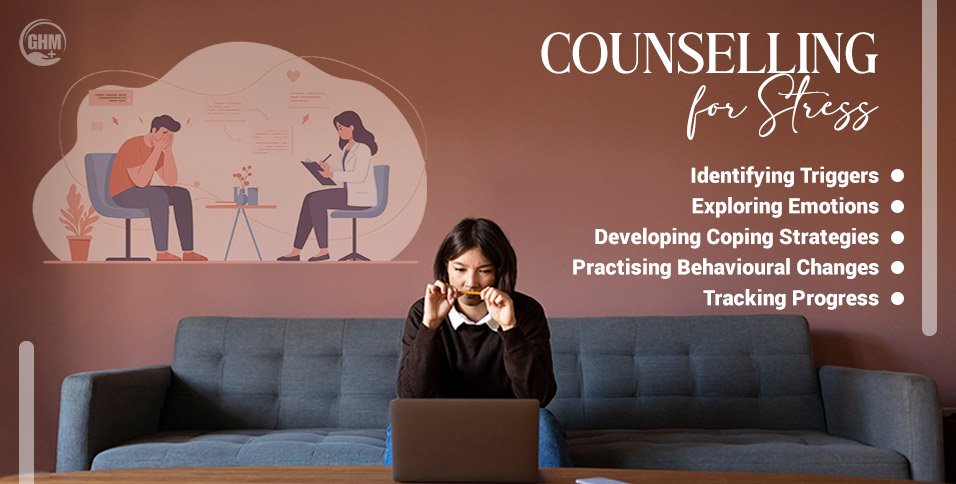
How Does Counselling for Stress Work?
Counselling for stress follows a structured process to help you regain control over your well-being.
1. Identifying Stress Triggers
Your therapist helps you recognize external stress triggers like work and relationships, alongside internal drivers like perfectionism and unrealistic expectations.
2. Exploring Thoughts and Emotions
Stress counselling helps you understand how thoughts, emotions, and behaviors influence your reactions during difficult moments. This allows you to catch unhelpful cycles early and work on improving them.
3. Developing Personalised Coping Strategies
Therapists introduce practical ways to handle difficult situations and foster healthier responses to emotional pressure and stress.
4. Practising Behavioural Changes
Stress counselling sessions focus on establishing personal boundaries, improving communication skills, and adjusting daily routines. It helps to restore long-term balance and mental clarity.
5. Tracking Progress
Regular progress tracking in stress management ensures that your therapeutic plan adapts smoothly to your evolving needs and milestones.
What Are The Techniques Used in Stress Counselling?
The counsellors draw from a variety of evidence-based therapy techniques to match your specific situation in stress management therapy.
1. Cognitive Behavioural Therapy (CBT)
CBT is a goal-focused talk therapy that helps identify negative and unhelpful thought patterns. CBT for stress management teaches you to challenge unrealistic beliefs, replace them with balanced thinking, and apply practical behavioural changes.
2. Mindfulness-Based Stress Reduction (MBSR)
The mindfulness-based stress reduction technique utilizes meditation and body awareness to anchor you in the present moment, keeping your mind from constantly worrying about the past or future.
3. Deep Breathing and Relaxation Exercises
Therapists introduce diaphragmatic breathing, paced breathing, and progressive muscle relaxation to release built-up physical tension, while providing professional counselling for stress.
4. Acceptance and Commitment Therapy (ACT)
Acceptance and Commitment Therapy (ACT) encourages you to acknowledge difficult thoughts and emotions instead of fighting them, directing your energy toward actions aligned with your personal values.
5. Solution-Focused and Other Approaches
Solution-focused therapy centers on achievable goals and actionable solutions, while other modalities help reframe your identity and relationship with stress.
What Happens During A Stress Counselling Session?
During the First Session
Your counsellor will ask about your current stressors, physical symptoms, personal background, and history. You share your concerns in a safe, confidential space, and together you establish initial goals for stress management therapy.
During Follow-Up Sessions
Subsequent meetings focus on reviewing your progress, practicing coping techniques, and adjusting strategies when necessary. Sessions operate as collaborative conversations where you set a comfortable pace.
Online vs. In-Person Counselling for Stress: Which Is Better?
| Online Counselling | In-Person Counselling |
| Attend sessions remotely from anywhere. | Meet your therapist at a dedicated clinic or office. |
| Highly convenient for busy schedules and remote regions. | Provides face-to-face interaction and a dedicated physical setting. |
| Requires a private space and a reliable internet connection. | Requires travel time and formal appointment scheduling. |
Both Online counselling and In-Person counselling deliver comparable clinical outcomes when conducted by qualified professionals. Your choice of counselling for stress depends entirely on personal comfort, privacy, and accessibility.
When Should You Seek Professional Counselling for Stress?
Self-management tools for stress relief are powerful, but professional guidance becomes vital when:
- Stress persists for an extended period without relief.
- Emotional distress interferes with daily work or academic performance.
- Sleep disruptions, concentration failures, or decision-making struggles become frequent.
- Tension strains your personal relationships or causes emotional exhaustion.
A qualified practitioner can properly evaluate whether your stress overlaps with anxiety or requires comprehensive mental health support.
How to Choose the Right Counsellor for Stress?
- Professional qualifications: Verify proper licensing and registration with local mental health boards.
- Relevant experience: Look for a specialist with a strong background in stress management, anxiety, or workplace wellness.
- Therapeutic approach: Inquire whether they utilize CBT, mindfulness, or client-centered modalities.
- Communication style: Ensure you feel heard, respected, and comfortable sharing openly.
Can You Self-Manage Stress Alongside Counselling?
You can amplify the effects of stress management therapy by integrating healthy everyday habits into your routine:
- Regular physical activity: Engage in walking, swimming, or sports to release endorphins.
- Consistent sleep schedule: Protect your rest by maintaining a reliable wind-down routine.
- Social support: Share your experiences with trusted friends, family, or support groups.
- The 4 A’s framework: Practice Avoid, Alter, Adapt, and Accept to navigate daily stressors.
Final Note
Stress is an inevitable part of the human experience, but chronic stress does not have to overwhelm your life. Through counselling for stress as a treatment approach, you can map your triggers, build robust emotional resilience, and regain a sense of personal agency.
Take the first step toward professional support and face life’s challenges with clarity and confidence.
Disclaimer: This article is intended for educational and informational purposes only and should not replace professional medical advice. Always consult a qualified healthcare provider regarding any health concerns.