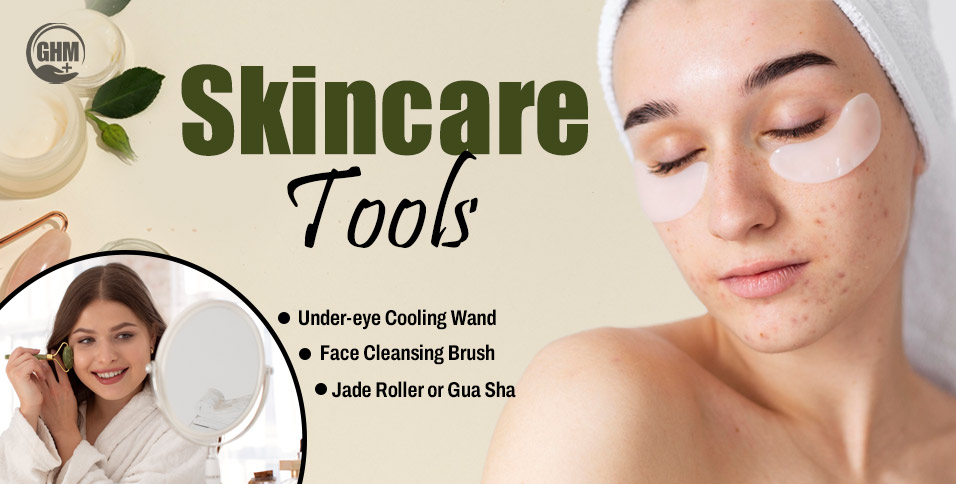
If your bathroom shelf is full of creams that promise everything but deliver little, it may be time to upgrade your routine with some smart skincare tools. In 2026, more people are choosing smart skincare tools because they target one issue at a time—acne, puffiness, dullness, wrinkles, or oily skin.
Instead of relying only on products, these beauty tools and skincare devices can improve results when used correctly.
The global skincare market continues to grow rapidly, driven by rising demand for personalized routines and at-home treatments. The worldwide market for skincare products is expected to grow from around USD 166.35 billion in 2024 to over USD 233 billion by 2033.
From facial tools to skin care gadgets, below is a practical guide to the best skincare tools worth trying today, that are compact, niche, and especially useful if you want targeted, efficient care.
10 Skincare Tools Worth Knowing For Your Healthy Skin
1. Ice Roller
Best For: Puffiness, tired skin, morning swelling
An ice roller cools the skin, temporarily reduces swelling, and helps refresh the face. The facial rollers are great to use after poor sleep or hot weather. But ice should be avoided on sensitive skin for a prolonged period of time.
2. Jade Roller or Gua Sha
Best For: Face massage, circulation, relaxation
These popular face massage tools, like jade roller or gua sha, may temporarily reduce puffiness and help product absorption. Jade roller, a classic facial tool, supports gentle massage and relaxation. Benefits of Gua sha include sculpting massage, tension release, and temporary lifting effects.
People who want a calming self-care routine can add it to their product list. Use Gua Sha with gentle pressure only. Too much force can irritate skin.
3. LED Light Therapy Wand
Best For: Acne, redness, anti-aging
Blue light targets acne-causing bacteria, while red light supports inflammation control and collagen support. Dermatologists often recommend LED for mild acne. LED light therapy can be useful for people with recurring breakouts or early fine lines. Make sure to buy certified products. While using this device, make sure to follow the device instructions.
4. Silicone Face Cleansing Brush
Best For: Deep cleansing, oily skin, pores
The face cleansing brush helps remove dirt, sunscreen, and makeup more effectively than hands alone. Anyone with oily or combination skin types can use this tool. But be careful. Overuse of face cleansing brushes can disrupt the skin barrier.
5. Derma Roller
Best For: Texture, acne marks, dull skin
A derma roller for skin uses tiny needles to create micro-channels. A gentle derma roller may improve product penetration and support smoother-looking skin. This microneedling tool can help adults who are dealing with mild texture issues.
But it should be used by experienced users or under expert guidance. Incorrect use may damage skin or spread bacteria. If you have a damaged skin barrier, skip this tool until your skin heals.
6. Blackhead Extractor Tool
Best For: Visible blackheads on the nose or chin
The blackhead extractor tool can help remove congestion when used carefully. People who experience occasional clogged pores can benefit from this skincare tool.
Improper use of the blackhead remover tool can cause scarring, broken capillaries, and infection. Only trained users or professionals should use this tool.
7. Sebum-absorbing Roller
Best For: Shiny skin, midday oil control
A sebum-absorbing roller is one of the best skincare tools for oily skin. It absorbs sebum without disturbing makeup. It is very useful for people with a busy lifestyle, such as students, office workers, and commuters. Keep in mind that rollers need regular cleaning.
8. Under-eye Cooling Wand
Best For: Under-eye puffiness, tired eyes
Under-eye cooling wands or gel wands soothe the delicate eye area, improve serum glide, and support lymphatic drainage.
Anyone with screen fatigue or travel tiredness can use this tool to get a soothing effect. It should be used gently as the skin near the eye is very thin. If kept clean, it does not pose any risk.
9. Microcurrent Facial Tool
Best For: Jawline definition, tone, anti-aging
These anti-aging tools use low electrical current to stimulate facial muscles temporarily. They work the same as a gua sha but require less effort. Adults who want non-invasive lifting support can prefer this skincare tool.
The microcurrent facial tool is not suitable for some medical conditions, such as epilepsy, active cancer, or those who are pregnant.
10. Pimple Patch Applicator & Acne Patches
Best For: Breakouts, spot care
Hydrocolloid pimple patches absorb fluid and protect pimples from picking. Teens and adults with mild acne can use these patches. Some medicated patches may irritate sensitive skin.
How to Start Using Skincare Tools Safely
- Keep it simple. Start with one beginner-friendly option, such as an ice roller, jade roller, or oil-absorbing roller
- Use clean skin. Always cleanse first. Then apply products after use unless directions say otherwise.
- Pair with smart ingredients. Use supportive skincare such as salicylic acid for acne-prone skin, glycolic acid for dullness, and barrier-repair moisturizer for sensitive skin.
- Go slow. Use tools 2–3 times weekly first. Then increase only if skin tolerates it.
- Clean tools properly. Dirty facial tools can spread bacteria.
Effective Use of Skincare Tools
- Treat them as supplements, not replacements. These micro-products work best when used alongside a basic face care routine (cleanser, sunscreen, gentle moisturiser).
- Use them only on the problem area, as their precision is their strength. Because they’re often potent (acids, actives, light therapy), apply only to the concerned area.
- Combine with healthy habits. Balanced diet, sun protection, hydration, and gentle daily care still matter. These small products simply help target specific issues more effectively.
- For troubled or sensitive skin, consider seeking advice from a qualified dermatologist or skin-care professional before trying aggressive micro-treatments.
Why Skincare Tools Are In Demand
Modern consumers want:
- Faster visible results
- Affordable home treatments
- Less complicated skincare routines
- Personalized care for targeted skin concerns
- Portable skincare essentials
That is why tools like LED devices, facial rollers, cleansing brushes, and acne treatment tools are becoming part of everyday routines.
End Note
In a world full of extensive multi-step skincare routines, these skincare tools stand out as refreshingly simple, and often more effective solutions. They allow you to zero in on what your skin really needs.
Whether you’re a teenager dealing with acne, an adult managing early wrinkles, or simply someone who wants to keep skin healthy with minimal fuss, these small, smart, and effective innovations have something to offer. If you struggle with acne, choose LED tools or acne patches. If puffiness is the issue, try an ice roller or cooling wand. For oily skin, use a sebum roller or cleansing brush.
As global demand for personalised, efficient skincare continues to rise, we’re likely to see even more creative micro-products emerge. So next time you spot a tiny patch, pen, or roller at the store, consider giving it a try. Your skin may thank you.
Start with one tool, stay consistent, and combine it with a simple face care routine. Smart skincare is no longer about doing more; it is about doing what works.
If you enjoyed this list and found it helpful, share this article with friends or family who care about skin health and spread the word about smart, targeted care.
Frequently Asked Questions
- What are Skincare Tools?
Skincare Tools refer to compact, targeted tools or formulations, like patches, roll-ons, pens, or tiny masks, designed to address specific skin concerns rather than cover the entire face.
- Are these tiny skincare products as effective as regular creams or serums?
Many are highly effective because they deliver actives directly to problem areas, often in concentrated form. However, they are best used as complements to a basic skin care routine, not full replacements.
- Do skincare tools replace visits to a dermatologist?
Not entirely. They are great for everyday maintenance, convenience, and care of mild skin concerns. But for serious skin conditions like persistent acne, deep scars, and skin disease, professional consultation remains important.