Most people think serious eye problems come with obvious pain or clear warning signs. But what if the condition that could permanently steal your sight arrives quietly? No pain, no redness, just a few strange visual changes you might brush off as tiredness?
That is exactly how retinal detachment works…a true eye emergency. And the symptoms of detached retina are easy to miss until things get much worse. Every hour without treatment can mean more permanent vision loss, yet many people wait days before seeing a doctor.
This article explains the common symptoms of detached retina that can affect vision and disrupt daily life. It also tells who is most at risk of retinal detachment, and what to do the moment symptoms appear, so you can protect your sight before it is too late.
What Is Retinal Detachment?
Retina is the thin, light-sensitive tissue that lines the back wall of the eye. The retina captures images and sends them to your brain through the optic nerve. Without a healthy retina, clear vision is impossible.
Retinal detachment happens when this tissue pulls away from the underlying layer that supplies it with oxygen and nutrients. Once separated, the retinal cells begin to deteriorate rapidly.
According to research, retinal detachment affects approximately 12.17 people per 100,000 population each year globally, and projections suggest this rate could double within the next 20 years.
It is important to understand that retinal tear and retinal detachment are not the same thing. A retinal tear is a small break in the retina that can lead to detachment if fluid seeps underneath and causes the retina to lift away. Both conditions share similar warning signs, and both require urgent attention.
What Are The Common Symptoms of Detached Retina?
Recognizing the signs of retinal detachment early is the single most important thing you can do to preserve your vision.
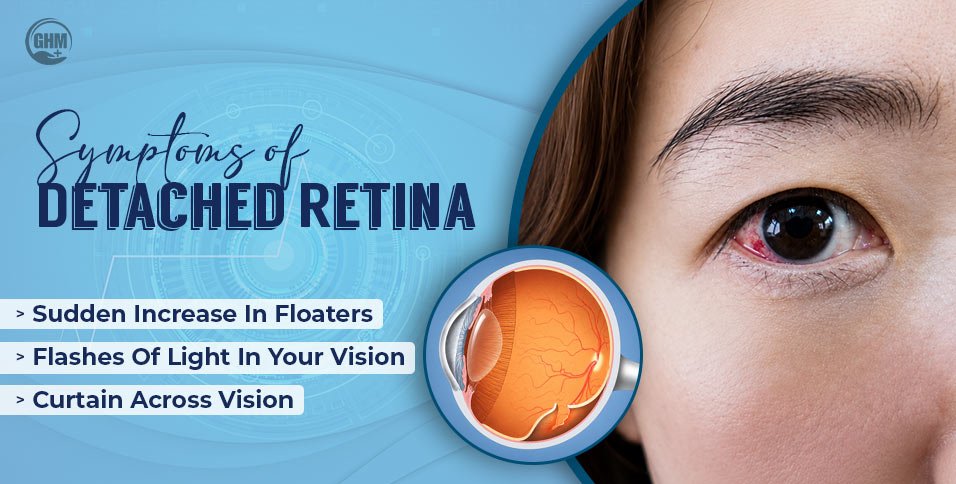
Here are the five key retinal detachment symptoms to know.
1. Sudden Increase in Floaters
Eye floaters, those small dots, threads, or squiggly lines that drift across your field of vision, are common and usually harmless. However, a sudden and dramatic increase in eye floaters is a sign of retinal detachment. When the retina is torn or beginning to detach, debris and pigment cells can flood the vitreous (the gel-like fluid filling your eye), creating a shower of new spots or a “cobweb” effect. This kind of eye floater is very different from the occasional floater most people experience.
2. Flashes of Light in Your Vision
Seeing brief flickers or flashes of light, especially in your peripheral (side) vision, is another classic early symptom of detached retina. These vision flashes occur when the pulling or tugging of a detaching retina stimulates the light-sensitive cells, tricking your brain into perceiving light that is not there. Flashes that are new, frequent, or occur in one eye should be treated as urgent.
3. A Dark Shadow or Curtain Across Vision
If you notice a dark shadow, veil, or curtain-like shape creeping across part of your visual field, this is one of the most serious symptoms of retinal detachment and demands same-day emergency care. This shadow represents an area where the retina has already detached and can no longer process visual information. It often starts at the edges and gradually moves toward the centre.
4. Loss of Peripheral (Side) Vision
A gradual narrowing or darkening of the outer edges of your visual field can signal early or advancing retinal detachment. People frequently overlook this symptom of side vision loss or mistake it for tiredness, which makes it one of the most dangerous signs to ignore. At this point, treatment becomes more complex and recovery less certain.
5. Blurred or Distorted Vision
As detachment progresses, it begins involving the macula, the central part of the retina responsible for sharp, detailed vision. At this stage, you may notice symptoms such as blurry vision, wavy lines, or difficulty reading and recognising faces. Once the macula is affected, the risk of permanent central vision loss increases significantly.
If you experience any of the above symptoms of detached retina, do not drive yourself to the hospital. Call for help or ask someone to take you to an ophthalmologist or emergency eye clinic immediately.
Who Is Most at Risk of Developing Retinal Detachment?
While retinal detachment can affect anyone, certain factors significantly raise the likelihood. Understanding your personal risk can encourage earlier screening and faster action when warning signs appear.
High myopia (severe nearsightedness) is one of the strongest causes behind retinal detachment. Research shows that high myopes face a 39-fold greater risk of retinal detachment compared to people with normal vision.
Other key risk factors of retinal detachment include:
- Age over 50, as age-related vitreous changes are a leading cause
- A previous retinal tear or detachment in either eye
- History of cataract surgery, particularly if complicated
- Diabetes and diabetic retinopathy, which weaken retinal tissue
- Eye injuries or blunt trauma to the head or face
- Family history of retinal detachment
- Certain connective tissue disorders, such as Marfan syndrome
How Do Doctors Diagnose Retinal Detachment?
Prompt diagnosis of retinal detachment is critical. Ophthalmologists use several reliable tools to confirm whether the retina has torn or detached.
1. Dilated Eye Examination
The doctor will use special drops to widen your pupil, then examine the back of the eye using a bright light and magnifying lenses. This is the most direct way to view the retina and identify any tears, holes, or areas of detachment.
2. Optical Coherence Tomography (OCT)
OCT uses light waves to produce detailed cross-sectional images of the retina. It is particularly useful for detecting subtle separations around the macula that may not be obvious during a standard examination.
3. Ocular Ultrasound
When the view of the retina is blocked by a dense cataract or bleeding inside the eye, ultrasound provides a sound-wave image of the retinal structure. This helps doctors assess the extent of detachment even when they cannot see the retina directly.
What Is The Treatment For Retinal Detachment?
When treatment begins promptly, the success rate of repairing detached retina is high. There are several surgical options for retinal detachment, and the right approach depends on the type, size, and location of the detachment.
- Laser photocoagulation and cryopexy: Used for small tears before full detachment occurs; they seal the retina back in place using heat or freezing.
- Pneumatic retinopexy: A gas bubble is injected into the eye to push the retina back against the eye wall while it heals.
- Scleral buckle surgery: A silicone band is placed around the outside of the eye to push the eye wall gently toward the detached retina.
- Vitrectomy: The vitreous gel is removed and replaced with a gas or silicone oil bubble to support the retina during healing.
Timing matters enormously in retinal detachment treatment. When the macula is still attached at the time of surgery, patients have a much stronger chance of recovering good central vision. Every delay reduces that chance.
How to Protect Your Vision & Lower Your Risk
While retinal detachment cannot always be prevented, several habits meaningfully reduce your risk:
- Schedule routine dilated eye examinations, especially after age 40 or if you are highly myopic
- Manage diabetes carefully to protect retinal blood vessels from damage
- Wear appropriate protective eyewear during sports or high-risk activities
- Report any sudden vision changes to an eye doctor promptly. Do not wait.
- Follow all post-operative instructions carefully after cataract or other eye surgery
End Note
Retinal detachment is one of the few true eye emergencies, and it is also one of the most treatable when caught in time. The five core symptoms of detached retina to remember are: a sudden surge of floaters, flashes of light in your vision, a dark curtain or shadow across your visual field, loss of peripheral vision, and blurring or distortion of central vision.
None of the retinal detachment symptoms cause pain, which is exactly what makes them dangerous. If you or someone near you experiences any of these warning signs, do not wait and see. Get to an eye specialist the same day.
Your sight is irreplaceable. Act fast, and early treatment can preserve it.
Sanskruti Jadhav