Strategy, in a technology company, is a word that can mean almost anything. In some organizations, it refers to competitive positioning. In others, it means product direction or commercial expansion. In a company like Nucleai, whose central proposition is that artificial intelligence can identify patterns in human tissue that trained human eyes cannot reliably detect, strategy carries a more consequential meaning. It means determining how a fundamentally new scientific capability enters medicine, where it delivers the greatest value first, and how it moves from experimental promise into clinical and pharmaceutical reality.
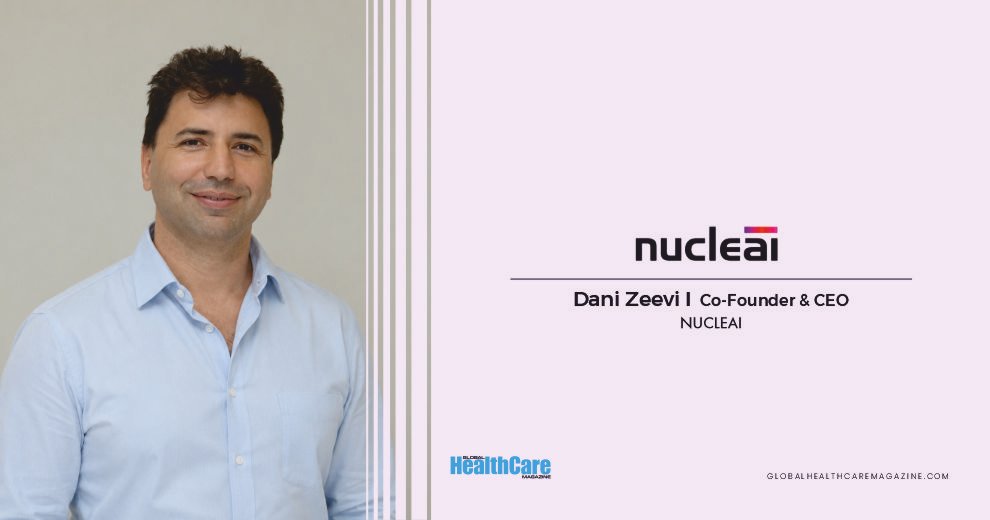
That is the space Dani Zeevi occupies as Co-Founder and Chief Executive Officer of Nucleai.
The Company Dani Helps Shape
Nucleai operates at the intersection of artificial intelligence, spatial biology, and computational pathology, applying machine learning to tissue analysis in ways that are reshaping how pharmaceutical companies, research institutions, and clinicians understand disease at the microscopic level. The company’s platform is designed to identify molecular and cellular patterns within tissue that conventional pathology workflows often miss entirely: relationships too subtle, multidimensional, or spatially distributed for manual review to consistently recognize.
The implications of that capability are significant. Cancer is not simply a collection of abnormal cells. It is an ecosystem, a constantly evolving microenvironment composed of tumor cells, immune cells, stromal structures, signaling pathways, and spatial interactions that influence how disease progresses and how therapies succeed or fail. Traditional pathology has long relied on visual interpretation supported by limited biomarker panels. AI-driven tissue analytics changes the scale of what can be observed.
In this context, leadership at Nucleai requires more than operational oversight. It demands an ability to navigate simultaneously the scientific complexity of the platform, the realities of clinical implementation, and the rapidly evolving commercial landscape surrounding artificial intelligence in medicine. It requires, in short, the ability to understand not only the technology that exists today, but also the infrastructure and adoption pathways that will determine whether the technology becomes clinically transformative tomorrow.
Strategy as Translation
There is a particular kind of value that leaders in emerging science companies must provide: the ability to translate between worlds that do not naturally speak the same language.
The computational scientists building AI models speak one language. Clinicians and pathologists speak another. Pharmaceutical organizations evaluating biomarker strategies and drug response prediction speak yet another. Investors, regulators, and healthcare systems operate according to entirely different priorities and constraints. Bringing those worlds into alignment without losing scientific accuracy is one of the defining leadership challenges of modern biotechnology.
Dani’s role at Nucleai places him directly at that intersection. Under his leadership, the company has positioned itself within one of the most consequential shifts currently underway in oncology and precision medicine: the transition of AI-driven tissue analysis from a research capability into a scalable platform for clinical and pharmaceutical decision-making.
That transition is not purely technical. It requires sequencing adoption carefully, building trust among clinical stakeholders, validating performance rigorously, and ensuring that the technology integrates into real-world healthcare and drug-development workflows. The challenge is not simply proving that artificial intelligence can detect patterns in tissue. It is proving that those patterns can meaningfully improve therapeutic development, biomarker discovery, and patient outcomes.
The Field That AI-Powered Pathology Must Navigate
The landscape Dani operates within remains one of the most dynamic and unsettled areas in healthcare technology. AI-powered pathology is advancing rapidly, but the surrounding ecosystem, including regulation, reimbursement, clinical workflow integration, and standardization, is still evolving in parallel.
Many companies entering this space have discovered that strong technology alone is insufficient. Some platforms perform impressively in controlled research settings but struggle when introduced into the operational realities of hospitals, pharmaceutical pipelines, and clinical diagnostics. The gap between innovation and adoption remains one of the defining challenges of healthcare AI.
Bridging that gap requires more than engineering expertise. It requires understanding the incentives and limitations of every stakeholder involved, from the pathologist interpreting tissue slides to the biomarker scientist designing oncology trials, from pharmaceutical partners pursuing precision therapeutics to regulators evaluating diagnostic reliability.
This is where strategic leadership becomes essential. Dani’s work at Nucleai is not simply about positioning a company within a competitive market. It is about helping shape how artificial intelligence becomes integrated into the future architecture of pathology itself.
Toward a More Predictive Form of Medicine
The broader significance of companies like Nucleai lies in what they suggest about the future of medicine. Pathology is evolving from a primarily descriptive discipline, one focused on identifying what disease looks like, into a predictive and computational science capable of modeling how disease behaves, responds, and evolves.
That transformation depends on the ability to extract meaning from tissue at a scale impossible for unaided human interpretation. It depends on integrating spatial biology, machine learning, and clinical insight into a unified analytical framework. And it depends on leaders capable of translating scientific innovation into systems that healthcare can realistically adopt.
Dani’s work at Nucleai sits directly within that transformation. As AI-driven pathology continues to move toward mainstream clinical and pharmaceutical applications, the companies shaping its direction today will help determine not only how medicine sees disease, but how effectively it learns to predict and treat it.
Read More: Global Leaders Driving AI & High-Plex Tissue Analysis 2026