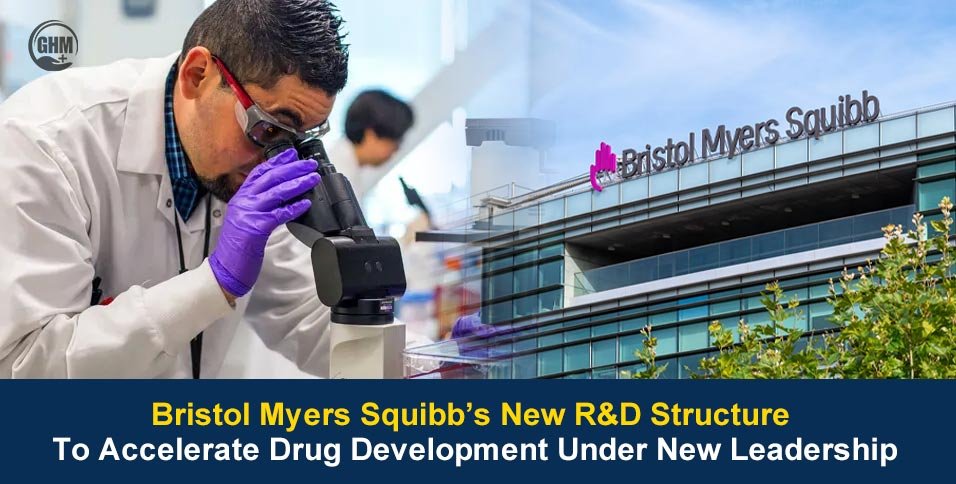
Bristol Myers Squibb (BMS) is bringing its research and development operations together under one leader as the pharmaceutical company looks to accelerate drug development and strengthen its future pipeline. Under Bristol Myers Squibb’s new R&D structure, current Chief Medical Officer Cristian Massacesi will lead a unified, end-to-end Research and Development (R&D) organization starting January 1, 2027. Meanwhile, Chief Research Officer Robert Plenge will leave the company after supporting the transition through March 2027.
The BMS restructuring aims to connect scientific research and clinical development more closely, improve decision-making, and strengthen the company’s ability to advance potential medicines. The announcement marks an important change in how BMS organizes its drug discovery and development activities.
Reasons Behinnd Bristol Myers Squibb’s New R&D Structure
The Bristol Myers Squibb’s new R&D structure comes as the company seeks to improve research productivity, strengthen its drug development pipeline, and prepare for long-term business challenges.
BMS unified R&D organization expects to:
- Improve collaboration: Connect scientific researchers and clinical development specialists more closely.
- Speed up decisions: Reduce organizational barriers when evaluating research opportunities and development priorities.
- Strengthen pipeline execution: Focus resources on promising drug candidates and improve portfolio management.
- Integrate technology: Build capabilities and use new technologies to support pharmaceutical research.
After BMS’s acquisition of Celgene in 2019, the company managed early research and development separately from global drug development. Its new approach is similar to structures used by major pharmaceutical companies such as Eli Lilly, Merck, and Pfizer.
Robert Plenge to Leave After the BMS R&D Reorganization
Bristol Myers Squibb’s new R&D structure also involves the departure of Robert Plenge, who currently serves as Executive Vice President and Chief Research Officer.
Plenge will remain with the company in an advisory capacity through March 2027 to support the transition before leaving. He joined BMS through its $74 billion acquisition of Celgene in 2019, where he previously led the inflammation and immunology business. He became BMS’s head of research in July 2023.
Plenge and Massacesi developed the new organizational structure together. Plenge said he was confident that the Bristol Myers Squibb leadership change represented the right direction for the company and its patients.
Bristol Myers Squibb’s New R&D Structure Puts Cristian Massacesi in Charge
Cristian Massacesi, currently BMS’s Executive Vice President, Chief Medical Officer, and Head of Development, will become the Head of R&D on January 1, 2027.
Under his leadership, the BMS unified R&D organization will bring scientific and clinical teams together, connecting work from early research and discovery through clinical development. This approach is intended to help the company move promising discoveries toward potential treatments more efficiently.
BMS CEO Christopher Boerner said the new structure would help the company “accelerate decision-making and ultimately enhance portfolio execution.”
The Bristol Myers Squibb leadership change also reflects the company’s aim to attract and retain scientific talent, build important capabilities, and integrate new technologies into its research operations.
BMS Drug Development Strategy Faces Patent Expiration Challenges
The Bristol Myers Squibb drug development pipeline remains important as the company prepares for potential revenue pressure from patent expirations, which can allow competitors to sell generic versions of medicines after market exclusivity ends.
Two major products highlight this patent expiration challenge:
- Eliquis: The blood thinner, developed with Pfizer, generated $14.4 billion in global sales in 2025.
- Opdivo: The cancer immunotherapy generated $10 billion in global sales during the same year.
Together, these medicines accounted for approximately half of BMS’s $48.2 billion revenue in 2025.
BMS needs to develop and commercialize new medicines to help offset potential revenue losses as competition increases. Its pipeline includes both opportunities and development risks, making research productivity and investment decisions particularly important.
Effects of the BMS Restructuring On Employees & Its Pipeline
as part of this particular Bristol Myers Squibb’s new R&D structure, the company has not announced workforce reductions or changes to its drug development pipeline. However, the wider implications for employees and future research operations remain unclear.
The unified organization will take effect on January 1, 2027. Its progress will be closely watched as BMS works to improve collaboration, advance promising drug candidates, and support its long-term growth strategy.