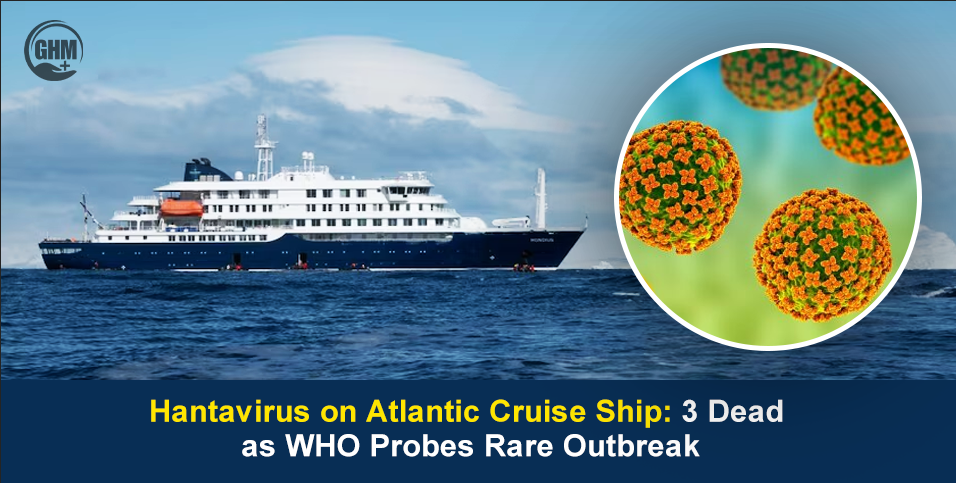
A suspected Hantavirus on Atlantic cruise ship has left three passengers dead and several others ill, raising health concerns. The Hantavirus outbreak occurred aboard the MV Hondius, a polar cruise vessel traveling from Argentina to Cape Verde, with around 150 passengers onboard.
According to the World Health Organization (WHO), one case of infection has been laboratory-confirmed, while multiple suspected infections are still under investigation.
Health officials say the situation on the cruise ship remains fluid, with international coordination underway to assess risks, treat patients, and prevent further spread.
How Did the Hantavirus Outbreak on Atlantic Cruise Ship Spread
https://globalhealthcaremagazine.com/news/hantavirus-outbreak-on-cruise-ship/The Hantavirus on atlantic cruise ship started when a 70-year-old passenger developed symptoms, including fever, headache, abdominal pain, and diarrhoea. He later died after arriving at St Helena. His spouse, aged 69, also fell ill and died after being evacuated to South Africa.
A third fatality was reported onboard, while additional passengers and crew members showed symptoms. Authorities are still determining whether the MV Hondius virus outbreak stems from a common exposure or limited human transmission.
The vessel, operated by Oceanwide Expeditions, departed from Ushuaia, Argentina, and was scheduled to reach Cape Verde before continuing to the Canary Islands.
Currently, the ship remains anchored off Praia, Cape Verde. The Hantavirus on the Atlantic cruise ship has delayed passenger movement due to ongoing medical evaluations and clearance requirements.
The health authorities are working to evacuate symptomatic individuals and provide urgent care. Two additional patients may require hospitalization, pending approval from local authorities in Cape Verde.
Global Response to the Hantavirus Cruise Ship Outbreak
The Hantavirus on Atlantic cruise ship has triggered a coordinated international response:
- The World Health Organization is leading risk assessment and investigation
- South African health officials are managing critical cases
- Dutch authorities are arranging repatriation for affected passengers
- The UK government is monitoring the situation and supporting nationals
Officials emphasized that“detailed investigations, including laboratory testing and virus sequencing, are ongoing.”
What Is Hantavirus?
Hantavirus is a group of viruses primarily carried by rodents and transmitted to humans through exposure to infected animal urine, droppings, or saliva. People can become infected when they inhale tiny airborne particles contaminated with these materials; this is the most common route of hantavirus transmission. Less commonly, infection may occur through direct contact or contaminated food.
Hantaviruses cause two main illnesses:
- Hantavirus Pulmonary Syndrome (HPS): A severe respiratory disease that affects the lungs and can become life-threatening within days.
- Hemorrhagic Fever with Renal Syndrome (HFRS): A condition that mainly affects the kidneys and can lead to internal bleeding and organ failure.
Common Hantavirus symptoms include:
- Fever and fatigue
- Muscle aches
- Shortness of breath (in severe cases)
There is no specific antiviral treatment, so early diagnosis and supportive hospital care—such as oxygen therapy—are critical to improving survival chances.
Why This Infectious Disease at Sea Is Unusual
Experts say the Hantavirus on Atlantic cruise ship is highly unusual. Infectious disease specialist Prof. Paul Griffin noted that hantavirus outbreaks typically occur in rural or rodent-exposed environments, not cruise ships.
He added that cruise ships can amplify infections due to:
- Close quarters
- Shared facilities
- Prolonged exposure among passengers
However, human-to-human transmission of this rodent-borne virus infection remains extremely rare.
Ongoing Investigation into Atlantic Cruise Ship Outbreak
The exact cause of the Atlantic cruise ship outbreak remains under investigation. Key questions include:
- How passengers were exposed
- Whether contaminated food or surfaces played a role
- If limited human transmission occurred
The cruise operator stated it is “working to establish full facts and ensure appropriate medical care and screening.”
Health experts warn that the Hantavirus on Atlantic cruise ship may not be over. There is a risk of more hantavirus cases emerging. The virus has an incubation period of one to eight weeks, meaning additional cases could still emerge.
Authorities are continuing surveillance and testing to track potential spread.
Summery
The Hantavirus on Atlantic cruise ship underscores the unpredictable nature of infectious diseases, even in controlled environments like cruise ships. While the number of confirmed cases remains limited, the severity of outcomes has prompted urgent global attention.
With investigations ongoing and health authorities closely monitoring developments, the situation highlights the importance of rapid response, international coordination, and public health vigilance in managing outbreaks at sea.